
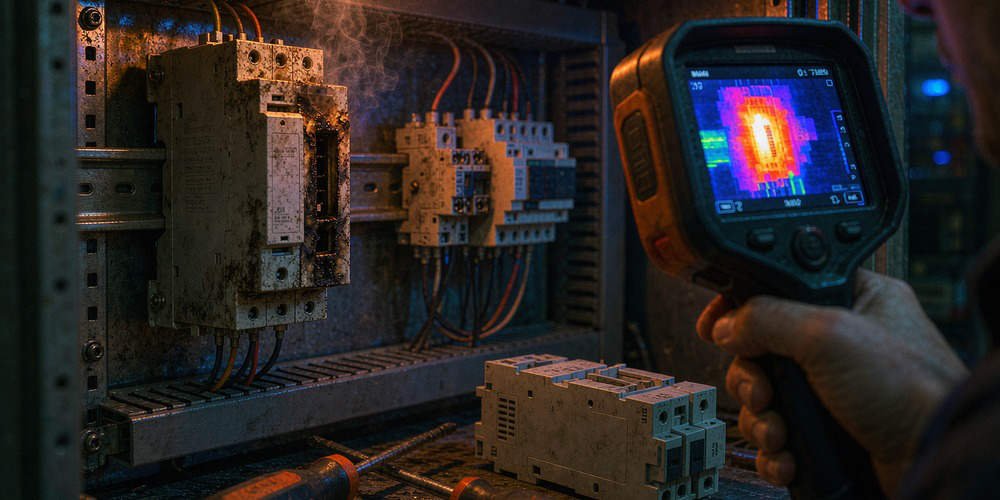
Honeywell FC-PSU-UNI2450U Smoke at Power-On: Diagnostic Guide for Power Supply Faults
A sudden emit of smoke from a Honeywell FC-PSU-UNI2450U power supply during post-overhaul energization demands immediate technical investigation. Industrial control systems rely on stable 24VDC power rails to maintain continuous safety manager operations. However, field engineers cannot immediately attribute power-on smoke solely to bridge rectifier breakdown or capacitor aging. Powergear X Automation provides this engineering assessment to isolate internal component failures, inrush current surges, and external wiring faults in process automation environments.
Understanding the Safety Manager Power Architecture
The FC-PSU-UNI2450U serves critical safety system components in DCS and PLC hardware environments. This module delivers regulated 25–28 VDC output specifically designed for high-reliability process safety applications. Unlike general-purpose industrial automation power units, safety manager power supplies integrate precise voltage monitoring and fast-acting protection logic. Therefore, engineers must avoid substituting this unit with standard commercial power supplies during facility maintenance or cabinet overhauls.
Analyzing Input Rectifier Failures and Inrush Current Impacts
Primary AC rectification components face severe thermal and electrical stress during initial system energization. An internal short circuit inside the bridge rectifier causes a massive AC input current surge upon power-on. Consequently, this sudden current draw trips input protection fuses, damages printed circuit boards, and generates visible smoke. However, metal oxide varistors, primary MOSFET switching devices, and input suppression circuits produce identical symptoms. Engineers must perform diode junction testing and resistance checks before declaring the rectifier as the root cause.
Evaluating Electrolytic Capacitor Aging and Dielectric Breakdown
DC bus electrolytic capacitors experience electrolyte drying, elevated Equivalent Series Resistance, and internal insulation degradation over time. High ESR typically causes excessive ripple voltage and thermal buildup during steady-state operation. However, severely aged capacitors can suffer dielectric breakdown during power-on inrush events. Visual indicators include bulging safety vents, electrolyte residue, and localized PCB discoloration. Furthermore, secondary collateral damage from a failed switching transistor can mimic direct capacitor failure, requiring thorough circuit tracing.
Technical Specifications and Thermal Operating Limits
Honeywell hardware reference manuals define strict operational parameters for the FC-PSU-UNI2450U power module. The unit guarantees a full-load hold-up time of 100 milliseconds to bridge momentary utility voltage dips. Moreover, operating ambient temperatures above 50°C trigger thermal derating profiles that shorten capacitor lifespan. Industrial plants must maintain cabinet ventilation to prevent heat accumulation, as excessive ambient temperatures accelerate insulation breakdown in both power semiconductor junctions and filter capacitors.
Step-by-Step Commissioning Isolation Protocol
- Secure System Isolation: Lock out the AC supply immediately and never re-energize a smoking power supply repeatedly.
- Verify Line Input Parameters: Measure incoming AC voltage, supply frequency, and mechanical connector retention clips for proper installation.
- Isolate Downstream Loads: Disconnect output terminals to differentiate between internal PSU short circuits and external load faults.
- Perform Component Resistance Tests: Check primary switching MOSFETs, rectifier diodes, and input MOVs with an multimeter prior to re-applying power.
Field Guidelines for Installation and Physical Maintenance
Proper mechanical assembly prevents premature power supply failures during plant commissioning. The FC-PSU-UNI2450U utilizes locking DC connectors and AC input retention clips to withstand cabinet vibration. Engineers must maintain vertical mounting orientations to facilitate natural convection cooling across the internal heat sinks. In addition, cleaning cabinet dust filters and verifying cooling fan operation significantly reduces thermal stress on high-voltage primary components.
B2B Procurement and Version Compatibility Review
Replacing legacy safety manager power supplies requires careful verification of hardware revisions and system catalog numbers. Honeywell documentation specifies FC-PSU-UNI2450U version 2.1 as a direct upgrade for older V1.0 and V2.0 models. However, legacy cabinet backplanes may require additional mechanical adapter plates or wiring harness updates. Purchasing teams should verify exact part numbers, revision levels, and firmware support with certified automation suppliers before executing plant upgrades.
Application Scenario: Petrochemical Refinery Commissioning
During a planned turnaround at a chemical processing facility, maintenance crews re-energized a safety instrumented system cabinet containing an FC-PSU-UNI2450U module. The power supply emitted smoke instantly, tripping the main cabinet circuit breaker. The plant engineering team isolated the supply and performed benchtop component analysis.
The diagnostic revealed that an line voltage transient had shorted the primary MOV surge suppressor, which subsequently damaged the adjacent bridge rectifier. The DC bus capacitors remained fully functional. The team replaced the damaged power module with a verified unit, inspected the AC input line filtering, and successfully restored safety system communications without further downtime.
For high-performance industrial control hardware, genuine safety system components, and expert technical support, visit Powergear X Automation to explore our comprehensive automation product portfolio.
Frequently Asked Questions (FAQ)
Q1: Can an external short circuit on the 24VDC output cause the power supply to smoke?
No, the FC-PSU-UNI2450U features built-in electronic short-circuit protection on its output stage. An external DC load fault causes output voltage collapse or hiccup mode protection, rather than immediate primary-side smoking.
Q2: How do I distinguish between a failed bridge rectifier and a shorted MOSFET?
Unplug the power supply and use a digital multimeter in diode-check mode. A shorted bridge rectifier shows zero resistance across the AC input pins or DC bus rails, whereas a shorted MOSFET displays low resistance specifically between its drain and source terminals.
Q3: Is the FC-PSU-UNI2450U directly interchangeable with Honeywell C300 power supplies?
No. While both systems use 24VDC power architectures, the FC-PSU-UNI2450U belongs to the Safety Manager family and possesses specific mechanical form factors, pinouts, and safety certification levels distinct from C300 series hardware.


Leave a Comment
Your email address will not be published. Required fields are marked *