Over 50,000 hot-selling automation module components.
3500-62 Module Review Improving Machinery Safety and Protection

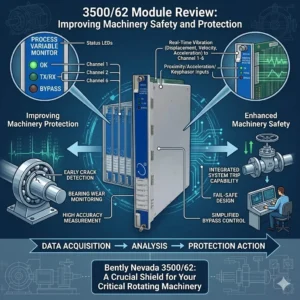
3500/62 Module Review: Improving Machinery Safety and Protection

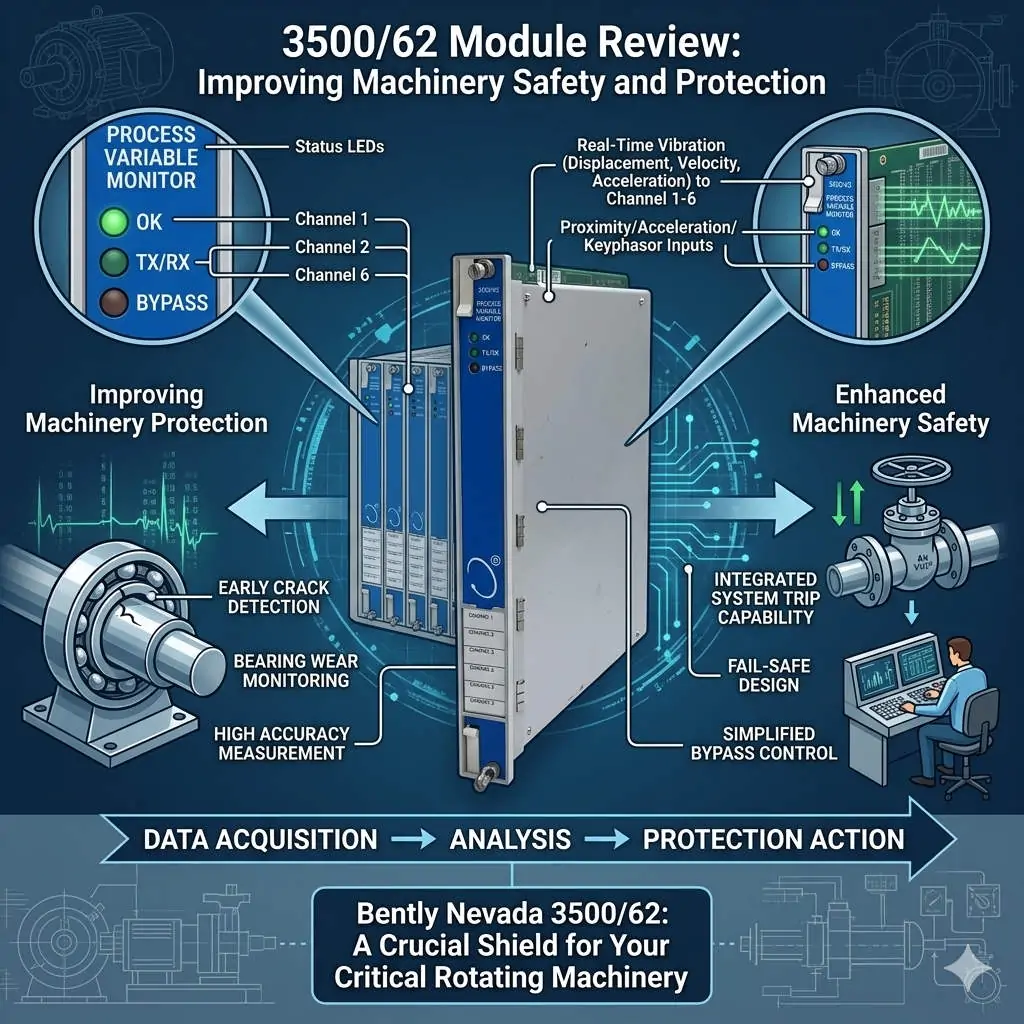
Enhancing Machinery Protection with the Bently Nevada 3500/62 Process Variable Monitor

Bridging the Gap Between Process Data and Mechanical Integrity

The Bently Nevada 3500/62 serves as a vital bridge in modern industrial automation. While standard vibration monitors track mechanical movement, this module integrates critical process variables like pressure and temperature. In heavy industries, mechanical failures often stem from process upsets. Therefore, correlating these data points within a single rack is essential for comprehensive asset protection. By using the 3500/62, operators gain a holistic view of machine health, moving beyond simple vibration analysis to true condition-based monitoring.

3500-62 Module Review Improving Machinery Safety and Protection

3500-62 Module Review Improving Machinery Safety and Protection

Technical Core: Standardizing 4–20 mA Analog Input Integration

The 3500/62 module primarily utilizes 4–20 mA analog inputs to interface with field transmitters. This compatibility ensures a seamless connection with standard flow, pressure, and temperature sensors used in factory automation. Because it accepts direct signals, the system eliminates the need for external converters. Consequently, this architecture reduces signal drift and minimizes points of failure. However, engineers must carefully calculate the loop power budget. High-load smart transmitters may occasionally require an external power source to maintain signal integrity during peak operation.

Advanced Alarm Logic and System Redundancy

Integrated alarm setpoints differentiate the 3500/62 from basic PLC or DCS modules. This hardware allows for “unified trip logic” directly within the protection rack. For example, a system can trigger a shutdown only when both high vibration and extreme bearing temperature occur simultaneously. This local logic execution provides faster response times than cross-platform communication via Modbus. Moreover, it creates a redundant layer of safety. Even if the primary control system fails, the 3500/62 ensures the machinery remains within safe operating limits.

Optimizing Installation for High-Noise Industrial Environments

Signal interference remains a significant challenge in plants featuring large Variable Frequency Drives (VFDs). Analog signals are sensitive to electromagnetic noise, which can cause “phantom” alarms. At Powergear X Automation Limited, we recommend using shielded twisted-pair cabling grounded at only one end. Furthermore, installers should never run low-voltage signal wires parallel to high-voltage power lines. In extreme cases, adding signal isolators can prevent ground loops that compromise measurement accuracy. Proper cable management significantly improves the Mean Time Between Failures (MTBF) for the entire monitoring system.

Strategic Procurement: Compatibility and Selection Criteria

Choosing the right module requires a thorough understanding of the existing 3500 rack ecosystem. The 3500/62 is generally backward compatible with older racks, but firmware versioning is critical. Before purchasing, verify that your Rack Configuration Software supports the specific revision of the module. Additionally, check the power supply capacity of the rack. Adding multiple process variable monitors can increase the thermal load and current draw. Ignoring these hardware constraints often leads to unexpected commissioning delays or analog signal instability.

Professional Insight from Powergear X Automation Limited

From the perspective of Powergear X Automation Limited, the 3500/62 is a diagnostic powerhouse rather than just an input card. As the industry moves toward “Industry 4.0,” the demand for synchronized data increases. While a DCS handles broad process control, the 3500 system provides the “high-speed” protection layer. We suggest that users do not view this as a replacement for a PLC. Instead, treat it as a specialized tool for critical rotating equipment where the cost of a missed trip far outweighs the module investment.

Industrial Solution Scenarios

  • Centrifugal Compressor Protection: Monitoring suction pressure and discharge temperature alongside vibration to prevent surge conditions.
  • Steam Turbine Management: Integrating casing expansion and steam pressure into the 3500 rack for real-time thermal stress analysis.
  • Remote Pump Stations: Using the 3500/62 to provide autonomous protection in areas with limited DCS connectivity.

Technical Implementation Checklist

  • ✅ Verify transmitter loop power requirements (Active vs. Passive loops).
  • ✅ Match the 3500/62 firmware with the Rack Interface Module (RIM) version.
  • ✅ Implement proper shielding and separation from high-voltage AC cables.
  • ✅ Configure “Danger” and “Alert” setpoints based on machinery manufacturer specifications.

Frequently Asked Questions (FAQ)

Q: Does the 3500/62 support HART protocol for smart transmitter diagnostics?
While the 3500/62 reads the 4–20 mA analog signal, it typically does not pass HART digital diagnostic data to the rack. If you need HART information for asset management, you should use a signal splitter to send the data to a specialized HART multiplexer or DCS.

Q: Can I use this module for high-speed turbine overspeed protection?
No. The 3500/62 is designed for static or slowly changing process variables. For overspeed protection, you must use the dedicated 3500/53 Electronic Overspeed Detection System, which has the necessary millisecond response time.

Q: How does the 3500/62 handle a “Transmitter Not OK” status?
The module monitors the input current. If the signal drops below a certain threshold (typically <2 mA), the system flags a “Not OK” status. This prevents a broken wire from accidentally triggering a machinery trip, improving overall system reliability.

For more technical specifications and high-quality parts, please visit the Powergear X Automation Limited website for expert support.

Honeywell CC-PAIM01 Analog Accuracy and Drift Management

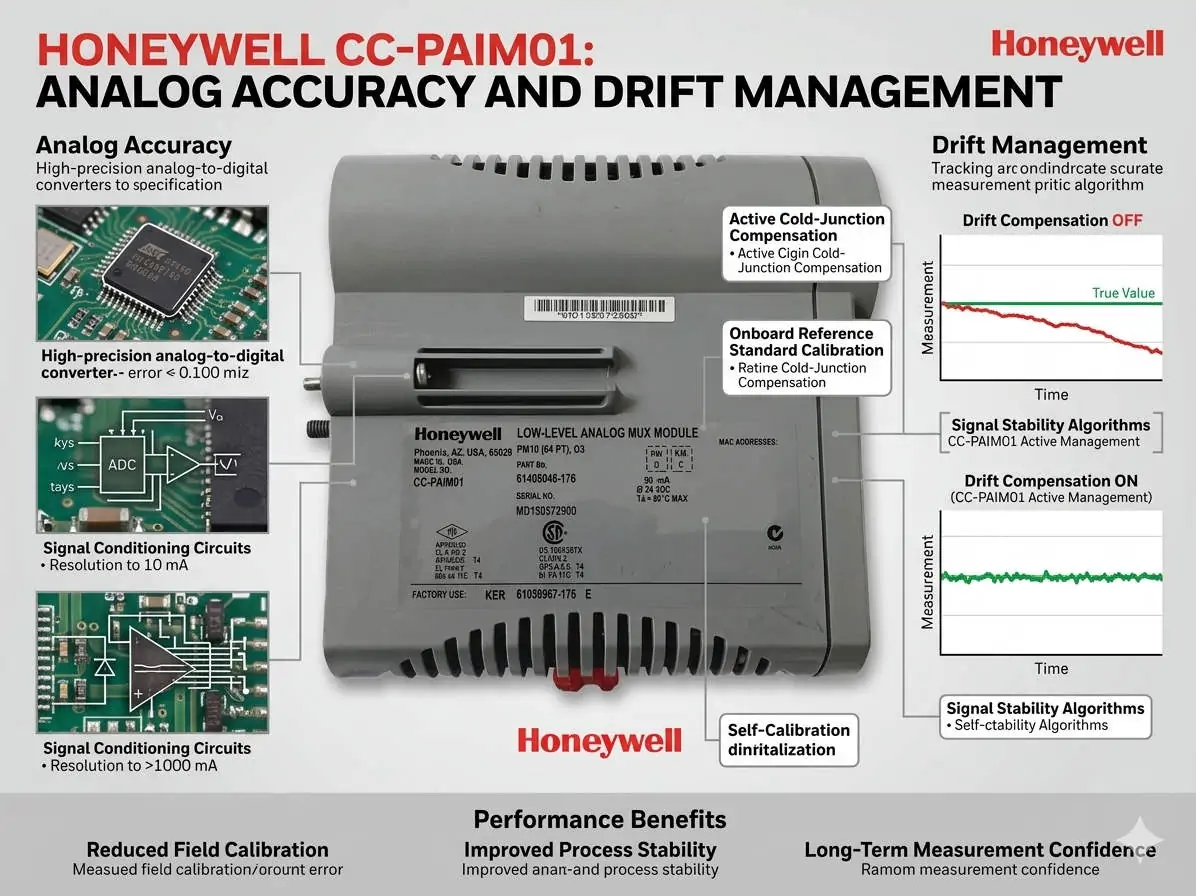
Honeywell CC-PAIM01: Analog Accuracy and Drift Management

Maximizing Precision: The Role of Temperature Compensation in CC-PAIM01 Modules

The Critical Value of Thermal Stability in Analog Inputs

The Honeywell CC-PAIM01 analog input module plays a vital role in maintaining high-accuracy signal acquisition. In volatile industries like petrochemicals and pharmaceuticals, thermal drift can compromise process stability. Even minor temperature fluctuations can lead to measurement bias. Therefore, engineers must prioritize internal temperature compensation to ensure product quality. Accurate field calibration maintains signal integrity and prevents the need for premature hardware replacement.

Honeywell CC-PAIM01 Analog Accuracy and Drift Management

Honeywell CC-PAIM01 Analog Accuracy and Drift Management

Understanding the Impact of Temperature Drift Coefficients

While the CC-PAIM01 includes built-in compensation, environmental stress and component aging eventually introduce drift. A typical drift coefficient of ±0.01%/°C might appear insignificant at first glance. However, in high-precision flow or pressure loops, these errors accumulate quickly. As a result, uncompensated drift creates offset errors in 4–20 mA signals. This issue is particularly prevalent in outdoor cabinets that lack strict climate control.

Maintaining High-Resolution Signal Fidelity

Thermal stability directly influences the effectiveness of high-resolution A/D conversion. When temperatures shift, the resulting offset errors reduce the module’s effective resolution. This loss of fidelity can trigger unnecessary control loop oscillations in complex DCS environments. Moreover, advanced control strategies like tight-tolerance PID loops become less reliable. Consistent thermal management ensures that the module provides the granular data required for modern factory automation.

Professional Field Calibration Procedures

Successful calibration requires a stable environment and precise tools. Our team at Powergear X Automation recommends following these technical steps:

  • Isolate the input channel from the process.
  • Connect a precision signal source with ±0.005% accuracy.
  • Allow the module to thermally stabilize for 45 minutes.
  • Execute zero and span calibration via DCS engineering tools.
  • Apply multi-point checks at 4, 12, and 20 mA.

Strategic Cabinet Thermal Management

Hardware placement significantly affects long-term performance. Always install modules away from heat-generating components like power supplies or VFDs. Ideally, maintain cabinet temperature variations within a ±5°C range. In one refinery project, relocating a module 15 cm away from a heat source reduced alarms by 60%. Therefore, physical layout is just as important as software configuration for system reliability.

Expert Insights from Powergear X Automation

At Powergear X Automation, we believe technical discipline drives operational excellence. Many engineers misdiagnose grounding noise as temperature drift. Always verify your single-point grounding and use shielded twisted-pair cables before recalibrating. By combining proper installation with routine verification, you extend the lifecycle of your Honeywell assets while ensuring peak performance.

Technical Summary Checklist

  • ✅ Verify temperature compensation curves during commissioning.
  • ✅ Use precision calibrators for all analog loop checks.
  • ✅ Maintain strict physical separation from power cables.
  • ✅ Implement annual calibration for critical control loops.
  • ✅ Ensure firmware compatibility before replacing legacy modules.

Industrial Application Scenarios

  • Pharmaceutical Batch Processing: Maintaining strict temperature-dependent chemical reactions.
  • Oil and Gas Custody Transfer: Ensuring highly accurate flow measurements for billing.
  • Power Generation: Monitoring turbine pressure sensors in high-heat environments.

Implementation FAQ

Q1: When should I prioritize recalibration over module replacement?
If you notice a consistent offset that correlates with seasonal temperature changes, recalibration is the first step. Modules usually last over a decade, but their compensation curves may shift after 3 to 5 years of continuous operation.

Q2: How does the CC-PAIM01 handle extreme outdoor environments?
While rated for -20°C to +60°C, the module performs best when shielded from direct sunlight. We recommend using air-conditioned panels or sun shields to keep the internal cabinet temperature stable near 25°C.

Q3: What is the biggest mistake made during field calibration?
Skipping the thermal “warm-up” period is a common error. If you calibrate a cold module immediately after opening the cabinet, the settings will drift again as the module reaches its operating temperature.

For more technical guides and high-quality automation hardware, visit the Powergear X Automation website.

Clear 1769-L32E Major Faults: Expert PLC Troubleshooting Guide

Clear 1769-L32E Major Faults: Expert PLC Troubleshooting Guide

Mastering Major Fault Recovery for the Allen-Bradley 1769-L32E CompactLogix

The 1769-L32E serves as a cornerstone in modern industrial control. This EtherNet/IP-enabled controller bridges the gap between small-scale logic and complex integrated systems. However, encountering a “Major Fault” can bring production to a standstill. Understanding the mechanics behind these errors is vital for any field engineer aiming to minimize downtime and maintain system integrity.

Clear 1769-L32E Major Faults: Expert PLC Troubleshooting Guide

Understanding the Mechanics of Controller Fault States

A Major Fault transitions the 1769-L32E into a halted state to protect hardware and personnel. During this mode, the controller stops executing user logic and sets outputs to their configured “Safe State.” This immediate shutdown is critical in high-speed packaging or chemical processing where erratic behavior could be catastrophic. Active monitoring via the status LEDs provides the first clue; a flashing red “OK” light typically indicates a recoverable major fault.

The Role of CompactFlash in System Recovery

The 1769-L32E utilizes CompactFlash (CF) non-volatile memory for robust program retention. While this ensures the controller recovers after power loss, it can create a “fault loop.” If the CF card contains a corrupted image or a program with an inherent logic error, the controller will reload that error every time it boots. Therefore, engineers must verify the “Load Image” settings in RSLogix 5000 before initiating a cold restart on-site.

Strategic Troubleshooting Procedures in the Field

Restoring a faulted system requires a disciplined, step-by-step approach to identify the root cause rather than just clearing the symptom. Follow this validated workflow to ensure long-term stability:

  • Step 1: Establish a connection using Studio 5000 or RSLogix 5000 software.
  • Step 2: Navigate to the Controller Properties and select the Major Faults tab.
  • Step 3: Record the Fault Type and Code (e.g., Type 04, Code 31 for an index out of range).
  • Step 4: Address the hardware failure or modify the offending rung of logic.
  • Step 5: Clear the fault in the software and return the key switch to Run Mode.

Identifying Common Hardware and Communication Triggers

External factors often trigger internal logic faults. In the industrial automation sector, electrical noise remains a primary culprit for backplane instability. According to IEEE standards, improper grounding can lead to intermittent communication losses. When the 1769-L32E loses contact with a critical I/O module, it may trigger a Major Fault to prevent the process from running blindly. High-vibration environments can also loosen terminal blocks, leading to module connection timeouts.

Expert Insights from Powergear X Automation Limited

At Powergear X Automation Limited, we observe that many “unexplained” faults stem from aging power supplies or firmware mismatches. As these controllers approach their end-of-life cycle, the internal capacitors may degrade. We recommend a proactive migration strategy for units exceeding ten years of service. Standardizing your firmware versions across the plant floor is also essential. This practice reduces the risk of unexpected instruction behavior during routine maintenance or part replacement.

Advanced Selection: When to Repair or Replace

Choosing between troubleshooting and replacement depends on the frequency of the errors. If a 1769-L32E experiences recurring non-recoverable faults (Solid Red LED), the internal circuitry likely has permanent damage. In such cases, replacing the unit is more cost-effective than risking a multi-day outage. For new installations, always ensure your choice aligns with the I/O count and memory requirements of your specific application.

Typical Solution Scenarios

  • Water Treatment Skids: Using the 1769-L32E for PID control and remote telemetry over EtherNet/IP.
  • Material Handling: Managing high-speed sorters where localized I/O processing is required.
  • Automotive Assembly: Integrating with various sensors and actuators via the 1769 backplane.

Frequently Asked Questions (FAQ)

1. Why does my controller fault immediately after I clear it?
This usually happens because the trigger—such as a “Divide by Zero” error or an array overflow—is still present in your logic. The controller re-executes the bad code the moment it enters Run Mode. You must fix the math or logic constraints before resetting.

2. Can I clear a major fault without using a laptop or software?
In some cases, toggling the physical key switch from Run to Program and back to Run can clear minor recoverable faults. However, for a Major Fault, a power cycle or software intervention is typically required to ensure the cause is acknowledged.

3. How does electrical noise specifically cause a Major Fault?
High-frequency noise from VFDs can corrupt data packets on the backplane. If the controller receives “garbage” data where it expects a module heartbeat, it assumes a hardware failure and enters a fault state to maintain safety.

For more technical support and high-quality industrial components, visit the experts at Powergear X Automation Limited today.

Allen-Bradley 1769-L16ER-BB1B SD Card Recovery Guide

Allen-Bradley 1769-L16ER-BB1B SD Card Recovery Guide

Optimizing Industrial Uptime with the Allen-Bradley 1769-L16ER-BB1B SD Card Functionality

The Strategic Role of Removable Storage in Modern PLC Systems

The Allen-Bradley 1769-L16ER-BB1B serves as a cornerstone for compact, high-performance automation. While its dual Ethernet ports and integrated I/O attract many engineers, the Secure Digital (SD) card slot offers a critical layer of operational resilience. In modern factory environments, this feature transforms the controller from a static device into a dynamic, self-restoring system. It allows teams to deploy programs without a dedicated engineering laptop, significantly lowering technical barriers during emergency recoveries.

Allen-Bradley 1769-L16ER-BB1B SD Card Recovery Guide

Mastering the Boot Sequence and Image Loading Mechanics

The 1769-L16ER-BB1B utilizes a sophisticated boot sequence controlled via firmware settings. Engineers can configure the “Load Image” parameter to trigger automatically upon power-up. Consequently, the controller detects the SD card, verifies the image integrity, and overwrites the internal volatile memory. This deterministic behavior proves invaluable for Original Equipment Manufacturers (OEMs). It ensures that every machine in a global fleet runs identical, validated code without manual intervention.

Technical Deep Dive: Memory Architecture and Firmware Alignment

A successful deployment depends on the harmony between the hardware’s internal memory and the SD backup. The 1769-L16ER-BB1B stores active logic in internal non-volatile memory, yet the SD card acts as the “Master Gold Image.” According to industry insights, the trend toward modular automation requires strict versioning. If the controller firmware version mismatches the SD image, the load process will fail. Therefore, engineers must synchronize firmware updates with their physical SD backups to avoid costly initialization faults.

Step-by-Step Manual Force-Loading Procedure

When a controller becomes corrupted or requires a complete reset, a manual force-load is the most reliable recovery path. Follow these precise steps to ensure success:

  • Power down the 1769-L16ER-BB1B unit completely.
  • Insert a FAT32-formatted SD card containing the valid Studio 5000 image.
  • Press and hold the physical reset button located on the front panel.
  • Apply power to the controller while maintaining pressure on the button.
  • Wait for the OK LED to flash red/green, signaling the load mode.
  • Release the button to allow the automatic transfer to conclude.

Powergear X Insight: Timing is everything. Releasing the reset button too early often defaults to a standard boot, bypassing the SD image entirely.

Ensuring Compliance and Reliability in Regulated Industries

In sectors governed by FDA 21 CFR Part 11 or GAMP 5, traceability is non-negotiable. The SD card provides a physical “Lock-and-Key” for program management. By physically controlling access to the SD cards, plant managers can prevent unauthorized logic changes. Furthermore, using industrial-grade media reduces the risk of file corruption caused by electrical noise or high-vibration environments typical in packaging and stamping lines.

Selection Criteria and Hardware Distinctions

Choosing the 1769-L16ER-BB1B involves understanding its specific constraints compared to larger 1769-L3 series models. While the L16ER is cost-effective for small-scale applications, its memory limits make the SD card even more vital for recovery.

  • Capacity: Supports up to 2GB or 1GB industrial SD cards from Rockwell.
  • Connectivity: Features integrated 16 DC inputs and 16 DC outputs.
  • Performance: Designed for up to 4 EtherNet/IP nodes, ideal for standalone machines.
  • Compatibility: Unlike older CompactLogix models, this unit requires Studio 5000 Logix Designer for image creation.

Expert Analysis from Powergear X Automation Limited

At Powergear X Automation Limited, we observe a growing shift toward “Laptop-Free Maintenance.” The 1769-L16ER-BB1B exemplifies this trend by empowering floor technicians to handle complex swaps. However, we recommend a strict auditing process for SD images. As industrial automation moves toward more integrated DCS environments, the physical SD card remains the most robust “Plan B” against network failures or memory loss.

Application Scenarios and Solutions

  • Water Treatment Facilities: Remote sites often lack on-site engineering support; SD recovery ensures local operators can restore service instantly.
  • Standardized Packaging Lines: OEMs can ship pre-loaded SD cards to global customers for seamless field upgrades.
  • High-Vibration Manufacturing: Using seated, industrial-grade cards prevents data loss during heavy mechanical operation.

Technical Best Practices Checklist

  • ✅ Only use Rockwell-certified industrial SD cards for long-term data retention.
  • ✅ Periodically verify the “Store on Power Down” settings in Studio 5000.
  • ✅ Protect the controller with proper grounding to prevent SD file system corruption.
  • ✅ Document firmware versions on the physical label of the SD card for quick reference.

Frequently Asked Questions (FAQ)

Q: Can I use a standard commercial SD card from a local electronics store?
While a standard card might work temporarily, we strongly advise against it. Industrial-grade cards use SLC (Single-Level Cell) flash, which handles extreme temperatures and higher write cycles, preventing failure in hot control panels.

Q: What happens if the ‘OK’ LED stays solid red during a load?
A solid red OK LED typically indicates a major non-recoverable fault. This often occurs if the firmware on the SD card is incompatible with the controller hardware revision. You must use a laptop to flash the correct firmware before the SD load will succeed.

Q: How do I prevent the SD card from being overwritten accidentally?
Within the Studio 5000 “Non-Volatile Memory” tab, you can set the Load Image attribute to “On Corrupt Memory” or “User Initiated” instead of “On Power Up.” This prevents the controller from overwriting its internal memory unless a specific fault occurs.

For more technical guides and high-reliability automation components, visit the official Powergear X Automation Limited website to explore our full inventory.

Allen-Bradley 1769-SM1 Guide: Master Modbus RTU Connectivity

Allen-Bradley 1769-SM1 Guide: Master Modbus RTU Connectivity

Optimizing Industrial Connectivity with the Allen-Bradley 1769-SM1 Modbus RTU Module

The Strategic Role of Serial Communication in Modern PLC Architectures

The Allen-Bradley 1769-SM1 serves as a critical bridge between high-performance CompactLogix controllers and the massive ecosystem of Modbus RTU devices. While many modern systems transition to Ethernet, serial protocols remain dominant in field devices like power meters and variable frequency drives (VFDs). By integrating this module, engineers eliminate the need for expensive external protocol gateways. Consequently, this streamlined approach reduces system complexity and lowers the total cost of ownership for industrial automation projects. Moreover, it maintains deterministic control within the native Logix environment.

Allen-Bradley 1769-SM1 Guide: Master Modbus RTU Connectivity

Technical Deep Dive into Modbus RTU Master Functionality

The 1769-SM1 operates primarily as a Modbus RTU Master, initiating all data requests across the serial network. This architecture ensures a predictable scan cycle, which is essential for stable factory automation. According to industry reports, the demand for legacy protocol integration remains high despite the rise of IIoT. The module supports adjustable baud rates and timing parameters to optimize performance. However, engineers must carefully calculate polling intervals to avoid network congestion, especially when connecting multiple slave nodes to a single 1769-SM1 channel.

Ensuring Signal Integrity in High-Interference Environments

Electrical noise is the primary enemy of reliable serial communication in control systems. The 1769-SM1 features robust hardware design, but installation quality determines its ultimate success. For instance, high-power equipment like VFDs can induce significant electromagnetic interference (EMI) on unshielded lines. Therefore, using high-quality shielded twisted-pair (STP) cabling is non-negotiable. Proper grounding at a single point prevents ground loops that could otherwise corrupt data frames or damage sensitive electronic components.

Advanced Installation and Maintenance Protocols

Successful deployment of the 1769-SM1 requires adherence to strict physical layer standards. From our extensive field experience, most communication failures stem from improper termination or biasing. Follow these essential technical steps:

  • Termination: Install 120-ohm resistors at both extreme ends of the RS-485 daisy chain to eliminate signal reflections.
  • ⚙️ Biasing: Verify if the network requires active biasing to maintain a stable voltage state during idle periods.
  • 🔧 Surge Protection: Implement external transient voltage suppressors in outdoor installations to protect the module from lightning or power surges.
  • Firmware: Always verify that the CompactLogix controller firmware supports the specific revision of the 1769-SM1 module.

Strategic Selection: 1769-SM1 vs. Protocol Converters

When selecting communication hardware, engineers often weigh the 1769-SM1 against third-party Modbus-to-Ethernet converters. The 1769-SM1 offers superior integration because the data resides directly in the controller’s I/O tree. This eliminates the latency introduced by external “black box” devices. However, if your DCS (Distributed Control System) requires high-bandwidth data logging from hundreds of points, a transition to Modbus TCP might be a more scalable long-term investment. For localized machine control, the 1769-SM1 remains the industry standard for reliability.

Expert Commentary from Powergear X Automation Limited

At Powergear X Automation Limited, we believe that the “simplest path is often the most reliable.” The 1769-SM1 simplifies the hardware stack by keeping communication internal to the PLC rack. While the industry pushes toward 100% Ethernet-based solutions, the reality in the field involves a mix of legacy and modern tech. We recommend the 1769-SM1 for applications where reliability and ease of configuration outweigh the need for high-speed data throughput. It is a workhorse that, when installed correctly, provides years of maintenance-free service.

Common Application Scenarios and Solutions

  • Oil & Gas Monitoring: Collecting real-time flow and pressure data from remote Modbus-enabled sensors.
  • Water Treatment: Standardizing communication across multiple chemical dosing pumps and flow meters.
  • Energy Management: Integrating multi-circuit power meters into a central SCADA system for efficiency tracking.

Professional Frequently Asked Questions (FAQ)

Q: How many Modbus slave devices can I realistically connect to a single 1769-SM1?
While the RS-485 standard theoretically supports up to 32 nodes, practical performance usually peaks between 10 and 15 devices. Increasing the node count beyond this typically results in higher latency and slower response times for critical control loops.

Q: What is the most common cause of “Timeout” errors in new installations?
In our experience, mismatched parity or stop bit settings are the usual culprits. Modbus RTU is extremely sensitive to these parameters. Ensure every slave device matches the 1769-SM1 configuration exactly before troubleshooting the physical wiring.

Q: Can this module support Modbus ASCII or other serial protocols?
The 1769-SM1 is specifically optimized for Modbus RTU. While some “generic” serial modules allow for custom ASCII strings, the 1769-SM1 provides a pre-built instruction set for Modbus, making it much easier to deploy but less flexible for non-Modbus protocols.

For more technical insights or to purchase high-quality automation hardware, visit Powergear X Automation Limited to explore our comprehensive product catalog.

Allen-Bradley 1769-L30ER: Multi-Vendor PLC Integration Guide

Allen-Bradley 1769-L30ER: Multi-Vendor PLC Integration Guide

Seamless Multi-Vendor Integration with the Allen-Bradley 1769-L30ER CompactLogix Controller

Bridging Heterogeneous Automation Systems via Ethernet

The Allen-Bradley 1769-L30ER stands as a versatile solution for modern industrial automation. This controller excels at integrating diverse hardware within a unified Ethernet architecture. In complex environments like chemical processing or bottling lines, it acts as a strategic bridge. It facilitates high-speed data exchange between Rockwell systems and third-party PLCs, such as Siemens. Moreover, its embedded dual-port Ethernet allows for direct connectivity. This eliminates the need for expensive external gateways in many localized applications. Consequently, engineers reduce system complexity and long-term maintenance costs simultaneously.

Allen-Bradley 1769-L30ER: Multi-Vendor PLC Integration Guide

EtherNet/IP and TCP/IP Communication Fundamentals

The 1769-L30ER natively supports the Common Industrial Protocol (CIP) over EtherNet/IP. However, Siemens controllers typically utilize PROFINET or the S7 protocol. To bridge this gap, engineers often implement Open User Communication (OUC) via TCP sockets. This method enables direct data transfer without secondary protocol converters. The demand for interoperable factory automation is rising globally. Therefore, choosing the correct communication interface is vital. It prevents data loss and ensures deterministic control in high-speed production environments. Proper configuration maintains the timing accuracy required for synchronized assembly tasks.

Optimizing Network Load and Deterministic Response Times

Performance in a control system depends heavily on network optimization. The L30ER supports 100 Mbps full-duplex communication on its embedded ports. Nevertheless, actual response times vary based on the Requested Packet Interval (RPI). High node counts or improper RPI settings can introduce network jitter. In addition, network topology plays a significant role in overall stability. Star topologies often provide better isolation compared to simple daisy chains. As a result, careful traffic management prevents synchronization issues in precision manufacturing processes. This is especially critical for motion-heavy applications like robotic packaging.

Enhancing Reliability through Advanced EMC Practices

Industrial environments often subject hardware to significant electrical noise and interference. The 1769-L30ER adheres to IEC 61131-2 standards for robust industrial performance. However, reliability requires strict adherence to electromagnetic compatibility (EMC) guidelines. Engineers must use shielded twisted pair (STP) cables to mitigate signal degradation. Furthermore, separating communication lines from Variable Frequency Drive (VFD) output wiring is essential. Poor shielding frequently causes intermittent communication drops during commissioning. Therefore, establishing a solid common ground point remains a foundational requirement for any stable PLC installation.

Field-Proven Installation and Maintenance Strategies

Drawing from extensive field experience at Powergear X Automation Limited, successful integration follows specific protocols. First, implement a rigorous IP addressing scheme to avoid network conflicts. Second, utilize managed industrial switches to segment broadcast traffic effectively. In high-vibration areas, such as milling or stamping, use locking RJ45 connectors. These prevent physical signal loss due to mechanical stress. Additionally, install external surge protection in environments prone to lightning or power transients. These proactive steps ensure the 1769-L30ER remains operational throughout its intended service life.

Comparative Analysis and Hardware Selection Guide

The 1769-L30ER belongs to the CompactLogix 5370 family, offering specific advantages over legacy models. While it supports many 1769-series I/O modules, firmware compatibility is paramount. It provides more memory and faster processing than the entry-level L1 series. However, it lacks the extreme node capacity of the larger L36ER controllers. When integrating with Siemens, engineers must evaluate if the built-in TCP socket capability suffices. If structured CIP data exchange is mandatory, a dedicated protocol gateway remains the industry standard. This hardware selection directly impacts both commissioning time and total system scalability.

Expert Insight from Powergear X Automation Limited

At Powergear X Automation Limited, we believe the future of industrial automation lies in open standards. The 1769-L30ER is a powerful tool because it balances proprietary performance with open connectivity. We often recommend implementing OPC UA via middleware for large-scale plant integration. This aligns with IEC 62541 standards and ensures future-proof data visibility. While direct EtherNet/IP to PROFINET communication is not native, the L30ER’s flexibility makes it a top choice for multi-vendor sites. We suggest always performing offline communication tests in Studio 5000 before live deployment.

  • Integrated Dual Ports: Supports Device Level Ring (DLR) for high network availability.
  • ⚙️ Socket Programming: Enables custom communication with non-Rockwell devices.
  • 🔧 Compact Form Factor: Saves significant cabinet space in localized control panels.
  • Standardized I/O: Compatible with a wide range of existing 1769 expansion modules.

Industrial Application Scenarios

  • Chemical Processing: Synchronizing Rockwell-based batching with Siemens-controlled safety valves.
  • Automotive Assembly: Managing high-speed data flow between different robotic cells on a single backbone.
  • Water Treatment: Integrating remote pump stations with various PLC brands into a central SCADA.

Technical Frequently Asked Questions (FAQ)

Q: Does the 1769-L30ER support direct S7 protocol communication with Siemens?
No, it does not support the S7 protocol natively. You must use TCP/IP socket programming (OUC) on both ends or utilize an industrial gateway. For large-scale projects, a gateway is often the more maintainable solution as it requires less custom code.

Q: How do I resolve frequent “Connection Timeout” errors in multi-vendor setups?
This usually stems from RPI mismatches or high network broadcast traffic. From our experience, increasing the RPI slightly or moving the PLCs to a dedicated VLAN on a managed switch typically stabilizes the connection. Always check the Ethernet cable shielding near high-voltage sources first.

Q: Can I use standard commercial Ethernet cables for these connections?
We strongly advise against it. Commercial cables lack the shielding and jacket durability required for factory floors. Industrial-grade STP cables protect against EMI from motors and VFDs, which are the primary causes of intermittent packet loss in industrial control systems.

For more technical documentation or to explore high-quality automation hardware, visit the official website of Powergear X Automation Limited today.

Allen-Bradley 1769-ASCII Module: Direct Serial Integration Guide

Allen-Bradley 1769-ASCII Module: Direct Serial Integration Guide

Enhancing Industrial Traceability with the Allen-Bradley 1769-ASCII Module

Bridging Serial Devices and CompactLogix Control Systems

The Allen-Bradley 1769-ASCII module serves as a specialized gateway for integrating serial peripherals into the CompactLogix ecosystem. It allows Programmable Logic Controllers (PLCs) to interpret data from barcode scanners, weigh scales, and RFID readers directly. Consequently, manufacturers in the automotive and pharmaceutical sectors can achieve real-time traceability without expensive third-party converters. This direct integration streamlines the hardware architecture and significantly improves system responsiveness during high-speed production cycles.

Allen-Bradley 1769-ASCII Module: Direct Serial Integration Guide

Technical Architecture: Baud Rates and Buffer Management

A successful serial deployment relies heavily on precise communication parameters and data handling logic. The 1769-ASCII module supports a broad spectrum of baud rates, ranging from 9600 to 115200 bps. However, engineers must ensure the module and peripheral device share identical data bits and parity settings to prevent string corruption. Furthermore, internal buffer management plays a vital role in high-throughput environments like conveyor sorting. Proper PLC polling routines must continuously clear these buffers to avoid data overflow and missed scans.

Industrial Reliability and EMI Mitigation Strategies

Modern factory automation environments often suffer from heavy electromagnetic interference (EMI) generated by VFDs and large motors. The 1769-ASCII module incorporates built-in isolation to protect signal integrity and hardware longevity. Nevertheless, field experience suggests that shielded cabling remains a mandatory requirement for stable data acquisition. In addition, implementing a single-point grounding strategy according to IEC 60204-1 standards helps eliminate ground loops. These physical layer protections prevent the “phantom faults” that frequently plague serial communication lines.

Installation Best Practices for Harsh Environments

Commissioning serial modules requires meticulous attention to physical connectivity and mechanical stability. For instance, robotic cells and packaging machinery often subject cables to intense vibrations. Therefore, we recommend utilizing locking connectors and integrated strain relief to maintain consistent contact. Moreover, always verify the specific RS-232 or RS-485 pinout requirements of your scanner. A common oversight in the field involves neglecting the need for a null modem configuration, which can halt commissioning for hours.

Strategic Selection: ASCII Modules vs. Modern Ethernet Gateways

Deciding between the 1769-ASCII and newer Ethernet-based solutions depends on your existing infrastructure and scalability goals. While Ethernet/IP scanners offer superior diagnostics and Industry 4.0 readiness, many legacy systems still rely on robust serial protocols. According to MarketsandMarkets, the demand for bridge modules remains steady as plants extend the life of reliable legacy equipment. The 1769-ASCII is an excellent choice for point-to-point serial tasks where simplicity and cost-efficiency are the primary drivers.

Expert Insight from Powergear X Automation Limited

At Powergear X Automation Limited, we believe the 1769-ASCII remains a vital tool for localized data capture. Although the industry is shifting toward unified Ethernet architectures, serial communication still offers a “fail-safe” simplicity that complex networks sometimes lack. We advise engineers to maintain a “Gold Configuration” backup of their ASCII settings. This practice ensures that replacement modules can be deployed instantly during a failure, effectively minimizing Mean Time To Repair (MTTR).

Operational Solutions and Application Scenarios

  • Food & Beverage Batch Tracking: Real-time capture of ingredient serial numbers directly into the PLC to meet FDA compliance.
  • Automotive Part Verification: Scanning VIN barcodes at assembly stations to trigger specific robot logic via the CompactLogix backplane.
  • Warehouse Logistics: Integrating legacy weigh scales to automate parcel weight logging without PC-based middleware.

Technical Implementation Checklist

  • ✅ Match baud rate, parity, and stop bits between the PLC and the peripheral device.
  • ✅ Use high-quality shielded twisted-pair (STP) cables for RS-485 long-distance runs.
  • ✅ Implement logic-based handshaking to verify data receipt within the Studio 5000 environment.
  • ✅ Verify firmware compatibility with the CompactLogix controller before hardware installation.

Frequently Asked Questions (FAQ)

Q: Why is my 1769-ASCII module receiving garbled or incomplete strings?
This is typically caused by mismatched baud rates or electrical noise. Check your cable shielding and ensure the terminal resistor is correctly placed for RS-485 configurations. Also, confirm the ‘End of Message’ delimiter in your PLC logic matches the scanner’s output.

Q: Can this module support multiple serial devices simultaneously?
The module typically features two ports, allowing for the connection of two separate ASCII devices. However, you must configure each port independently in the I/O tree. For high-density serial needs, consider a specialized communication gateway.

Q: Does the module require separate power, or is it bus-powered?
The 1769-ASCII draws power from the CompactLogix backplane. However, you must calculate the total power consumption of your I/O bank to ensure the power supply distance rating is not exceeded, which could lead to intermittent module resets.

For more high-performance modules and expert technical support, visit the official Powergear X Automation Limited website to browse our full catalog.

Allen-Bradley 1769-ADN Guide: Integrating DeviceNet with CompactLogix

Allen-Bradley 1769-ADN Guide: Integrating DeviceNet with CompactLogix

Maximizing Control with the Allen-Bradley 1769-ADN DeviceNet Adapter

In the modern landscape of industrial automation, legacy systems often collide with cutting-edge technology. The Allen-Bradley 1769-ADN DeviceNet Adapter serves as a critical bridge. It allows a CompactLogix controller to manage distributed DeviceNet field devices within a Studio 5000 environment. This module essentially transforms a local I/O slot into a powerful scanner interface.

Allen-Bradley 1769-ADN Guide: Integrating DeviceNet with CompactLogix

The Role of 1769-ADN in CompactLogix Architectures

The 1769-ADN matters because it protects existing investments in hardware. Many factory automation setups in chemical and pharmaceutical plants still rely on proven DeviceNet manifolds and drives. Instead of a costly “rip-and-replace” strategy, engineers use this adapter to migrate to Logix-based platforms. Consequently, users maintain system stability while gaining the advanced diagnostic features of newer PLC systems.

Step-by-Step Configuration in Studio 5000 Logix Designer

Integrating the module into your control systems is a logical process. First, you must add the 1769-ADN to the I/O Configuration tree under the CompactBus Local backplane. You must match the physical slot number exactly to avoid a Module Fault (Code 16#0204). After defining the module, you assign a unique Node Address (MAC ID) and set the baud rate.

Optimizing Network Performance and Baud Rates

Technical precision is vital when setting communication speeds. While 500 kbps offers the highest bandwidth, it limits cable distance to roughly 100 meters. From my experience, choosing 250 kbps often provides a better balance for large-scale industrial automation projects. This lower speed increases tolerance against signal reflections and electromagnetic interference. Therefore, the network remains stable during long, high-speed production cycles.

Mapping I/O Data for Seamless Communication

Logix Designer automatically generates controller tags once you create the module. These tags include Input, Output, and Configuration data arrays. You must map your specific DeviceNet slave data into these arrays to enable real-time control. However, remember that the 1769-ADN requires a scan list download via RSNetWorx. Without this step, the module stays online but fails to exchange data with field sensors.

Ensuring Power Integrity and Grounding Success

Power issues frequently cause intermittent node dropouts in DCS and PLC environments. DeviceNet requires a dedicated 24 VDC supply that is separate from the communication signals. Voltage drops on long trunk lines can lead to random disconnections if levels fall below 11 V. To prevent this, install power taps every 100 meters. Additionally, ensure the cable shield is grounded at only one point to eliminate noise loops.

Author Insight: The Strategic Value of Legacy Integration

While EtherNet/IP is the current industry standard, DeviceNet remains a workhorse in rugged environments. The 1769-ADN is not just an old component; it is a strategic migration tool. It allows for a phased upgrade of factory automation systems. By using this adapter, companies can prioritize budget toward the processor while keeping reliable field devices in service. This approach balances technical innovation with fiscal responsibility.

Application Scenarios and Solutions

  • Pharmaceutical Packaging: Integrating existing valve manifolds into a new CompactLogix L33ER system.
  • Chemical Processing: Extending control to distant sensors across a 300-meter facility using a 125 kbps baud rate.
  • Conveyor Systems: Managing distributed motor starters without replacing miles of existing DeviceNet cabling.
Migration Guide: Replacing Allen-Bradley 1769-L32E with 5069-L320ER

Migration Guide: Replacing Allen-Bradley 1769-L32E with 5069-L320ER

Upgrading 1769-L32E to 5069-L320ER: A Strategic PLC Migration Guide

As the legendary Allen-Bradley 1769-L32E controller reaches its end-of-life, facilities must choose a sustainable path forward. Rockwell Automation identifies the 5069-L320ER CompactLogix 5380 as the primary successor for modern industrial automation. While some integrators opt for the 1769-L33ER to keep existing I/O, the 5380 series offers superior long-term performance. Consequently, moving to the 5380 platform aligns your facility with the latest technical standards and support roadmaps.

Migration Guide: Replacing Allen-Bradley 1769-L32E with 5069-L320ER

Breaking the Memory Ceiling in Factory Automation

Memory capacity is a frequent bottleneck in aging PLC systems. The legacy 1769-L32E provides roughly 750 KB of user memory, which limits modern logic expansion. In contrast, the 5069-L320ER offers a substantial 2 MB of memory. This extra headroom allows engineers to implement complex IIoT data tags and advanced diagnostics. Therefore, you can expand machine modules or SCADA data collection without worrying about memory exhaustion.

Enhancing Ethernet/IP Communication Capacity

Modern control systems demand high-speed data exchange between VFDs, HMIs, and vision sensors. The older L32E features a single port that often struggles with high network utilization. However, the 5069-L320ER includes dual embedded Ethernet ports and significantly higher CIP connection capacity. This architecture reduces network lag and prevents I/O delays. As a result, your factory automation network becomes more resilient and responsive to real-time process changes.

Optimizing I/O Performance with 5069 Architecture

The shift from 1769 CompactBus to the 5069 backplane represents a major leap in speed. The 5380 platform supports high-performance I/O modules that provide faster update rates and better diagnostics. For high-speed packaging lines, these improvements translate to more precise motion coordination. Moreover, the 5069 series offers improved module hot-swap behavior, which minimizes downtime during maintenance or hardware failures.

Field Experience: Migration Strategies and Challenges

Based on field experience, the 5069-L320ER is not a direct “drop-in” for 1769-based systems. Because the I/O platforms differ, you must evaluate your hardware strategy. Many engineers use EtherNet/IP remote I/O to bridge existing 1769 racks during a phased upgrade. Additionally, you must verify firmware compatibility within Studio 5000 Logix Designer. Upgrading from RSLogix 5000 v20 often requires code conversion and logic verification to ensure a smooth transition.

Author Insight: Future-Proofing Your Industrial Assets

In my view, choosing the 5069-L320ER over a 1769-L33ER is an investment in longevity. While the 1769-L33ER saves initial hardware costs, it tethers you to an aging backplane technology. The 5380 series is the foundation for future Rockwell innovations. For plants integrating DCS-level data or robotics, the performance gains of the 5069 platform are indispensable. I recommend the 5380 for any project intended to run for the next decade.

Application Case: Phased Modernization in Oil & Gas

An oil & gas skid manufacturer recently faced recurring memory faults on several 1769-L32E units. By migrating to the 5069-L320ER, they integrated new diagnostic sensors and remote monitoring tools. They utilized EtherNet/IP to retain existing 1769 I/O modules while upgrading the core processor. This strategy minimized initial capital expenditure while providing the necessary processing power for modern analytics.

If you are looking to source high-performance controllers or legacy modules, visit World of PLC Limited at https://worldofplc.com/ for immediate stock. For expert technical advice on migration paths, contact Ubest Automation Limited at https://www.ubestplc.com/.

Managing ABB CI830 Ambient Heat for Peak DCS Performance

Managing ABB CI830 Ambient Heat for Peak DCS Performance

Evaluating ABB CI830 Module Reliability in 50°C High-Heat Environments

Critical Role of the CI830 in Industrial Automation

The ABB CI830 serves as a foundational PROFIBUS DP communication interface within the Advant S800 I/O system. In chemical and power sectors, this module bridges the gap between controllers and field instrumentation. Maintaining its stability is essential for preventing process trips or costly downtime. However, harsh industrial environments often push these electronic components to their thermal limits. At Powergear X Automation, we see that thermal management directly dictates the overall health of your distributed control systems (DCS).

Managing ABB CI830 Ambient Heat for Peak DCS Performance

Understanding the 55°C Upper Operational Limit

Most industrial communication hardware specifies an operating range of 0°C to 55°C. Operating at 50°C technically stays within the manufacturer’s data sheet parameters. However, this environment leaves a dangerously small safety margin of only 5°C. High temperatures accelerate the degradation of internal electrolytic capacitors and integrated circuits. Industry data suggests that every 10°C rise above 40°C can halve the lifespan of sensitive electronics. Therefore, a 50°C cabinet represents a high-risk zone for long-term hardware reliability.

The Impact of Internal Cabinet Heat Stratification

Engineers often mistake the general room temperature for the module’s actual environment. Heat naturally rises within a sealed enclosure, creating distinct thermal zones. While the cabinet bottom might stay at 35°C, the top section often hits 52°C or higher. CPUs and power supplies generate significant heat, which accumulates near communication interfaces like the CI830. As a result, local “hot spots” can trigger intermittent communication errors. Moreover, random module resets frequently occur during peak summer hours due to this thermal stress.

Optimizing Installation for Better Thermal Performance

Correct physical placement significantly improves module ventilation and reduces hardware failure rates. Always maintain at least 50mm to 80mm of vertical clearance between the CI830 and surrounding components. Avoid installing communication modules directly above heat-producing power units. Furthermore, utilize managed filter fan units or dedicated cabinet heat exchangers if temperatures exceed 45°C. Proper airflow prevents stagnant hot air from damaging the S800 I/O backplane and internal circuitry.

Strategic Field Maintenance and Monitoring

Active monitoring is the best defense against heat-induced communication faults. We recommend placing a digital temperature logger inside critical cabinets for a 72-hour audit during summer. This data helps identify peak thermal loads that simple spot checks might miss. If the internal air consistently stays above 50°C, simple passive cooling is usually insufficient. Investing in cabinet air conditioning or sun-shielding for outdoor enclosures provides a high return on investment. These measures protect your factory automation assets from premature aging and unexpected failures.

Powergear X Automation Expert Insights

Our team at Powergear X Automation believes that thermal design is often overlooked during the commissioning phase. Many “network faults” reported by technicians are actually hardware struggles caused by excessive heat. A 50°C environment is a warning sign, not a standard operating condition. We advise clients to maintain cabinet temperatures below 45°C for optimal component longevity. If you cannot reduce the heat, ensure you have redundant modules available to minimize the impact of thermal fatigue.

Technical Implementation Checklist

  • ✅ Confirm the module has 80mm of vertical ventilation space.
  • ✅ Use shielded PROFIBUS cables to prevent heat-induced signal noise.
  • ✅ Install external sun-shields on all outdoor control cabinets.
  • ✅ Mount heat-generating power supplies at the top of the rack.
  • ✅ Check cabinet filter mats weekly for dust-clogged airflow.
  • ✅ Verify that internal cooling fans operate at full RPM.

Solution Scenario: Compressor Station Integration

  • The Challenge: A gas compressor station cabinet reached 52°C, causing daily CI830 resets.
  • The Fix: Relocated the CI830 to the bottom rail and added a forced-air fan kit.
  • The Result: Local temperature dropped to 44°C, eliminating all communication dropouts.

Frequently Asked Questions (FAQ)

Q1: Will my CI830 fail immediately if the cabinet reaches 55°C?

No, immediate failure is rare. However, the module will likely exhibit intermittent CRC errors or “ghost” faults. Long-term exposure at this limit significantly shortens the Mean Time Between Failures (MTBF).

Q2: What is the best cooling method for high-dust environments?

Avoid open-air filter fans in dusty areas like cement or mining plants. Instead, use a closed-loop heat exchanger or a cabinet air conditioner to keep the internal air clean and cool.

Q3: Does vertical vs. horizontal mounting affect the CI830 temperature?

Yes. Vertical mounting is preferred for the S800 system as it promotes natural convection. If you must mount horizontally, you must increase the spacing between modules to compensate for restricted airflow.

Back to Top
Product has been added to your cart