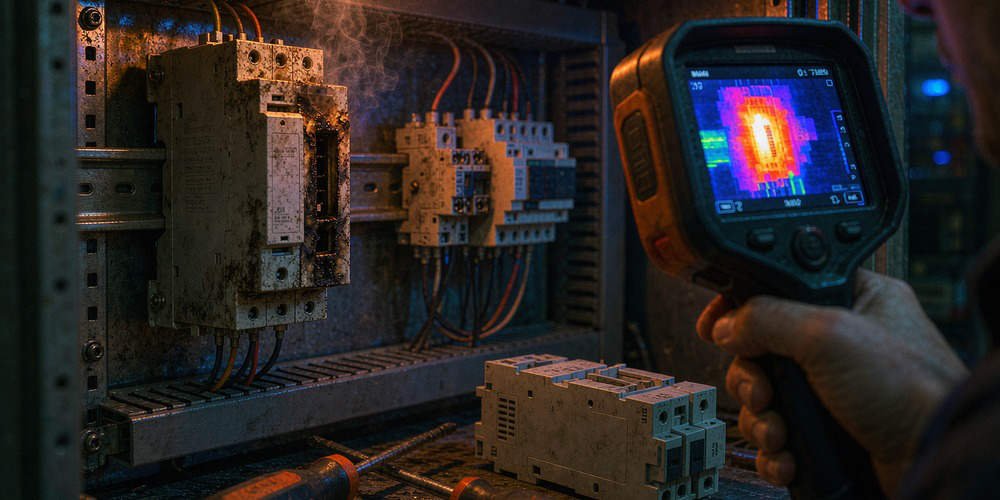

How to Diagnose a “Loop Current Fault” on the GE Mark VIe IS220PDOAH1A Module
In high-availability control systems, a single diagnostic alarm can prevent a catastrophic plant trip. The GE Mark VIe IS220PDOAH1A discrete output module acts as a critical field interface. It directly drives field components like solenoids, relays, and emergency trip valves. However, operators frequently encounter the critical “Loop Current Fault” alarm on this card. This technical guide outlines how to determine if the issue stems from an external solenoid short or an internal contact failure.

Troubleshooting GE IS220PDOAH1A Loop Current Fault Alarms
The Functional Architecture of Discrete Output Modules
The IS220PDOAH1A serves as a specialized Ethernet-ready I/O pack within the GE Speedtronic family. It communicates directly with the controller over the proprietary IONet protocol. This module monitors output conduction current, open-circuit states, and short-circuit faults in real-time. In addition, it provides galvanic isolation to shield sensitive logic circuits from harsh field environments. Gas turbine auxiliaries and petrochemical refinery networks rely heavily on this module for fail-safe operations.
Understanding the Loop Current Fault Detection Mechanism
The internal circuitry monitors the electrical current running through each individual output channel continuously. Under normal conditions, the current stabilizes at the rated holding specification of the connected solenoid. However, the module triggers a fault if it detects an abnormally high current. This alert also activates if current flows when the command status remains completely off. Therefore, the alarm warns maintenance teams before a complete failure disrupts factory automation loops.
Isolating External Solenoid Shorts via Load Testing
To isolate the root cause, engineers must first disconnect the external field wiring terminal block. If the alarm disappears immediately after removal, the problem exists in the field circuit. Aging solenoids from major brands often experience degraded internal insulation under extreme heat. Consequently, they draw excessive current that trips the IS220PDOAH1A diagnostic sensors. Technicians should verify coil resistance and check the electrical cable insulation utilizing a 500V insulation tester.
Identifying Internal MOSFET or Relay Device Breakdown
If the alarm persists after disconnecting the load, suspect an internal hardware failure. The IS220PDOAH1A utilizes solid-state MOSFET switches to control output channels. High inductive voltage spikes can puncture these components over time, causing a permanent short. In this state, the channel output LED remains illuminated even when the software command is off. As a result, the channel supplies continuous voltage, presenting an immediate safety risk to the DCS loop.
The Importance of Surge Suppression Design
Inductive feedback remains a primary killer of discrete output electronics in heavy industries. Unsuppressed DC solenoids release massive inductive energy surges into the module backplane upon de-energization. Therefore, engineers must install freewheeling diodes in parallel with DC field coils. Moreover, AC applications require properly sized RC snubber networks. Omitting these simple mitigation components accelerates component aging and leads to repeated current loop errors in industrial automation setups.
Field Maintenance Protocols and Power Quality Safeguards
- ✅ Isolate Load Terminals: Disconnect field wiring to determine if the fault is internal or external.
- ⚙️ Measure Coil Resistance: Verify that solenoid coil resistance matches standard manufacturer specifications.
- 🔧 Inspect Surge Diodes: Check the integrity of flyback diodes across all highly inductive field loads.
Strategic Sourcing Recommendations by Powergear X Automation Limited
At Powergear X Automation Limited, we emphasize that system upgrades require comprehensive infrastructure evaluation. When migrating from legacy Mark VI to modern Mark VIe platforms, simply swapping modules is insufficient. Engineers must re-evaluate grounding structures and 24VDC power supply ripple factors. High power supply ripple often destabilizes initialization protocols inside modern electronics. To browse our inventory of genuine Mark VIe hardware, please visit https://www.powergearx.com/ for verified industrial parts.
Application Solution: Turbine Lubrication Oil System
In a gas turbine power plant, the lubrication skid uses multiple directional valves controlled by the IS220PDOAH1A. During a recent routine inspection, an operator noticed an intermittent loop current alarm. Following standard MOC guidelines, engineers performed a swap-test and isolated a partially shorted solenoid coil on a backup pump valve. Replacing the valve coil immediately cleared the alarm, ensuring the trip circuit remained functional and preventing an unplanned blackout.
Frequently Asked Questions (FAQ)
1. Can a faulty module terminal board (TBDT) cause a current loop error?
Yes. Loose terminal screws or cracked copper traces on the terminal layer create intermittent connections. These physical hardware failures mimic electronic output issues in complex control panels.
2. What is the typical resistance value for a healthy 24VDC industrial solenoid?
Most standard 24VDC solenoids measure between 40 and 200 ohms. Any reading under 10 ohms indicates a critical internal coil short that requires immediate component replacement.
3. Is it safe to temporarily bypass this diagnostic alarm in the controller software?
Absolutely not. This alarm often indicates a stuck-on condition that prevents safety valves from closing during an emergency shutdown. Bypassing it compromises the integrity of plant safety interlocks.