
GE Mark VIe IS220PRTDH1A Drift: Shield Grounding Issue or Onboard ADC Aging?
Temperature monitoring is vital for the safety of heavy rotating machinery. In GE Mark VIe and EX2100 control systems, the IS220PRTDH1A RTD input module acquires critical thermal data. However, field engineers frequently encounter slow measurement drift or sudden, unstable signal jumps. This technical challenge often sparks a debate regarding the true root cause. Technicians must determine if the problem stems from external grounding loops or internal analog circuit degradation.

GE Mark VIe IS220PRTDH1A Module Drift vs Grounding Faults
Functional Role of the Module in Industrial Automation
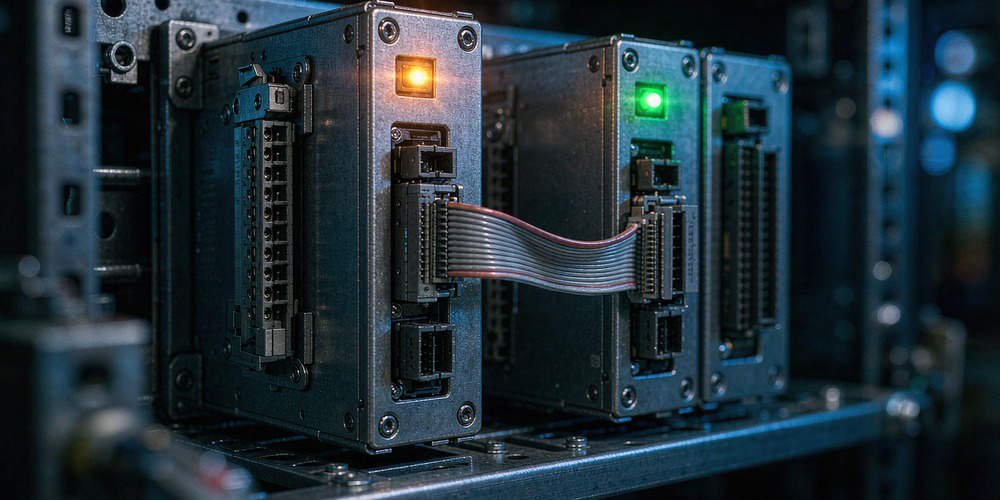
The IS220PRTDH1A serves as a high-density resistance temperature detector (RTD) interface pack. It connects field sensors to the deterministic IONet communication network. As a result, the hardware ensures fast data delivery to the central controller. This capability makes it perfect for turbine bearing and generator winding protection. Reliable thermal tracking prevents catastrophic equipment failures across large-scale power facilities.
The Sensitivity of Millivolt Signals to Electromagnetic Interference
RTD elements like Pt100 sensors produce very small resistance changes over variable temperature ranges. Consequently, these millivolt-level analog loops are highly vulnerable to external noise. Routing sensor cables parallel to high-power lines introduces severe electromagnetic interference (EMI). Moreover, terminating cable shields at both ends creates circulating ground loops. These loops distort the incoming data, which triggers false alarms in the DCS or turbine control layers.
Onboard A/D Converter Degradation Under Constant Thermal Stress
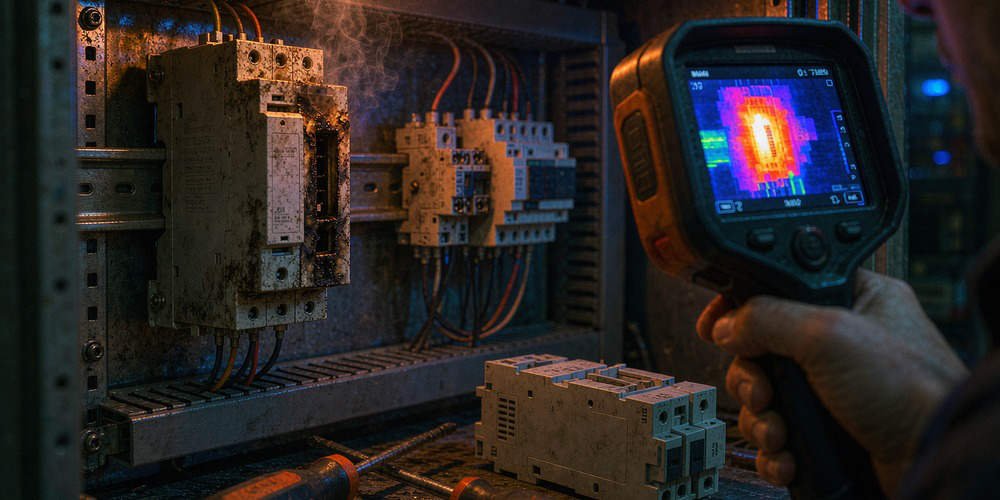
Internal hardware aging represents another distinct failure mode for control system components. Continuous exposure to cabinet temperatures above 55 degrees Celsius accelerates component drift. Over time, the input operational amplifiers and Analog-to-Digital Converters (ADCs) lose their precision. Unlike grounding noise, ADC aging typically creates a steady, single-channel measurement offset. This degradation persists even when you disconnect field wiring and apply a direct simulation source.
Comparing Grounding Interference and Hardware Component Aging
Distinguishing between external noise and internal hardware failure requires systematic testing. Grounding issues usually cause multiple channels to fluctuate simultaneously during motor starts. In contrast, hardware aging affects single channels independently without correlation to plant load. Maintenance teams can isolate the fault by swapping field wires to a neighboring channel slot. If the anomaly follows the physical wire, you must optimize your grounding network configuration.
Selection Guidelines and Backward Compatibility Risks
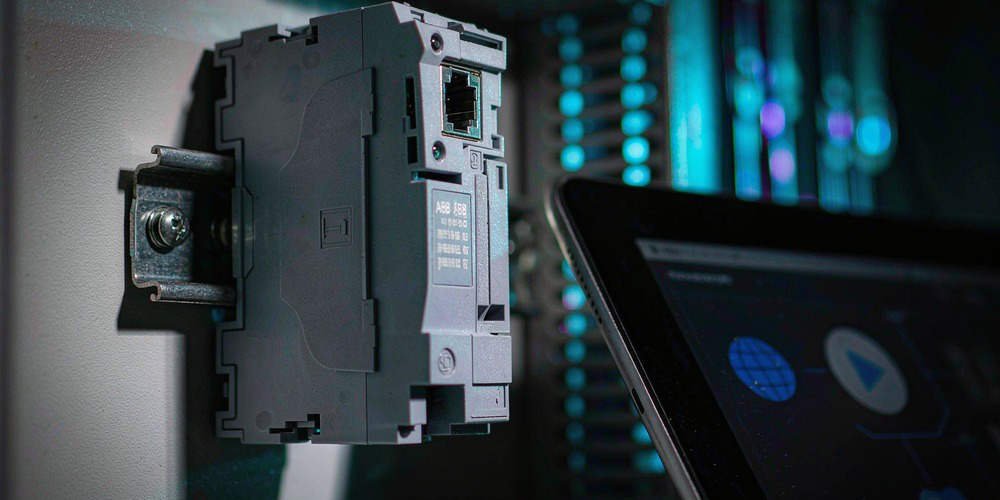
Choosing the correct replacement hardware requires careful review of original equipment software revisions. The IS220PRTDH1A relies on specific firmware profiles inside the ControlST engineering suite. Therefore, deploying new hardware packs onto legacy terminal boards can cause initialization faults. Engineers should cross-reference the GE compatibility matrix before executing brownfield upgrades. This step ensures seamless integration and prevents unexpected system communication drops.
Field Maintenance Best Practices for Engineering Teams
- ✅ Single-Point Shielding: Secure all RTD shield drain wires to a dedicated analog ground bus only.
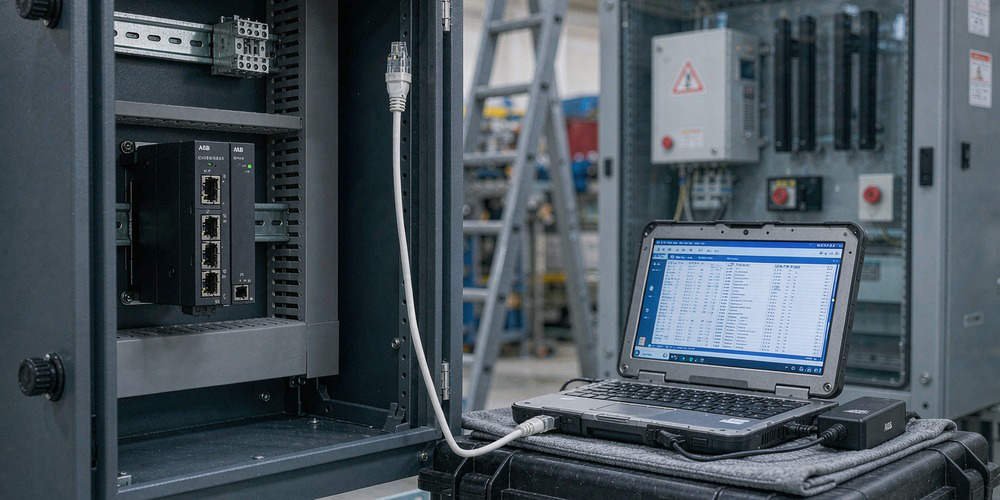
- ⚙️ Signal Simulation: Use a portable calibrator to inject stable resistance values directly at the terminal block.
- 🔧 Thermal Management: Monitor cabinet cooling fans and clean filters regularly to protect internal circuitry.
Strategic Insights from Powergear X Automation Limited
At Powergear X Automation Limited, we know that premature module replacement inflates operational maintenance budgets. Industry statistics show that roughly 70% of analog input faults relate directly to poor shield continuity. We highly recommend conducting comprehensive bus resistance audits before ordering new hardware. If you require verified replacement units or professional system migration support, look through our catalog at https://www.powergearx.com/.
Real-World Solutions and Application Scenarios
During a gas turbine overhaul, an operator noticed random temperature spikes on the main bearing sensor. The team initially suspected a faulty IS220PRTDH1A pack. However, an infrastructure inspection revealed that the cable tray grounding clamps had loosened over time. Re-tightening the clamps restored stable readings without requiring any hardware changes. This scenario proves that physical path integrity is vital for precise factory automation tracking.
Frequently Asked Questions (FAQ)
1. Can a single channel on the module fail while others remain accurate?
Yes. The front-end multiplexers or individual input resistors can degrade due to localized electrical overstress, leaving the remaining channels unaffected.
2. How do I test the internal ADC health if I suspect thermal drift?
Disconnect the field wiring completely and attach a high-precision fixed resistor to the input terminals. If the reading still drifts in a stable room environment, the card requires factory service.
3. Why do my temperature values fluctuate only when the turbine auxiliary pumps start?
This behavior indicates severe electromagnetic coupling. Your sensor cables are likely running too close to the pump power lines, or the pump chassis lacks proper bonding.