

Why Non-Safety Faults Cause Total System Shutdowns in PACSystems RX3i IC695CPE400 Control Systems
Modern process plants rely heavily on high-performance controllers for distributed control systems (DCS) and factory automation. The Emerson PACSystems RX3i IC695CPE400 standalone controller delivers impressive processing power for demanding applications. However, control engineers often ask why non-safety domain errors trigger complete plant shutdowns. Powergear X Automation presents this technical analysis to clarify the structural limits of multi-core processors, error propagation mechanisms, and functional safety isolation in modern PLCs.

Multi-Core Processors versus Physical Safety Isolation in Factory Automation
The IC695CPE400 controller features a quad-core AMD G-Series processor running a real-time VxWorks operating system. System integrators often assume that multi-core architectures provide true physical isolation between standard control and safety tasks. However, task separation on shared silicon does not equal certified functional safety isolation. A software-based safety task inside a standard PLC cannot achieve Safety Integrity Level (SIL) ratings. Therefore, critical safety functions must always run on dedicated, independently certified safety controllers.
Root Causes of Non-Safety Errors Triggering Global Controller Shutdowns
A non-safety fault can halt the entire PACSystems RX3i controller due to shared hardware resources. Heavy Ethernet traffic from SCADA or OPC UA clients can exhaust controller memory queues. Consequently, communication overload delays real-time control task execution and triggers the internal hardware watchdog timer. Furthermore, uncorrectable multi-bit ECC memory errors or bus faults force the CPU into a fatal STOP HALT state. As a result, the controller revokes all output scanning regardless of logic task prioritization.
Evaluating Output Behaviors and Final Element States During PLC Halt Events
When an IC695CPE400 controller enters a STOP state, field actuators behave according to hardware configurations and circuit designs. Industrial safety standards like IEC 61511 and IEC 60204-1 require predictable fail-safe states during control failure. However, holding last state on digital outputs can create severe process hazards during unexpected shutdowns. Engineers must design independent hardwired trip circuits to ensure critical valves close safely even when the main CPU halts.
Systematic Troubleshooting Steps for Controller Faults and Shutdown Events
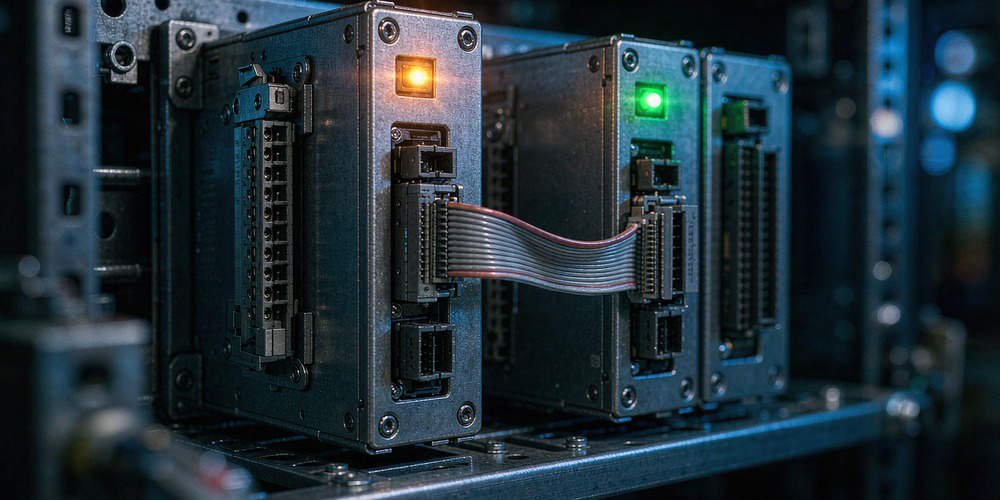
- Check Controller Status LEDs: Inspect the PWR, FLT, and OE indicators on the front panel to identify CPU fault states.
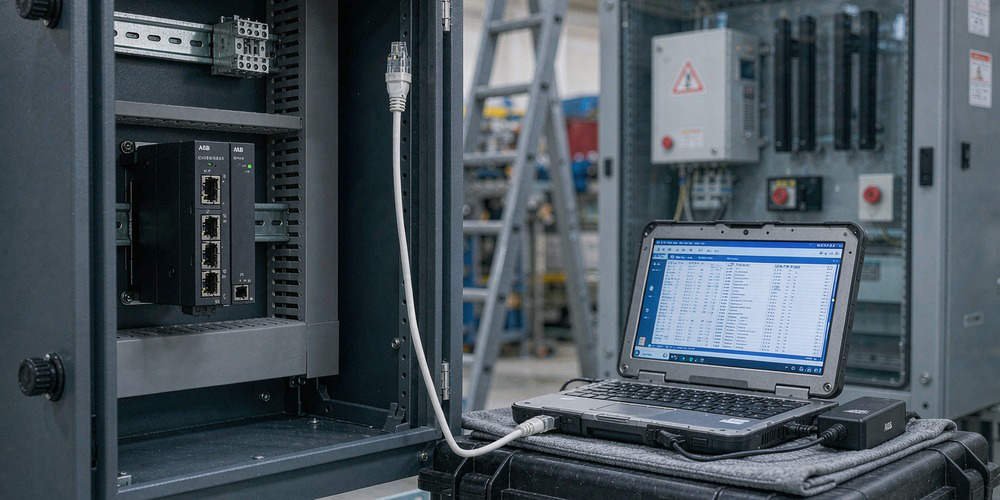
- Extract PLC Fault Tables: Connect PAC Machine Edition software to capture error logs and time stamps before clearing memory.
- Trace Error Propagation Paths: Compare network traffic spike times with CPU watchdog timeout events to isolate the root cause.
- Verify Safety Circuit Integrity: Test independent trip relays to ensure safety interlocks operate without CPU intervention.
Field Installation and Network Segmentation Best Practices
Isolating critical control networks from enterprise IT systems prevents external communication faults from affecting PLC performance. Engineers should deploy industrial firewalls and strict access control rules to limit unrestricted polling. Moreover, field technicians must avoid unthrottled Modbus TCP requests within fast ladder logic loops. Proper network architecture protects controller resources, minimizes processor load, and improves overall system stability across automated facilities.
B2B Hardware Procurement and Firmware Compatibility Guidelines
Replacing an IC695CPE400 controller requires thorough compatibility verification before scheduling plant maintenance. Procurement managers must verify hardware revision numbers, backplane firmware versions, and PAC Machine Edition software compatibility. Deploying unmatched firmware releases can lead to unexpected watchdog resets and diagnostic alarm losses. Therefore, engineering teams should conduct offline configuration tests before installing new hardware on live production lines.
Application Scenario: Chemical Reactor Emergency Shutdown Protection
A continuous chemical processing plant experienced repeated reactor shutdowns caused by high OPC UA polling rates on an IC695CPE400 controller. The excessive network traffic saturated processor buffers, causing a watchdog timeout that halted all digital output modules. Consequently, the main feed pumps stopped abruptly, disrupting plant production for several hours.
To resolve the issue, the engineering team separated the SCADA data collection network using an industrial managed switch with rate limiting. Furthermore, they transferred the emergency reactor trip logic to an independent SIL-certified safety relay system. This architecture prevented network traffic spikes from halting the CPU while ensuring absolute safety protection for critical reactor valves.
To source original Emerson PACSystems RX3i hardware and receive expert engineering support for your DCS infrastructure, visit Powergear X Automation to explore reliable control system solutions.
Frequently Asked Questions (FAQ)
Q1: Does the IC695CPE400 multi-core processor eliminate the need for a separate safety PLC?
No. Multi-core execution inside a standard controller does not satisfy IEC 61511 functional safety standards. Certified safety PLCs require physical redundant architectures, diagnostic coverage, and hardware fault tolerance that standard PLCs lack.
Q2: Should I immediately replace the IC695CPE400 CPU if the FLT LED turns red?
Not necessarily. A red FLT light indicates a fatal fault, which often stems from software logic errors, network buffer overflows, or firmware mismatches rather than permanent hardware failure. Always check the PLC Fault Table first.
Q3: How does network segmentation improve PACSystems RX3i controller reliability?
Network segmentation isolates real-time I/O traffic from high-volume enterprise data requests. Limiting non-critical network traffic prevents communication buffer exhaustion and reduces the risk of CPU watchdog timeouts.
Leave a Comment
Your email address will not be published. Required fields are marked *