
Honeywell C300 PROFIBUS Gateway Module Fault Resolution and Part Number Correction
In industrial automation systems, maintaining reliable communications between controllers and field instrumentation remains vital. Site engineers occasionally mistake the Honeywell CC-PPIX01 for a PROFIBUS Gateway. However, official documentation defines CC-PPIX01 as a Series C Pulse Input Module (PIM) for high-speed counter signals. Instead, Honeywell Series 8 PROFIBUS Gateway Modules (PGM), including models 8C-IP0102 and 8U-IP0102, manage PROFIBUS DP slave communications for C300 systems. Powergear X Automation presents this guide to resolve PGM bus faults without interrupting DCS operations.

Understanding the Core Value of PROFIBUS Gateway Modules in Process Control
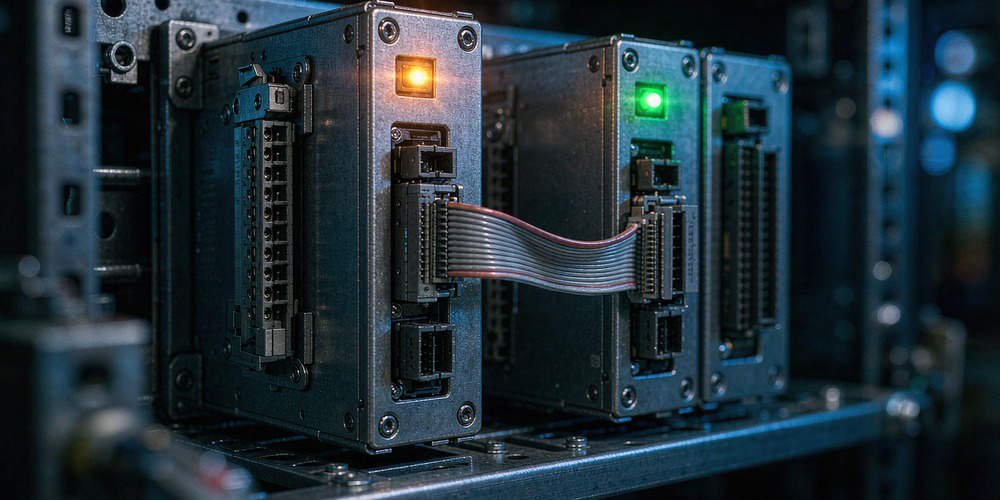
The PROFIBUS Gateway Module bridges C300 controllers and field instruments in continuous processing plants. A single gateway failure can cause multiple valves, drives, and smart transmitters to report bad signal status. Therefore, engineers must focus on maintaining process execution while restoring fieldbus communications. Redundant PGM configurations allow secondary modules to take over fieldbus traffic seamlessly. Consequently, plant operators can isolate hardware faults without shutting down the primary process controller.
Technical Insights: How PGM Interfaces Connect to Experion PKS C300
The PGM functions as a Fault Tolerant Ethernet (FTE) resident module rather than a standard I/O card. It communicates with the C300 controller via FTE while acting as a PROFIBUS DP Master. As a result, a PROFIBUS bus fault does not mean the C300 CPU has failed. The controller continues running control execution environments (CEE) normally during gateway disruptions. However, field device values enter fail-safe states, impacting overall loop integrity.
Analyzing Mass Slave Disconnections Across Fieldbus Networks
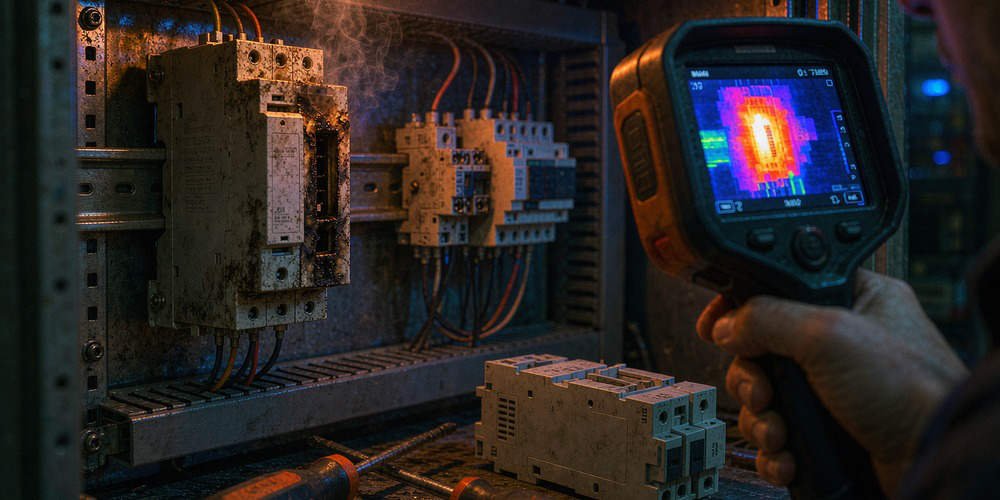
When a PGM displays a solid red Bus Fault LED, all downstream slaves disconnect simultaneously. Field technicians must avoid replacing individual transmitters during total network dropouts. Instead, this symptom points toward a systemic failure at the master level. Common root causes include master hardware faults, trunk cable damage, or incorrect bus termination. Additionally, network short circuits and power supply drops can cause total communication loss across control systems.
Managing Hot Swap Capabilities in Series 8 PGM Assemblies
Honeywell Series 8 PGM modules support Module Removal and Insertion Under Power (RIUP). Operating on 24 VDC power, these modules mount directly onto matching IOTA assemblies. However, engineers must distinguish between redundant and non-redundant installations before pulling modules. Secondary modules in a redundant pair allow online replacement during normal operation. Conversely, removing a non-redundant PGM immediately interrupts fieldbus communications, requiring offline maintenance procedures.
Step-by-Step Troubleshooting Procedure for Redundant PGM Failures
- Check Module Labels: Verify the physical part number to ensure you are troubleshooting an 8C-IP0102 PGM rather than a CC-PPIX01 PIM.
- Verify Redundancy Status: Open the PGM block in Control Builder to confirm the secondary module maintains synchronized standby status.
- Execute Manual Switchover: Trigger a manual switchover in Experion software to transfer PROFIBUS master duties to the secondary gateway.
- Confirm Slave Recovery: Monitor the PROFIBUS network diagnostics to verify that downstream field devices return to active communication states.
- Isolate and Replace Faulty Hardware: Perform diagnostic resets or physical hot-swaps on the offline primary module safely.
Field Installation Practices and Compliance Standards
Robust fieldbus wiring forms the foundation for reliable PROFIBUS DP operations. Technicians must install properly rated RS-485 cable with active termination at both ends of the segment. Moreover, control cabinets must follow strict EMC guidelines to shield signal lines from variable frequency drives. According to field statistics, over 70% of fieldbus communication errors stem from improper grounding or damaged cable shields. Adhering to international installation standards eliminates intermittent packet loss and bus faults.
B2B Procurement Considerations for Honeywell Legacy and Series 8 Parts
Procurement teams must carefully verify exact part numbers before ordering replacement modules for Honeywell systems. Ordering a CC-PPIX01 module when requiring a PROFIBUS gateway creates severe project delays. Moreover, purchasing teams should verify firmware compatibility between new PGM assemblies and existing C300 controllers. Working with trusted industrial supply partners ensures accurate part selection and authentic factory-certified hardware.
Application Scenario: Petrochemical Refinery Fieldbus Recovery
A major petrochemical refinery experienced a sudden red Bus Fault LED on a Series 8 PGM, disconnecting 28 PROFIBUS control valves. Rather than shutting down the unit, the engineering team verified that the secondary PGM was fully synchronized. They executed a manual switchover in Experion Control Builder, transferring master functions in under 100 milliseconds. All 28 valves resumed normal operations immediately, preventing an un-planned unit trip and saving thousands in potential downtime costs.
To source authentic Honeywell automation components and access expert technical support for your DCS infrastructure, visit Powergear X Automation today.
Frequently Asked Questions (FAQ)
Q1: Can I replace a Honeywell CC-PPIX01 module with an 8C-IP0102 PGM?
No. The CC-PPIX01 is a Series C Pulse Input Module designed for pulse counting, whereas the 8C-IP0102 is a Series 8 PROFIBUS Gateway Module. They serve completely different functional roles in C300 systems.
Q2: Does resetting a non-redundant PGM interrupt the C300 controller execution?
No. The C300 controller CPU remains running in RUN mode. However, fieldbus data communications will stop temporarily, causing connected PROFIBUS I/O signals to enter fail-safe states.
Q3: Will a PGM lose its network configuration parameters after a power cycle?
No. The PGM retains its Slave configurations, baud rates, and memory offsets in non-volatile memory, allowing automatic re-initialization upon restoration of 24 VDC power.