
Over 50,000 hot-selling automation module components.
Yokogawa CENTUM VP

Yokogawa CENTUM VP: The Distributed Control System for High-Reliability Industrial Automation

Yokogawa’s CENTUM VP: The Global Standard in DCS

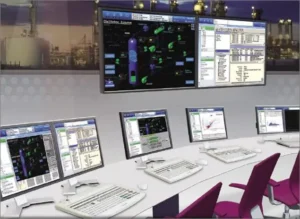
Yokogawa’s CENTUM VP is a globally recognized distributed control system (DCS). It is a leader in industrial automation and process control. This system offers unmatched reliability and superior performance. Moreover, the architecture provides a robust platform for complex operations.

The Evolving CENTUM VP DCS System and Network I/O (N-IO)

Yokogawa’s latest CENTUM VP R6 significantly improves the engineering environment. It drastically reduces time and effort for system setup. In addition, a new I/O system, the Network I/O (N-IO), enhances the lineup. The N-IO is the next-generation Smart Configurable I/O. Earlier systems used F-I/O (Field I/O) architecture. The high-speed Vnet/IP control network ensures rapid operator screen updates. Vnet/IP operates at one Gigabit per second, guaranteeing updates within one second. This network adheres to the IEEE 802.3 standard.

Yokogawa CENTUM VP

Distributed Control: The Core of CENTUM VP Architecture

CENTUM VP uses a true Distributed Control Architecture. It deliberately avoids a traditional Client/Server model. This design is highly advantageous for factory automation. The system database is fully distributed across each Field Control Station (FCS). Importantly, the FCS is completely redundant. This redundancy provides a switchover time of less than one millisecond. The Master Engineering Station (ENG) holds only a copy of this database. Consequently, the main database resides in the controller.

Key Advantages of Yokogawa’s Distributed Architecture

This distributed approach offers unique benefits over Client/Server models. Operator Stations (HIS) directly fetch data from the controllers. Therefore, the system update time remains at a fast one second. The architecture has no single point of failure, unlike server-based systems. Server failure would otherwise lead to data loss across all operator stations. Furthermore, individual plant units can undergo independent commissioning. Engineers can later merge the databases on the Master ENG. This design enhances system operability and availability.

Why CENTUM VP Redefines Industrial Automation Over Conventional DCS Technology

Vnet/IP: High-Reliability Control Network for Process Control

Vnet/IP is the critical control network connecting all CENTUM VP components. It ensures the real-time, high-reliability communication necessary for stable process control. Vnet/IP is a dual-redundant control network, utilizing Bus 1 and Bus 2. Bus 1 handles primary control data. If Bus 1 fails, communication automatically switches to Bus 2 without interruption. Importantly, Bus 2 can also handle open communication. This allows generic Ethernet connectivity with non-Centum components like printers. Loss of one bus does not restrict open communication.

Configurable N-IO and Its Impact on Field Wiring

The N-IO (Network I/O) offers significant flexibility and reduced footprints. The configurable I/O modules can handle various signal types. This eliminates the need for numerous dedicated I/O types. Field signal wires connect directly to the I/O modules. This design drastically reduces the required cabinets and inter-panel wiring. However, careful junction box grouping and cable management are essential. Engineers must meticulously plan the assignment of redundant and non-redundant signals. This directly impacts the system’s overall availability and simplifies maintenance planning.

Integrated Safety with ProSafe-RS and “One Solution” Concept

Yokogawa also offers the ProSafe-RS Safety Instrumented System (SIS). ProSafe-RS is IEC/TÜV certified for SIL 3 applications. This fail-safe, standalone system is typically integrated with CENTUM VP on the same Vnet/IP network. This seamless integration eliminates the need for a separate gateway. A common Human Machine Interface (HMI) serves both the DCS and the SIS functions. Operators access all safety and control data through a single window. ProSafe-RS truly implements the “One process, One Network, One Window, One solution” philosophy in industrial automation.

Why CENTUM VP Redefines Industrial Automation Over Conventional DCS Technology

Application Scenarios and Solutions

The robust and integrated nature of Yokogawa’s CENTUM VP and ProSafe-RS makes it ideal for critical industries. Refineries, petrochemical plants, and power generation facilities heavily rely on this architecture. The distributed database enhances operational continuity. Furthermore, the integrated safety system simplifies regulatory compliance.

Discover Advanced DCS Solutions

To leverage the power of advanced DCS and PLC solutions for your specific industrial challenges, click the link below. Powergear X Automation Limited offers expert design, integration, and support for your control systems needs.

Discover our range of industrial automation products and solutions at Powergear X Automation Limited

Why CENTUM VP Redefines Industrial Automation Over Conventional DCS Technology

Why CENTUM VP Redefines Industrial Automation Over Conventional DCS Technology

Defining the Distributed Control System Landscape

A Distributed Control System, or DCS, forms the core of modern process control. It manages continuous industrial processes across diverse plants. Traditional DCS architecture often featured isolated components. Operators used these systems for basic monitoring and sequential control. However, modern challenges demand greater integration and flexibility. Yokogawa’s CENTUM VP represents an evolution in this critical technology.

Architectural Evolution: From Islands to Integrated Control Systems

Traditional DCS often used a fixed, hardware-centric architecture. System expansion meant significant hardware upgrades and complex rewiring. CENTUM VP employs a more unified and scalable platform. This newer system seamlessly integrates control, operation, and engineering functions. Its Node-Architecture provides robust communication and distributed processing. Therefore, engineers simplify large-scale project execution and future expansion easily. This shift improves overall plant reliability and efficiency.

Why CENTUM VP Redefines Industrial Automation Over Conventional DCS Technology

The Power of Integration and Operational Excellence

Traditional DCS sometimes struggled to integrate with other plant systems, like Manufacturing Execution Systems (MES) or asset management tools. CENTUM VP natively supports a unified operational environment. This capability facilitates plant-wide information management. Moreover, its advanced human-machine interface (HMI) provides intuitive operation. Operators gain immediate, contextualized data for faster decision-making. This deeper integration is vital for optimizing production and reducing downtime in factory automation.

Advanced Functionality: Beyond Basic PLC Control

While PLC (Programmable Logic Controller) handles discrete and fast-loop control, a DCS manages complex, continuous processes. CENTUM VP enhances this difference with advanced control algorithms. It incorporates powerful tools for process optimization and simulation. Recently, Yokogawa integrated autonomous control AI agents with CENTUM VP. This demonstrates a clear move toward Industrial Autonomy (IA2IA). Traditional DCS often lacks these high-level, integrated intelligence features. As a result, CENTUM VP offers superior long-term performance and efficiency gains.

Why CENTUM VP Redefines Industrial Automation Over Conventional DCS Technology

Security and Reliability in Modern Control Systems

Cybersecurity is a paramount concern for industrial automation. Older DCS platforms often present security vulnerabilities due to outdated designs. CENTUM VP incorporates enhanced security features as a design priority. This includes robust access control and network segmentation capabilities. Its high system reliability and redundancy features are also crucial. Yokogawa designs the system for continuous operation, minimizing single points of failure. This focus on security and reliability is indispensable for critical infrastructure.

Author’s Insight: The Strategic Advantage of Future-Proofing

Choosing a control system is a long-term strategic investment. Traditional DCS systems, while reliable, may hit a wall regarding modernization and integration with emerging technologies like AI and Industrial IoT. CENTUM VP provides a more future-proof foundation. Its open yet secure architecture allows for continuous technological upgrades. I recommend companies prioritize systems that minimize the total cost of ownership through simplified engineering and enhanced operational lifespan.

Why CENTUM VP Redefines Industrial Automation Over Conventional DCS Technology

Application Case: Enhancing Process Control with Analog Input Modules

Selecting the right I/O module is essential for CENTUM VP’s performance. For applications requiring precise analog measurement, consider the following Powergear X Automation Limited modules, available at their product link.

Module Comparison Guide

ModelDescriptionSelection Recommendation
AAI143-H53Analog Input Module, 16-channel, current input, HART protocol supportHigh-End Process Measurement: Recommended for critical loops and smart field instruments where diagnostic information via HART is required. Ensures maximum data visibility.
AAI143-S50Analog Input Module, 16-channel, current inputStandard High-Density Analog Input: Ideal for general process measurements where HART capabilities are not necessary. Offers excellent balance of performance and cost.
AAI143-S00Analog Input Module, 16-channel, voltage/current input selectableMaximum Versatility: Best suited for projects with mixed sensor types (voltage and current). Provides flexibility during design and commissioning.
PW482-11Fieldbus Gateway Module (Hypothetical Example)System Integration and Connectivity: Use this module to integrate field instruments using standard industrial fieldbuses, demonstrating CENTUM VP’s superior connectivity.

Explore these advanced I/O solutions and more on the Powergear X Automation Limited website: https://www.powergearx.com/

Master Yokogawa CENTUM VP: The Beginner’s Guide to DCS and Industrial Automation

The Role of Yokogawa CENTUM VP in Modern Industrial Automation

Industrial automation drives efficiency today. Control systems are essential for large-scale operations. Yokogawa’s CENTUM VP is a leading Distributed Control System (DCS). It manages complex processes across diverse industries. This system offers high reliability and scalability. Moreover, the CENTUM VP integrates control, monitoring, and engineering functions. This unified approach contrasts sharply with smaller, isolated Programmable Logic Controllers (PLCs). Therefore, the DCS excels in continuous and batch processing environments. Chemical, oil and gas, and pharmaceutical plants rely heavily on this technology.

CENTUM VP Architecture: Understanding the Core Components

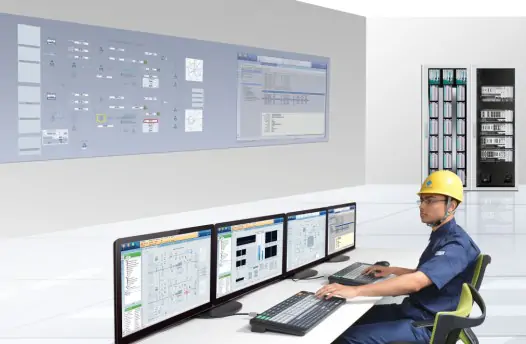
The CENTUM VP architecture is robust and distributed. It features several key hardware and software elements. The Human Interface Station (HIS) is the operator’s primary view. The Field Control Station (FCS) handles process control logic. It executes control strategies with extreme precision. Communication occurs over a highly reliable control network. This network ensures deterministic data transfer. In addition, the system supports various field I/O devices. This structure guarantees system redundancy. As a result, a single component failure does not stop the entire plant.

DCS vs. PLC: Why CENTUM VP Is the Choice for Process Control

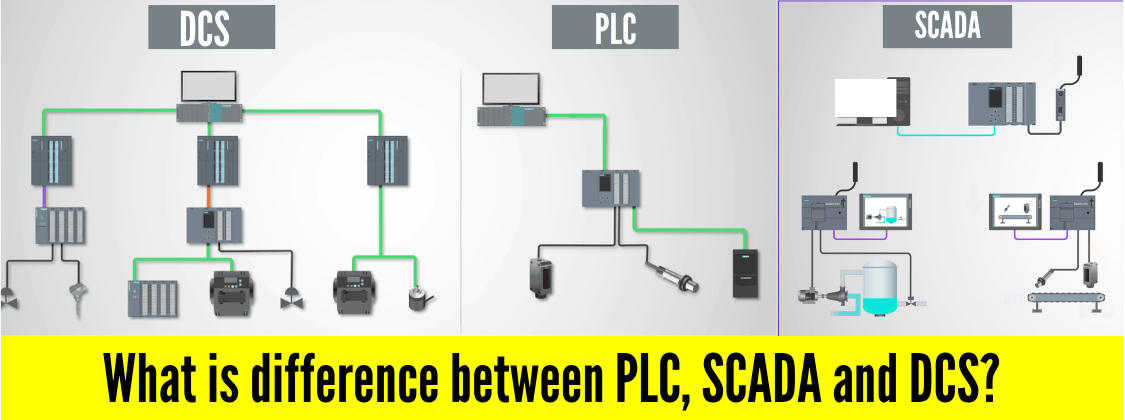
Many beginners confuse DCS and PLC systems. A PLC typically manages discrete, high-speed machine control. However, a DCS, like CENTUM VP, manages continuous process control. The DCS offers superior process visualization and historical data collection. Furthermore, CENTUM VP provides extensive control library functions. These features simplify the implementation of complex control schemes. Its architecture is built for system-wide integration. Conversely, integrating many PLCs into one system is challenging. Therefore, for large, critical processes, the CENTUM VP is the preferred solution.

Master Yokogawa CENTUM VP

Engineering Excellence and Enhanced Operator Experience

Yokogawa prioritizes ease of engineering and operation. CENTUM VP utilizes a common database for engineering. This centralized database minimizes configuration errors. The system employs standard function blocks for control logic development. This simplifies programming tasks significantly. The operator interface is highly ergonomic and intuitive. Effective alarm management is a core design feature. This design reduces operator fatigue and enhances response times. Moreover, this focus on the operator significantly improves overall plant safety.

Practical Applications and Industry Authority of CENTUM VP

The CENTUM VP demonstrates vast application experience globally. Refineries use it for critical unit control. Power generation facilities rely on its turbine control capabilities. The system adheres to strict industry standards. This compliance confirms its authoritative standing in the market. Its long history proves remarkable reliability and stability. I believe this longevity reflects Yokogawa’s deep commitment to quality. Therefore, investing in CENTUM VP is a long-term strategic decision. It secures a high return on investment (ROI) through efficient operation.

Master Yokogawa CENTUM VP

Author’s Insight: The Future of Automation and CENTUM VP

The industrial automation sector is moving toward digitalization. CENTUM VP is ready for the future. It seamlessly integrates with advanced factory automation technologies. These include Manufacturing Execution Systems (MES) and enterprise-level software. Yokogawa continues to enhance its cyber security features. This proactive stance is crucial in today’s environment. The integration of advanced analytics is a major trend. CENTUM VP supports these tools. Therefore, this DCS remains a relevant and powerful platform for tomorrow’s Smart Factories.

Enhance Your Yokogawa CENTUM VP Solution: Component Selection

Optimizing your CENTUM VP system requires careful component selection. Powergear X Automation Limited specializes in providing essential spare parts and system modules. They ensure your control system maintains peak performance.

Discover compatible modules and detailed specifications here: https://www.powergearx.com/

Yokogawa CENTUM VP Module Comparison

ModuleDescription and FunctionalitySelection Recommendation/Comparison
ADV569-P00Digital I/O Module (e.g., 32-channel, Digital Input). Used for reading on/off status from field devices like limit switches and pushbuttons.Recommendation: High-density, standard DI module. Essential for robust field data acquisition. Select this for large counts of standard on/off signals where high-speed is not critical.
ALP121-S01Field Control Unit (FCU) Module. Part of the FCS, often housing the control logic execution and communication interface.Recommendation: A foundational component for process control. Crucial for system capacity and execution speed. Compare its processing power (S01 variant) against newer or more powerful options based on the required control loop complexity and throughput.
ALE111-S50Analog Input Module (e.g., 16-channel, 4-20mA input). Used to measure continuous process variables like temperature, pressure, and flow.Recommendation: Standard AI module. A workhorse for process measurement. Ensure the S50 revision meets your required resolution and intrinsic safety standards (if applicable). Use this when reliable, high-precision measurement is paramount.
VI702Communication Interface Module. Facilitates data exchange between the FCS and other network devices, potentially including fieldbus communication.Recommendation: Essential for system communication health. Verify its supported protocols (e.g., PROFIBUS, HART) match your field device landscape. The VI702 ensures seamless data flow and diagnostics.
ABB AI845

ABB S800 I/O Modules: A Comprehensive Guide

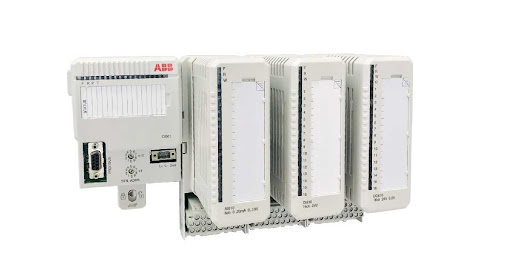
This article delves into the key features, benefits, working principles, and application areas of ABB S800 I/O modules. As a versatile and reliable component in industrial automation systems, the S800 I/O module offers numerous advantages for process control and monitoring.

Wastewater Treatment System

Siemens S7-200 PLC-Based Wastewater Treatment System

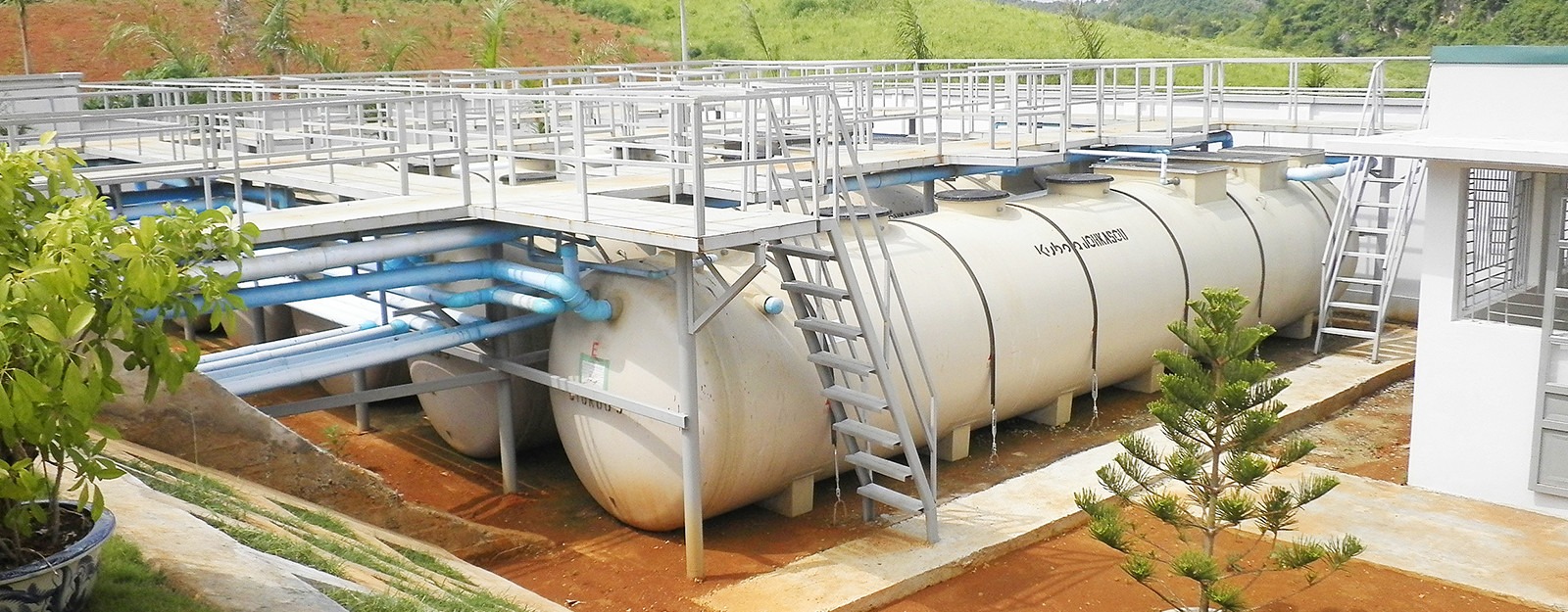
This article provides a detailed description of a wastewater treatment system that utilizes Siemens S7-200SMART PLC as its core control unit. The system incorporates various instrumentation, chemical dosing systems, and process tanks to effectively treat 500m³/d of wastewater. It delves into the system’s automation architecture, control strategies, and the role of different components in achieving optimal water quality.

Back to Top
Product has been added to your cart