GE IS200JPDHG1A Troubleshooting: False Total Failure Alarms
Can Monitoring Circuit Drift on the GE IS200JPDHG1A Cause False System Trips?
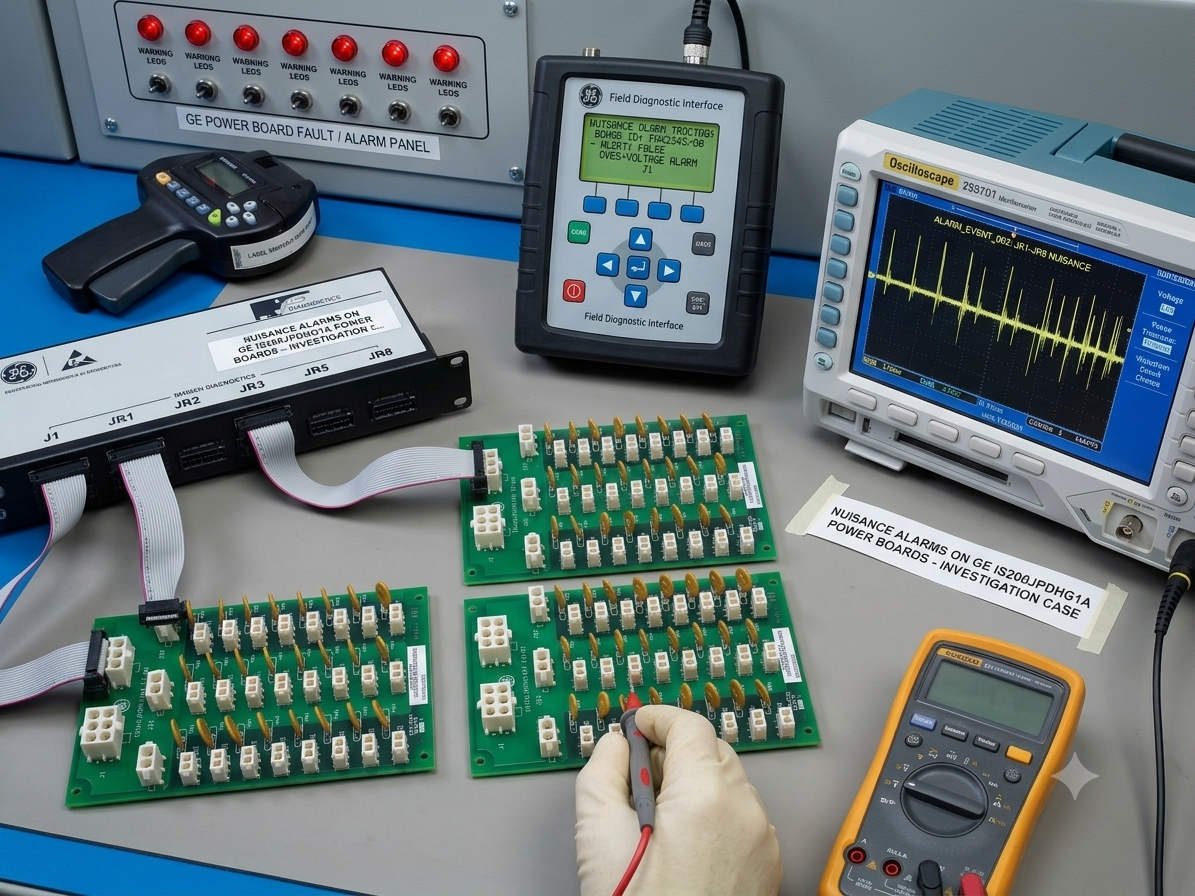
In high-availability industrial automation, faulty diagnostic feedback can prove as damaging as actual physical hardware failures. The GE IS200JPDHG1A Power Distribution Board serves as the central power backbone within EX2100 excitation systems. Beyond distributing vital DC voltage rails, this board actively monitors subsystem health metrics. However, an isolated internal failure within its internal sensing loop can trick the main controller. Consequently, the DCS may generate an unwarranted “Power System Total Failure” critical alarm message.
The Functional Architecture of Power Supervision Circuitry
The IS200JPDHG1A integrates an intricate network of analog voltage dividers, operational amplifiers, and status signal comparators. These components constantly read feedback parameters across multiple incoming power feeds. After processing, the hardware forwards real-time status packets straight to the core turbine control systems. This architecture ensures that the controller can instantly identify sagging power lines. Therefore, the processing brain can protect downstream electronics before an absolute brownout disrupts plant operations.
How Internal Board Anomalies Generate Ghost Alarms
Component degradation can mimic a severe electrical blackout within the power distribution array. Over time, analog sensing channels can experience thermal resistance drift or comparator latch-up malfunctions. When this occurs, the diagnostic circuitry reports low or absent voltage despite a perfectly healthy DC bus. If the system lacks redundant cross-checking paths, a single sensor failure may trigger an immediate emergency trip. This false alarm unnecessarily isolates the entire generator excitation unit from the power grid.
Industry research indicates that up to 30% of power supply diagnostic alarms stem from feedback path errors. Pin oxidation on heavy backplane connectors can similarly attenuate the weak low-voltage telemetry signals. Moreover, old firmware configurations may misinterpret a single channel fault as an absolute power failure. Engineers must cross-reference actual physical bus bars before approving extensive control system module swaps.
Noise Immunity Vulnerabilities in Heavy Factory Automation
Turbine rooms host heavy electromagnetic fields generated by excitation transformers and massive variable frequency drives. The low-voltage supervisory lines on the IS200JPDHG1A remain susceptible to high-frequency induced noise. If cabinet grounding terminals loosen, common-mode noise can override the true analog feedback measurements. This electrical interference distorts waveform edges, leading to intermittent channel mismatch errors. Maintaining excellent shield continuity remains mandatory to protect signal tracking accuracy.
Evaluating Backward Compatibility and Selection Differences
Replacing an older power supervisor requires careful checking of part number suffix variations. While the base IS200JPDHG1A model handles standard distribution tasks, physical revision layers alter connector arrangements. Certain sub-versions feature specialized trace impedances designed to handle modern high-speed noise filtering tasks. Attempting to install an unverified board revision can introduce unintended parameter reading offsets. To avoid project delays, procure components from certified distributors like Powergear X Automation Limited.
Step-by-Step Diagnostic Verification Protocols
- ✅ Physical Bus Measurement: Measure the true incoming DC control voltage directly using a calibrated digital multimeter.
- ⚙️ Connector Inspection: Unplug and re-seat all communication cables while checking for immediate thermal pin discoloration.
- 🔧 Chronological Log Analysis: Examine the ToolboxST event sequence to trace if channel faults preceded the total blackout alarm.
Strategic Maintenance Perspectives from Powergear X Automation Limited
At Powergear X Automation Limited, we emphasize that automatic hardware swapping often increases overall troubleshooting costs. When a total power failure indicator arises, blindly replacing the distribution block skips root-cause verification. Many issues resolve after cleaning oxidized edge contacts with manufacturer-approved chemical solvents. We suggest tracking sensing calibration trends during standard annual system turnarounds. To explore our comprehensive database of genuine GE components, visit our store at https://www.powergearx.com/.
Real-World Application Scenarios
During a baseline commissioning phase at a combined-cycle power station, operators reported a sudden, unexplained total power alarm. Physical tests confirmed that the main 125VDC auxiliary battery supply remained fully energized. Further analysis traced the error to an open-circuit feedback trace on the distribution board. Replacing the damaged module restored correct telemetry reporting, allowing the plant to achieve full production output without further delay.
Frequently Asked Questions (FAQ)
1. Why does a minor analog drift escalate to a complete total power system shutdown message?
If the controller code uses an unweighted “AND” condition across sensing channels, a single dead input simulates a total voltage loss. Updating your I/O block parameters to utilize voting logic solves this vulnerability.
2. Can I test the internal comparator circuitry of this board while the system runs online?
Online manual circuit tracing is highly discouraged due to short-circuit risks near the main power buses. Confine deep component-level validation to a static test bench during standard outage schedules.
3. How do I differentiate between a real input supply failure and a board-level telemetry fault?
A genuine supply failure simultaneously alters parallel monitoring systems, such as your main upstream switchgear breakers. If only the specific board reports zero volts while other metrics remain unchanged, suspect a telemetry issue.