Over 50,000 hot-selling automation module components.
The Best 6 PLC Brands for Industrial Automation in 2025

The Best 6 PLC Brands for Industrial Automation in 2025: Siemens, Allen-Bradley, and More

Choosing the Right PLC for Modern Industrial Automation

Picking the best PLC for your industrial automation project is vital. The market offers diverse options in 2025. Manufacturers now prioritize edge computing and better connectivity. Your choice impacts system performance and future scalability. Consider factors like cost, reliability, and programming ease. Moreover, project scope and industry sector are key drivers. This guide helps you navigate the top brands. We focus on features and application suitability.

The Best 6 PLC Brands for Industrial Automation in 2025

Top PLC Brands for Factory Automation and Their Strengths

Six major brands dominate the factory automation landscape. Each offers unique advantages for various control systems. Siemens provides high performance and excellent scalability. Therefore, it suits large industrial plants well. Allen-Bradley (Rockwell Automation) is known for premium precision and deep integration. This makes it ideal for complex, high-end applications. Mitsubishi Electric offers affordable, modular designs. As a result, it works for small-to-medium enterprises. Schneider Electric focuses on energy efficiency and is IoT-ready. This brand fits versatile industrial needs. ABB builds robust systems for heavy industries. Choose ABB for mining, oil, and gas sectors. Finally, Omron delivers compact PLCs, excellent for robotics. Understanding these strengths simplifies your selection process.

PLC Brand Comparison

BrandKey FeaturesCost RangeIdeal For
SiemensHigh performance, scalability$500 – $2,000+Large industrial plants
Allen-BradleyPremium precision, integration$1,000 – $5,000+Complex, high-end applications
Mitsubishi ElectricAffordable, modular designs$300 – $1,500Small-to-medium enterprises
Schneider ElectricEnergy-efficient, IoT-ready$400 – $2,000+Versatile industrial needs
ABBRobust for heavy industries$800 – $3,000+Mining, oil & gas sectors
OmronCompact, robotics-ready$200 – $1,000Small-scale automation

Advanced Features in 2025 Control Systems: Edge Computing and AI

Modern control systems now embrace new technology trends. Edge computing integration is rapidly increasing. It allows faster data processing at the machine level. This reduces latency and boosts response times. AI integration is another critical factor. It enables smart maintenance and better quality control. For instance, AI cuts downtime by up to 40%. It also improves process quality significantly. Additionally, robust cybersecurity measures are essential. New PLCs must comply with standards like IEC 62443. This protects systems from increasing cyber threats.

The Best 6 PLC Brands for Industrial Automation in 2025

Comparing Top-Tier PLCs: Siemens S7-1500 vs. Allen-Bradley ControlLogix

The Siemens S7-1500 and Allen-Bradley ControlLogix are industry leaders. They target large factories and advanced projects. The S7-1500 boasts faster processing and superior memory. It supports modern protocols like OPC UA and MQTT. Therefore, it is ideal for Industry 4.0 applications. ControlLogix offers solid performance in discrete manufacturing. It integrates seamlessly within the Rockwell ecosystem. Its strength lies in North American factory automation. However, Siemens provides stronger built-in cybersecurity features. The choice often depends on geographic location and required speed.

Feature Comparison

FeatureAllen Bradley ControlLogixSiemens S7-1500
CPU PerformanceUp to 0.1ms per 1000 Boolean instructionsUp to 0.04ms per 1000 instructions
Programming UsabilityStudio 5000 environmentUnified, user-friendly TIA Portal
CybersecurityBasic cybersecurity featuresSecure boot, role-based access

Value and Total Cost of Ownership in PLC Selection

The purchase price is only part of the cost. You must also consider the total cost of ownership (TCO). This includes direct costs like maintenance and training. Indirect costs, like the learning curve, are also important. Furthermore, hidden costs, such as vendor lock-in, can be significant. Mitsubishi Electric and Schneider Electric often offer excellent value. Their modular designs allow phased upgrades. This prevents expensive system overhauls. A smarter initial investment focuses on long-term value. Always select a PLC that aligns with your operational goals.

Author’s Insight: Prioritizing Future-Proofing and Scalability

My professional experience shows a clear trend toward flexibility. Software-defined PLCs are emerging as a major force. They allow control logic changes without new hardware. This provides immense long-term adaptability. Always choose a system with inherent scalability. It must accommodate future growth and technological shifts. This future-proofing approach maximizes your investment. For demanding environments, the ABB AC500 remains highly reliable. For smaller, fast-paced automation, the Omron NX1 shines. Therefore, match the brand’s core expertise to your specific needs.

The Best 6 PLC Brands for Industrial Automation in 2025

Enhance Your Industrial Automation Strategy

Selecting the right PLC is crucial for operational success. Review the features, costs, and application suitability carefully. A well-chosen control system improves efficiency and reduces TCO.

Ready to implement a best-in-class industrial automation solution for your facility? Explore proven, high-quality DCS and PLC products.

Discover how Powergear X Automation Limited can optimize your systems today.

Click Here to Explore Powergear X Automation Limited Products

Top PLC Brands Driving Industrial Automation Smart Factory Race

Choosing the Best PLC: A Guide to Industrial Automation Control Systems

The Evolving Role of PLCs in Industry 4.0

Industrial automation systems rely heavily on PLCs (Programmable Logic Controllers). These controllers are fundamental to modern production. However, smart technologies are rapidly changing manufacturing criteria. Today’s PLCs offer real-time data analytics, monitoring, and control. They enable predictive maintenance, in-built alarms, and trend analysis. Furthermore, they ensure smooth machine communication. They achieve this by integrating with cloud, AI systems, and IoT devices. Therefore, choosing the right PLC brand is crucial for a successful smart factory journey.

Top PLC Brands Driving Industrial Automation Smart Factory Race

Siemens: The Global Leader in Digital Twin Technology

Siemens stands out as a top PLC brand worldwide. They dominate markets in Europe and the Middle East. Their Simatic S7 series is widely used across various sectors. This is due to its reliable performance and compatibility. It supports PROFINET and OPC UA protocols. Siemens also leads in edge computing and digital twin technologies. Consequently, they are a primary choice for many smart factories. Their focus on comprehensive digital solutions sets a high industry standard.

Allen-Bradley (Rockwell Automation): A North American Powerhouse

Allen-Bradley, a division of Rockwell Automation, is immensely popular. This brand leads the North American industrial automation market. Their ControlLogix and CompactLogix series are well-known. They excel in the automotive and food processing sectors. Rockwell focuses on scalable control systems and digital transformation. They are a major player in Industry 4.0 evolution. Most American facilities utilize this brand in their factory automation. This strong regional preference reflects its proven dependability.

Top PLC Brands Driving Industrial Automation Smart Factory Race

Mitsubishi Electric: Speed and Compactness in Asia-Pacific

Mitsubishi Electric is a distinguished PLC manufacturer. They particularly thrive in high-speed electronic systems. The MELSEC series is notable for its fast processing speed. It also offers reliable connections and a small footprint. Mitsubishi supports protocols like OPC UA and CC-Link IE Field. This ensures great interoperability in Industry 4.0. Their commitment to energy efficiency makes them a formidable competitor. They dominate the Asia-Pacific region’s factory automation.

Schneider Electric: Sustainability and Open Protocols

Schneider Electric’s Modicon PLCs offer impressive technical features. Their adaptability suits various Industry 4.0 systems. Schneider champions digital transformation and sustainability. Their current lineup features cloud integration and remote control. These PLCs support open protocols like Modbus and Ethernet/IP. This flexibility allows their use in many industrial settings. They are a top choice for integrating water and pumping stations. Therefore, environmentally conscious businesses often prefer Schneider’s solutions.

Omron: Integrating AI for Predictive Control

Omron is a progressive Japanese PLC brand. They are known for precision control and continuous innovation. Their NX and CJ series are common in robotics and packaging. Omron integrates AI and Deep Learning into its systems. This integration delivers predictive analytics and adaptive control. They emphasize smart sensing and HMI communication. Omron is a key participant in the Japanese automotive industry’s transformation. This technical foresight drives their market position.

Top PLC Brands Driving Industrial Automation Smart Factory Race

The Global PLC Landscape: Key Industry 4.0 Competitors

Other strong contenders shape the market. ABB focuses on large-scale applications with its AC500/AC800 series. ABB integrates PLCs with its Ability Platform for cloud analytics. Panasonic’s FP series is known for its affordability and compact size. This makes it a great choice for manufacturers on a budget. Delta Electronics from Taiwan focuses on intelligent, energy-efficient control. They are quickly expanding in various sectors. B&R Automation, now part of ABB, integrates PLCs with motion control. Bosch Rexroth emphasizes high-performance control and open architecture. Each brand brings unique strengths to the smart factory ecosystem.

Future-Proofing Your Factory Automation Investment

Successful PLC brands share common, vital characteristics. They feature strong hardware and open communication protocols. Cutting-edge software and cloud integration are essential. Support for IEC 61131-3 programming guarantees flexibility. Features like cybersecurity and predictive maintenance are now mandatory. Edge computing and redundant technologies give a competitive advantage. Furthermore, seamless integration with SCADA, ERP, and MES systems is critical. Continuous innovation remains the only path to market leadership. Manufacturers must select the specific PLC that meets their unique operational requirements.

Discover Advanced Automation Solutions

Are you ready to elevate your industrial automation systems? Powergear X Automation Limited offers high-quality products and bespoke solutions. We help you integrate the latest PLC and control systems into your operations.

Explore our product range and take the next step in your smart factory journey!

Click here to view Powergear X Automation Limited’s innovative products and solutions.

Yokogawa CENTUM VP

Yokogawa CENTUM VP: The Distributed Control System for High-Reliability Industrial Automation

Yokogawa’s CENTUM VP: The Global Standard in DCS

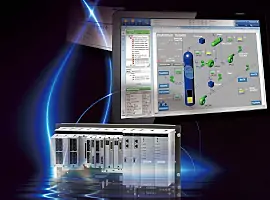
Yokogawa’s CENTUM VP is a globally recognized distributed control system (DCS). It is a leader in industrial automation and process control. This system offers unmatched reliability and superior performance. Moreover, the architecture provides a robust platform for complex operations.

The Evolving CENTUM VP DCS System and Network I/O (N-IO)

Yokogawa’s latest CENTUM VP R6 significantly improves the engineering environment. It drastically reduces time and effort for system setup. In addition, a new I/O system, the Network I/O (N-IO), enhances the lineup. The N-IO is the next-generation Smart Configurable I/O. Earlier systems used F-I/O (Field I/O) architecture. The high-speed Vnet/IP control network ensures rapid operator screen updates. Vnet/IP operates at one Gigabit per second, guaranteeing updates within one second. This network adheres to the IEEE 802.3 standard.

Yokogawa CENTUM VP

Distributed Control: The Core of CENTUM VP Architecture

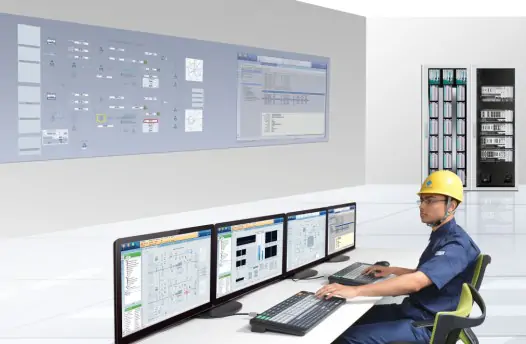
CENTUM VP uses a true Distributed Control Architecture. It deliberately avoids a traditional Client/Server model. This design is highly advantageous for factory automation. The system database is fully distributed across each Field Control Station (FCS). Importantly, the FCS is completely redundant. This redundancy provides a switchover time of less than one millisecond. The Master Engineering Station (ENG) holds only a copy of this database. Consequently, the main database resides in the controller.

Key Advantages of Yokogawa’s Distributed Architecture

This distributed approach offers unique benefits over Client/Server models. Operator Stations (HIS) directly fetch data from the controllers. Therefore, the system update time remains at a fast one second. The architecture has no single point of failure, unlike server-based systems. Server failure would otherwise lead to data loss across all operator stations. Furthermore, individual plant units can undergo independent commissioning. Engineers can later merge the databases on the Master ENG. This design enhances system operability and availability.

Why CENTUM VP Redefines Industrial Automation Over Conventional DCS Technology

Vnet/IP: High-Reliability Control Network for Process Control

Vnet/IP is the critical control network connecting all CENTUM VP components. It ensures the real-time, high-reliability communication necessary for stable process control. Vnet/IP is a dual-redundant control network, utilizing Bus 1 and Bus 2. Bus 1 handles primary control data. If Bus 1 fails, communication automatically switches to Bus 2 without interruption. Importantly, Bus 2 can also handle open communication. This allows generic Ethernet connectivity with non-Centum components like printers. Loss of one bus does not restrict open communication.

Configurable N-IO and Its Impact on Field Wiring

The N-IO (Network I/O) offers significant flexibility and reduced footprints. The configurable I/O modules can handle various signal types. This eliminates the need for numerous dedicated I/O types. Field signal wires connect directly to the I/O modules. This design drastically reduces the required cabinets and inter-panel wiring. However, careful junction box grouping and cable management are essential. Engineers must meticulously plan the assignment of redundant and non-redundant signals. This directly impacts the system’s overall availability and simplifies maintenance planning.

Integrated Safety with ProSafe-RS and “One Solution” Concept

Yokogawa also offers the ProSafe-RS Safety Instrumented System (SIS). ProSafe-RS is IEC/TÜV certified for SIL 3 applications. This fail-safe, standalone system is typically integrated with CENTUM VP on the same Vnet/IP network. This seamless integration eliminates the need for a separate gateway. A common Human Machine Interface (HMI) serves both the DCS and the SIS functions. Operators access all safety and control data through a single window. ProSafe-RS truly implements the “One process, One Network, One Window, One solution” philosophy in industrial automation.

Why CENTUM VP Redefines Industrial Automation Over Conventional DCS Technology

Application Scenarios and Solutions

The robust and integrated nature of Yokogawa’s CENTUM VP and ProSafe-RS makes it ideal for critical industries. Refineries, petrochemical plants, and power generation facilities heavily rely on this architecture. The distributed database enhances operational continuity. Furthermore, the integrated safety system simplifies regulatory compliance.

Discover Advanced DCS Solutions

To leverage the power of advanced DCS and PLC solutions for your specific industrial challenges, click the link below. Powergear X Automation Limited offers expert design, integration, and support for your control systems needs.

Discover our range of industrial automation products and solutions at Powergear X Automation Limited

Essential Maintenance Strategies for Yokogawa CENTUM VP Industrial Automation

Essential Maintenance Strategies for Yokogawa CENTUM VP Industrial Automation

Boosting Reliability in Your Industrial Automation Control Systems

The Yokogawa CENTUM VP Distributed Control System (DCS) is a backbone for many process industries. It delivers powerful, reliable industrial automation and process control. However, even the most robust control systems require skilled maintenance. Proactive troubleshooting maximizes uptime and protects your plant’s efficiency. Therefore, understanding common faults streamlines maintenance and minimizes operational risks. We discuss key issues and proven strategies here.

Field Control Station (FCS) Communication Errors: Diagnosing V-net/IP Integrity

A frequent issue involves the Field Control Station (FCS) reporting a communication error. This often means a problem on the V-net/IP control network. You must immediately verify the physical network layer first. Check all fiber optic or copper cable connections for damage. Furthermore, confirm all network switch statuses are normal and healthy. We recommend checking the system error logs and the FCS status display. These logs provide specific error codes guiding diagnostics. Remember, Yokogawa designed V-net/IP for high reliability. Therefore, a communication failure suggests a physical or configuration issue.

Essential Maintenance Strategies for Yokogawa CENTUM VP Industrial Automation

Human Interface Station (HIS) Performance Lags: Optimizing Display Call-up Time

Operators sometimes experience slow display call-up times or sluggish HMI response on the Human Interface Station (HIS). This issue affects operator efficiency. Often, excessive high-speed trend recording or unnecessary high-speed execution of control blocks (e.g., function blocks in the PLC or FCS logic) cause the load. We must review and optimize the scan periods for all function blocks. For example, most applications require only the default one-second basic scan. Moreover, temporarily disabling trend recording can quickly isolate a load issue. We observe that graphics driver incompatibility on the Windows OS layer also causes display problems.

Managing Control Loop and Function Block Errors: Enhancing DCS Logic

Control loop malfunctions or specific function block errors signal logic or parameter problems. DCS engineers must use the Control Drawing and Sequence Table utilities. Actively check block parameters like PID tuning constants for abnormal values. A common user mistake involves incorrect logic flow or data type mismatch. Moreover, for complex factory automation sequences, systematically trace the logic block by block. Always use the CENTUM VP engineering station to monitor the control logic online. This active monitoring allows for real-time identification of logic faults.

Essential Maintenance Strategies for Yokogawa CENTUM VP Industrial Automation

Hardware Component Failures: Strategic Module Replacement and Spares Management

Hardware failures, though rare in Yokogawa’s robust systems, do occur. Power supply failures and Input/Output (I/O) module faults are typical examples. Always check power supply status LEDs first. For I/O modules, the module status indicator often points to the failed channel or internal fault. Our experience shows a well-managed spare parts inventory is critical. Furthermore, when replacing components, strictly follow the proper hardware replacement procedure. This maintains system integrity and validates the repair.

Author’s Insight: The Cybersecurity Imperative in Control Systems

Modern DCS and industrial automation systems face increasing cybersecurity threats. Yokogawa’s CENTUM VP provides inherent reliability. However, we must implement a strong security posture at the network and host level. We advocate for dedicated industrial firewalls and robust patch management. This proactive defense protects against unauthorized access. This is especially true for systems connected to the corporate network or the industrial internet.

Essential Maintenance Strategies for Yokogawa CENTUM VP Industrial Automation

Application Case: Selecting Digital Input Modules for CENTUM VP

Choosing the correct I/O modules is vital for system performance and maintainability. Powergear X Automation Limited offers essential Yokogawa modules for your CENTUM VP DCS.

Explore our product solutions and contact us for detailed inquiries: Powergear X Automation Limited

Module Selection Comparison: ADV Digital Input Modules

Module ModelChannelsSignal TypeTerminal Block TypeKey Feature/Use Case
ADV157-S0032-channel24 V DCPressure ClampCost-effective, simple wiring; Ideal for standard DI applications.
ADV151-P5032-channel24 V DCDedicated Cable (AKB331)Robust, high-density connection using dedicated I/O cable; Best for large-scale wiring standardization.
ADV151-E5332-channel24 V DCDedicated Cable (AKB331)Designed for Explosion Protection (Non-Incendive); Required for hazardous area field wiring.
Why CENTUM VP Redefines Industrial Automation Over Conventional DCS Technology

Why CENTUM VP Redefines Industrial Automation Over Conventional DCS Technology

Defining the Distributed Control System Landscape

A Distributed Control System, or DCS, forms the core of modern process control. It manages continuous industrial processes across diverse plants. Traditional DCS architecture often featured isolated components. Operators used these systems for basic monitoring and sequential control. However, modern challenges demand greater integration and flexibility. Yokogawa’s CENTUM VP represents an evolution in this critical technology.

Architectural Evolution: From Islands to Integrated Control Systems

Traditional DCS often used a fixed, hardware-centric architecture. System expansion meant significant hardware upgrades and complex rewiring. CENTUM VP employs a more unified and scalable platform. This newer system seamlessly integrates control, operation, and engineering functions. Its Node-Architecture provides robust communication and distributed processing. Therefore, engineers simplify large-scale project execution and future expansion easily. This shift improves overall plant reliability and efficiency.

Why CENTUM VP Redefines Industrial Automation Over Conventional DCS Technology

The Power of Integration and Operational Excellence

Traditional DCS sometimes struggled to integrate with other plant systems, like Manufacturing Execution Systems (MES) or asset management tools. CENTUM VP natively supports a unified operational environment. This capability facilitates plant-wide information management. Moreover, its advanced human-machine interface (HMI) provides intuitive operation. Operators gain immediate, contextualized data for faster decision-making. This deeper integration is vital for optimizing production and reducing downtime in factory automation.

Advanced Functionality: Beyond Basic PLC Control

While PLC (Programmable Logic Controller) handles discrete and fast-loop control, a DCS manages complex, continuous processes. CENTUM VP enhances this difference with advanced control algorithms. It incorporates powerful tools for process optimization and simulation. Recently, Yokogawa integrated autonomous control AI agents with CENTUM VP. This demonstrates a clear move toward Industrial Autonomy (IA2IA). Traditional DCS often lacks these high-level, integrated intelligence features. As a result, CENTUM VP offers superior long-term performance and efficiency gains.

Why CENTUM VP Redefines Industrial Automation Over Conventional DCS Technology

Security and Reliability in Modern Control Systems

Cybersecurity is a paramount concern for industrial automation. Older DCS platforms often present security vulnerabilities due to outdated designs. CENTUM VP incorporates enhanced security features as a design priority. This includes robust access control and network segmentation capabilities. Its high system reliability and redundancy features are also crucial. Yokogawa designs the system for continuous operation, minimizing single points of failure. This focus on security and reliability is indispensable for critical infrastructure.

Author’s Insight: The Strategic Advantage of Future-Proofing

Choosing a control system is a long-term strategic investment. Traditional DCS systems, while reliable, may hit a wall regarding modernization and integration with emerging technologies like AI and Industrial IoT. CENTUM VP provides a more future-proof foundation. Its open yet secure architecture allows for continuous technological upgrades. I recommend companies prioritize systems that minimize the total cost of ownership through simplified engineering and enhanced operational lifespan.

Why CENTUM VP Redefines Industrial Automation Over Conventional DCS Technology

Application Case: Enhancing Process Control with Analog Input Modules

Selecting the right I/O module is essential for CENTUM VP’s performance. For applications requiring precise analog measurement, consider the following Powergear X Automation Limited modules, available at their product link.

Module Comparison Guide

ModelDescriptionSelection Recommendation
AAI143-H53Analog Input Module, 16-channel, current input, HART protocol supportHigh-End Process Measurement: Recommended for critical loops and smart field instruments where diagnostic information via HART is required. Ensures maximum data visibility.
AAI143-S50Analog Input Module, 16-channel, current inputStandard High-Density Analog Input: Ideal for general process measurements where HART capabilities are not necessary. Offers excellent balance of performance and cost.
AAI143-S00Analog Input Module, 16-channel, voltage/current input selectableMaximum Versatility: Best suited for projects with mixed sensor types (voltage and current). Provides flexibility during design and commissioning.
PW482-11Fieldbus Gateway Module (Hypothetical Example)System Integration and Connectivity: Use this module to integrate field instruments using standard industrial fieldbuses, demonstrating CENTUM VP’s superior connectivity.

Explore these advanced I/O solutions and more on the Powergear X Automation Limited website: https://www.powergearx.com/

Master Yokogawa CENTUM VP: The Beginner’s Guide to DCS and Industrial Automation

The Role of Yokogawa CENTUM VP in Modern Industrial Automation

Industrial automation drives efficiency today. Control systems are essential for large-scale operations. Yokogawa’s CENTUM VP is a leading Distributed Control System (DCS). It manages complex processes across diverse industries. This system offers high reliability and scalability. Moreover, the CENTUM VP integrates control, monitoring, and engineering functions. This unified approach contrasts sharply with smaller, isolated Programmable Logic Controllers (PLCs). Therefore, the DCS excels in continuous and batch processing environments. Chemical, oil and gas, and pharmaceutical plants rely heavily on this technology.

CENTUM VP Architecture: Understanding the Core Components

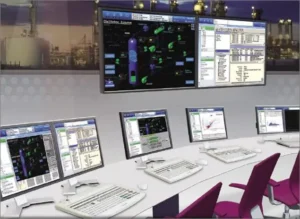
The CENTUM VP architecture is robust and distributed. It features several key hardware and software elements. The Human Interface Station (HIS) is the operator’s primary view. The Field Control Station (FCS) handles process control logic. It executes control strategies with extreme precision. Communication occurs over a highly reliable control network. This network ensures deterministic data transfer. In addition, the system supports various field I/O devices. This structure guarantees system redundancy. As a result, a single component failure does not stop the entire plant.

DCS vs. PLC: Why CENTUM VP Is the Choice for Process Control

Many beginners confuse DCS and PLC systems. A PLC typically manages discrete, high-speed machine control. However, a DCS, like CENTUM VP, manages continuous process control. The DCS offers superior process visualization and historical data collection. Furthermore, CENTUM VP provides extensive control library functions. These features simplify the implementation of complex control schemes. Its architecture is built for system-wide integration. Conversely, integrating many PLCs into one system is challenging. Therefore, for large, critical processes, the CENTUM VP is the preferred solution.

Master Yokogawa CENTUM VP

Engineering Excellence and Enhanced Operator Experience

Yokogawa prioritizes ease of engineering and operation. CENTUM VP utilizes a common database for engineering. This centralized database minimizes configuration errors. The system employs standard function blocks for control logic development. This simplifies programming tasks significantly. The operator interface is highly ergonomic and intuitive. Effective alarm management is a core design feature. This design reduces operator fatigue and enhances response times. Moreover, this focus on the operator significantly improves overall plant safety.

Practical Applications and Industry Authority of CENTUM VP

The CENTUM VP demonstrates vast application experience globally. Refineries use it for critical unit control. Power generation facilities rely on its turbine control capabilities. The system adheres to strict industry standards. This compliance confirms its authoritative standing in the market. Its long history proves remarkable reliability and stability. I believe this longevity reflects Yokogawa’s deep commitment to quality. Therefore, investing in CENTUM VP is a long-term strategic decision. It secures a high return on investment (ROI) through efficient operation.

Master Yokogawa CENTUM VP

Author’s Insight: The Future of Automation and CENTUM VP

The industrial automation sector is moving toward digitalization. CENTUM VP is ready for the future. It seamlessly integrates with advanced factory automation technologies. These include Manufacturing Execution Systems (MES) and enterprise-level software. Yokogawa continues to enhance its cyber security features. This proactive stance is crucial in today’s environment. The integration of advanced analytics is a major trend. CENTUM VP supports these tools. Therefore, this DCS remains a relevant and powerful platform for tomorrow’s Smart Factories.

Enhance Your Yokogawa CENTUM VP Solution: Component Selection

Optimizing your CENTUM VP system requires careful component selection. Powergear X Automation Limited specializes in providing essential spare parts and system modules. They ensure your control system maintains peak performance.

Discover compatible modules and detailed specifications here: https://www.powergearx.com/

Yokogawa CENTUM VP Module Comparison

ModuleDescription and FunctionalitySelection Recommendation/Comparison
ADV569-P00Digital I/O Module (e.g., 32-channel, Digital Input). Used for reading on/off status from field devices like limit switches and pushbuttons.Recommendation: High-density, standard DI module. Essential for robust field data acquisition. Select this for large counts of standard on/off signals where high-speed is not critical.
ALP121-S01Field Control Unit (FCU) Module. Part of the FCS, often housing the control logic execution and communication interface.Recommendation: A foundational component for process control. Crucial for system capacity and execution speed. Compare its processing power (S01 variant) against newer or more powerful options based on the required control loop complexity and throughput.
ALE111-S50Analog Input Module (e.g., 16-channel, 4-20mA input). Used to measure continuous process variables like temperature, pressure, and flow.Recommendation: Standard AI module. A workhorse for process measurement. Ensure the S50 revision meets your required resolution and intrinsic safety standards (if applicable). Use this when reliable, high-precision measurement is paramount.
VI702Communication Interface Module. Facilitates data exchange between the FCS and other network devices, potentially including fieldbus communication.Recommendation: Essential for system communication health. Verify its supported protocols (e.g., PROFIBUS, HART) match your field device landscape. The VI702 ensures seamless data flow and diagnostics.
Mastering GE EX2100 Connectivity for Industrial Automation and Control Systems

Mastering GE EX2100 Connectivity for Industrial Automation and Control Systems

Understanding the GE EX2100 in Industrial Automation

The GE EX2100 is a critical component. It serves as a robust excitation control system. This system manages large synchronous generators. Reliable power generation depends on the EX2100. It is a key part of industrial automation. This controller demands reliable communication. Integration with higher-level systems is essential. These systems include SCADA and PLC networks. This integration allows for centralized control and monitoring.

Mastering GE EX2100 Connectivity for Industrial Automation and Control Systems

The Foundation: Protocols for EX2100 Integration

Communication protocols are the key to connectivity. The EX2100 typically uses proprietary GE protocols. However, it also supports standard industrial protocols. These often include Modbus TCP/IP or OPC UA. Selecting the right protocol is vital. This choice depends on your existing control systems. Modbus is common in many factory automation setups. OPC UA offers enhanced security and interoperability. A protocol converter may be necessary sometimes. This ensures seamless data exchange.

Bridging the Gap to PLC Networks

Connecting the EX2100 to a PLC (Programmable Logic Controller) requires careful planning. The PLC acts as a local controller. It handles specific control logic and sequences. The EX2100 data needs to be mapped to PLC registers. Use a reliable industrial gateway for this step. This gateway translates protocols effectively. Many modern PLCs (like Siemens or Rockwell) support Modbus TCP/IP directly. This direct support simplifies the integration process. Ensure your PLC can handle the data volume and speed.

Mastering GE EX2100 Connectivity for Industrial Automation and Control Systems

Scaling Up: Integrating with SCADA Systems

SCADA (Supervisory Control and Data Acquisition) systems offer a bird’s-eye view. They monitor and control the entire plant. Connecting the EX2100 to SCADA is crucial. This connection allows operators to view excitation status. They can also issue setpoint changes safely. OPC UA is the preferred method for many new SCADA implementations. It is secure and highly reliable. Data from the EX2100 first flows to the PLC. Therefore, the SCADA system often polls the PLC for EX2100 data. This layered approach is a standard industry practice.

Ensuring Security and Reliability in Control Systems

Security is paramount in industrial automation. Connecting the EX2100 exposes a critical asset. Implement strong network segmentation. Use firewalls to separate the control network. Encrypt communication where possible, especially with OPC UA. Furthermore, redundancy is essential for reliability. Deploy redundant communication paths and gateways. As a result, system uptime is maximized. These measures protect the system from cyber threats and failures.

Expert Insight and Best Practices

In my experience, standardization is key. Stick to well-established industrial communication standards. Do not rely solely on proprietary interfaces. Moreover, thorough testing is non-negotiable. Simulate failure scenarios before deployment. Integrating excitation systems requires specialized knowledge. Consider consulting experts in DCS (Distributed Control System) and factory automation. This proactive approach guarantees a robust and compliant solution. The future of control leans heavily on secure, open protocols.

Mastering GE EX2100 Connectivity for Industrial Automation and Control Systems

Application Scenario: Power Plant Modernization

A major power generation company needed to upgrade its aging system. They needed to integrate their GE EX2100 units. The goal was centralized control via a new SCADA system. Our solution involved deploying industrial gateways. These gateways translated the proprietary EX2100 data to OPC UA. The data then fed into the new SCADA platform. This modernization enhanced operational visibility. It also improved system response time significantly.

Discover the next generation of seamless control system integration.

Are you looking for reliable industrial gateways and bespoke integration services for your GE EX2100 or other critical assets?

Click here to explore our specialized products and solutions: Powergear X Automation Limited – Solutions

Siemens 3RW4447-6BC44 Soft Starter

Siemens 3RW4447-6BC44 Soft Starter Review: Heavy-Duty Motor Control for Industrial Automation

The Role of Soft Starters in Industrial Automation

Industrial operations demand reliable motor control. Large electric motors create significant mechanical and electrical stress upon startup. Soft starters manage this initial surge. They gradually increase voltage to the motor. This action minimizes damaging current spikes. Therefore, soft starting protects both the motor and the power grid. It is a critical component in any robust industrial automation setup.

Technical Profile: The Siemens 3RW4447-6BC44 Legacy

The Siemens SIRIUS 3RW4447-6BC44 served the heavy-duty sector. It offered advanced starting control for large three-phase induction motors. This model was highly respected for its capability and reliability. Key specifications defined its heavy-duty status. It handled a rated operational current of approximately 432 A at 400 V and 40°C. Moreover, the unit supported a wide voltage range of 200 to 460 V AC. Its design fit seamlessly into demanding factory automation environments.

Siemens 3RW4447-6BC44 Soft Starter

Power Handling and Advanced Features for Large Motors

The 3RW4447-6BC44 provided substantial power support. It managed up to 250 kW in standard in-line circuits at 400 V. Crucially, it supported up to 400 kW using an inside-delta circuit connection. This delta connection dramatically increases the effective power capability. Furthermore, an adjustable current limitation feature was standard. This gave operators precise control over the starting current. This precision reduced stress on mechanical components. In addition, the soft starter included essential motor protection functions. These included motor overload protection and thermal resistor monitoring. This combination enhanced overall system safety and longevity, a must for high-value machinery.

Core Applications in Heavy Industrial Settings

This soft starter excelled in high-inertia, heavy-load applications. Typical uses included large pumps, compressors, and ventilation fans. Conveyor systems and crushers also benefited significantly. These machines require a gentle, controlled start. The 3RW4447-6BC44 reduced mechanical shock on gearboxes and couplings. It also mitigated electrical interference on the grid. Therefore, it was ideal for large plants requiring stable power and extended equipment life. The performance made it a staple for sophisticated control systems such as PLC and DCS integrations.

The Transition: A Discontinued Model and Successor Planning

Siemens now lists the 3RW4447-6BC44 as “discontinued/replacement.” Users must acknowledge this product status. The model offers superior capability for its time. However, new projects must focus on its successor. For example, some sources suggest the 3RW5547-6HA14 as a suitable modern alternative. Organizations should confirm compatibility and availability when planning maintenance. Therefore, end-users must conduct a thorough compatibility check before equipment replacement or system upgrade.

Siemens 3RW4447-6BC44 Soft Starter

Installation and Selection: Key Engineering Considerations

Proper selection requires close attention to detail. Engineers must verify the motor’s rated power and voltage strictly match the soft starter’s capability. They must also consider the installation environment. Specifically, the 40°C rating implies derating is necessary at higher ambient temperatures. Adequate cooling space is mandatory. The unit uses robust screw terminals for connection. Finally, only qualified personnel should install and commission the system. Advanced parameter settings control the start/stop curves. Therefore, proper software configuration is vital for optimal performance.

Final Verdict and Next Steps for Industrial Buyers

The Siemens 3RW4447-6BC44 was a benchmark for heavy-duty motor control. Its features provided powerful protection and reduced operational stress. It remains a valuable reference point for legacy systems. However, its end-of-life status requires forward-thinking. Industrial buyers and engineers should immediately explore and qualify the approved successor models. This proactive approach ensures continuity of operations. It also maintains high standards of performance and reliability.

A Note from Powergear X Automation Limited:

Are you seeking a reliable, high-performance soft starter solution? Do you require a modern replacement for your legacy 3RW4447-6BC44 unit? Powergear X Automation Limited specializes in cutting-edge industrial control components and certified replacement parts. Click here to explore our range of powerful soft starters and compatible control solutions designed for today’s high-demand industrial environment.

A6110 Shaft Vibration Monitor API 670 Protection for Critical Assets

A6110 Shaft Vibration Monitor: API 670 Protection for Critical Assets

The A6110: Essential Protection for Rotating Equipment

Critical rotating machinery demands reliable protection. The A6110 Shaft Relative Vibration Monitor delivers this essential safeguard. This single-slot module fits seamlessly into existing AMS 6500 systems. Moreover, it rigorously adheres to stringent API 670 standards. It uses advanced non-contact eddy current sensors. Consequently, the A6110 accurately measures shaft relative vibration. Early detection of issues prevents catastrophic machine failures. This proactive approach minimizes costly downtime in industrial automation settings.

Precision Measurement and Technical Edge

The A6110 boasts impressive technical specifications. It features two independent input channels. Eddy current displacement sensors provide the core input data. This setup ensures high-precision monitoring. The wide frequency range, from 1 Hz to 2000 Hz, captures all relevant vibration data. Powering the module requires a standard 24 VDC supply. Furthermore, it operates reliably within a 0° to 65°C temperature range. Compliance with both API 670 and DIN standards confirms its superior quality and dependability.

A6110 Shaft Vibration Monitor API 670 Protection for Critical Assets

Seamless Integration with Control Systems

Effective communication is crucial for modern control systems. The A6110 excels in this area. It provides 4-20 mA current outputs for easy PLC or DCS integration. Additionally, 0-10 VDC voltage outputs offer proportional vibration signals. For configuration, an RS-232 interface is standard. Critically, ModBus TCP/IP ensures robust data communication across the network. Buffered raw signal outputs are available for detailed diagnostic analysis. These features make it a versatile component in any factory automation architecture.

A Hot-Swappable Solution for Maximum Uptime

Downtime severely impacts productivity. Therefore, the A6110 features a valuable hot-swappable design. Technicians can replace the module without system shutdown. This capability guarantees maximum operational uptime. The monitor typically protects equipment like steam and gas turbines, high-speed compressors, and large sleeve-bearing pumps. In addition, it supports sensor installations up to 300 meters away. This flexibility is vital for extensive industrial facilities. The A6110 embodies a commitment to continuous, reliable operation.

A6110 Shaft Vibration Monitor API 670 Protection for Critical Assets

Expert Insight: Enhancing Reliability and Predictive Maintenance

The adherence to API 670 is a non-negotiable standard for critical rotating equipment. The A6110 meets this industry benchmark, confirming its reliability and precision. I believe its integration of ModBus TCP/IP is particularly significant. This modern protocol facilitates true predictive maintenance strategies. It allows maintenance teams to transition from reactive to proactive intervention. This shift significantly reduces unexpected shutdowns and extends equipment lifespan. Investing in the A6110 means investing in long-term asset health.

Solution Scenario: Turbine Generator Protection

Consider a power generation facility using a large steam turbine. The A6110 is the ideal protection solution here. Two independent eddy current probes mount at the turbine shaft bearings. They continuously measure relative shaft movement. The module instantly transmits data via ModBus TCP/IP to the plant’s DCS. If vibration levels rise, the control system triggers an alarm or shutdown. This immediate response prevents severe damage to the turbine and generator. The A6110 ensures the integrity of this high-value, critical asset.

A6110 Shaft Vibration Monitor API 670 Protection for Critical Assets

Discover the robust protection and seamless integration of the A6110 monitor.

Click here to explore how Powergear X Automation Limited can integrate this essential technology into your critical machinery protection strategy.

Emerson 8mm to Bently Nevada Integration

Emerson 8mm to Bently Nevada Integration: Guide for 3300 & 3500 Systems

Understanding the Integration Challenge in Industrial Automation

Integrating diverse components forms the backbone of modern industrial automation. Engineers frequently face the challenge of connecting third-party sensors to legacy or proprietary monitoring systems. This scenario often arises when merging Emerson’s reliable 8mm proximity sensors with the ubiquitous Bently Nevada 3300 and 3500 machinery protection systems. Successful integration is critical for effective machine health monitoring. A smooth connection ensures reliable data flow for predictive maintenance. Therefore, careful planning and technical understanding become essential.

Emerson 8mm to Bently Nevada Integration

The Role of Proximity Sensors in Machinery Protection

Proximity sensors, like the Emerson 8mm series, play a vital role in measuring shaft position, vibration, and speed. These non-contact sensors generate a voltage output proportional to the gap distance. The Bently Nevada control systems, specifically the 3300 and 3500 rack monitors, require a specific signal input. However, direct electrical compatibility between brands may not exist. The sensor and the monitor must meet specific requirements for sensitivity (mV/mil), linearity, and range. This standardization ensures data accuracy for critical machinery.

Technical Specifications: Bridging the System Gap

Proper connection requires matching the key technical specifications of both systems. Emerson 8mm sensors typically use an external power supply and a coaxial cable for signal transmission. The Bently Nevada 3300 and 3500 series expect a buffered, conditioned signal. In addition, the system’s power requirements must align. Using an interface or conditioning module often solves potential electrical discrepancies. Experienced technicians confirm signal integrity across the entire operating range. Consequently, the selection of a suitable signal conditioner is paramount.

Emerson 8mm to Bently Nevada Integration

Practical Steps for a Seamless PLC/DCS Integration

  1. Verify the sensor’s power supply and current draw.
  2. Confirm the required gap voltage for the Bently Nevada input card.
  3. Use an interface module to translate the signal to the monitor’s expected format.
  4. Calibrate the entire measuring chain end-to-end.
  5. Update documentation and wiring schematics in the DCS or PLC records.

This diligence maintains system reliability and compliance.

Author’s Insight: Enhancing System Trustworthiness

Based on my experience, never compromise on cable quality or shielding. Noise interference significantly affects proximity sensor readings. Using specialized junction boxes with proper grounding improves system trustworthiness. Furthermore, consider future expansion or upgrades. Selecting a configurable interface module allows for easier scaling. The Bently Nevada 3500 offers greater flexibility, but the fundamental signal conditioning principle remains the same. Investing in quality components reduces long-term maintenance costs.

Emerson 8mm to Bently Nevada Integration

Application Scenario: Turbo-machinery Monitoring

Imagine a large industrial facility using turbo-machinery. Continuous, accurate shaft vibration data prevents catastrophic failures. Emerson 8mm sensors monitor the shaft displacement. The Bently Nevada 3500 system provides continuous, real-time protection and alarming. This blended solution leverages the strengths of both brands. The interface module acts as the crucial link, ensuring reliable data delivery to the central control systems. This successful integration minimizes downtime and maximizes asset utilization.

Need the right components for your integration?

Powergear X Automation Limited offers specialized interface solutions to perfectly match Emerson 8mm sensors with Bently Nevada systems. Click the product links below for detailed specifications and to compare models.

Product Comparison Guide

Product ModelKey FeatureApplication Focus
EZ1081-03-00-010High-speed data throughputCritical Turbomachinery
EZ1080-12-00-010Extended temperature rangeHarsh environments
EZ1080-18-08-010Integrated signal filteringHigh-noise applications

Product Selection Details

EZ1081-03-00-010: This model focuses on rapid data acquisition, ideal for high-speed machinery where minimal latency is critical. It ensures quick response in protection scenarios.

EZ1080-12-00-010: Designed for resilience, this unit operates reliably in extreme temperatures, making it suitable for unconditioned industrial spaces or outdoor applications.

EZ1080-18-08-010: With built-in noise reduction capabilities, this model is the superior choice for electrically noisy areas, guaranteeing clean, accurate signal transmission to the Bently Nevada monitor.

Back to Top
Product has been added to your cart