1769-IQ32 vs. 1769-IQ32T: Mastering Terminal Block Interchangeability and Wiring Logic
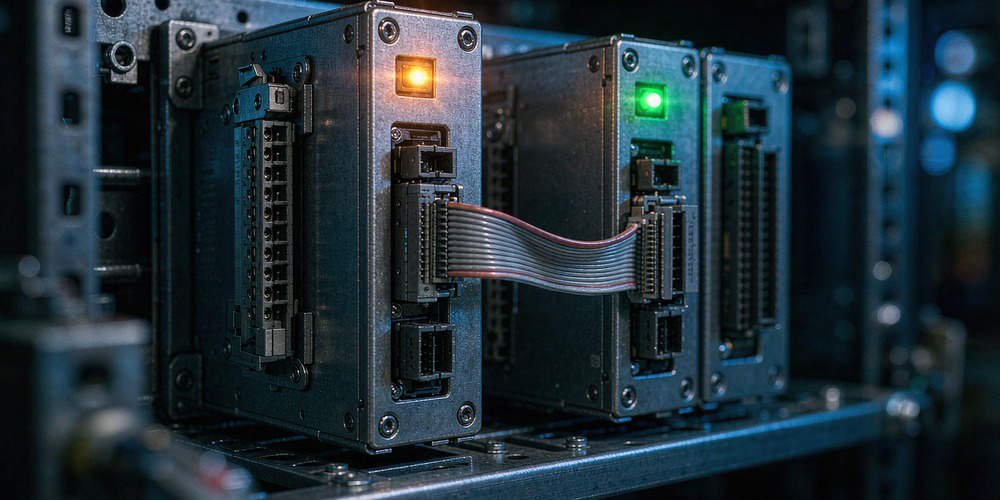
The 1769-IQ32 and 1769-IQ32T modules utilize the exact same 40-pin Removable Terminal Block (RTB). This mechanical consistency allows engineers to physically plug an existing connector into either module without modification. In factory automation environments, this design significantly reduces hardware replacement time. However, physical fitment does not guarantee electrical alignment. Engineers must verify the internal circuit logic before powering the system.

Sinking vs. Sourcing: The Critical Logic Divide
The fundamental difference lies in current flow direction. The standard 1769-IQ32 is a DC Sinking input module. Conversely, the 1769-IQ32T functions as a DC Sourcing input module. If you swap these units without adjusting external wiring, your sensors will likely fail to trigger. This distinction is vital for industrial control systems using PNP or NPN field devices. Failure to match polarity often leads to phantom signals or permanent “OFF” states in the PLC registers.
Maximizing Efficiency in High-Density Industrial Automation
The 1769-IQ32T is engineered for high-density 24V DC expansion within tight control cabinets. It allows for 32 points of digital input while maintaining a slim footprint. Moreover, sourcing inputs (IQ32T) often provide superior noise immunity in environments with heavy electromagnetic interference. This makes the “T” variant a preferred choice for pharmaceutical packaging and chemical processing lines. These sectors demand high reliability and rapid I/O scaling.
Technical Installation Checklist
- Verify sensor output types before commissioning.
- Label every common wire clearly during the swap.
- Use screw-clamp RTBs in high-vibration environments.
- Apply ferrules to all fine-strand wires.
- Implement external surge protection for outdoor runs.
- Tighten all terminal screws to torque ratings.
Author Insights from Powergear X Automation
In our experience at Powergear X Automation, many retrofits fail because teams overlook the “Common” pin polarity. While the RTB fits perfectly, the 1769-IQ32T requires a different power distribution strategy. We recommend performing a point-to-point continuity test after swapping modules. This proactive step prevents downtime and protects your PLC backplane from potential wiring faults.
Frequently Asked Questions
Q: Can I use the 1769-IQ32T with NPN sensors?
A: No, the 1769-IQ32T is a sourcing module designed for PNP sensors. For NPN devices, the standard 1769-IQ32 is the correct choice.
Q: Does the 1769-IQ32T require a firmware update?
A: Generally, no, but you must update the I/O configuration in your software to recognize the specific “T” catalog number.
Q: What is the most common failure point when reusing an old RTB?
A: The most common failure is a loose “Common” wire connection. Reusing an old block is safe, but wires often loosen during the transfer.
For premium technical support and high-quality automation hardware, visit the official Powergear X Automation website to browse our extensive inventory.