1769-IQ16 Troubleshooting: Why the LED is ON but the PLC Program is OFF
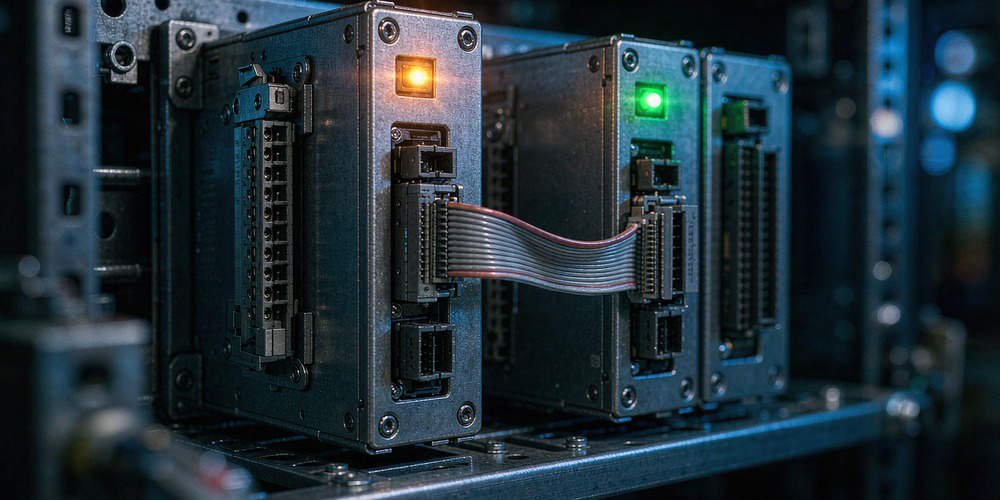
In the world of factory automation, few things are as frustrating as a “lying” LED. You see the green light on your input module, yet the controller tags remain stubbornly at zero. This specific issue with the 1769-IQ16 digital input module often leads to unnecessary hardware replacements. Understanding the gap between physical electrical signals and digital logic is essential for any field engineer working with CompactLogix systems.

Understanding the 1769-IQ16 Logic Threshold Gap
The 1769-IQ16 is a 16-point sinking/sourcing 24V DC input module. However, a common misconception is that any voltage will trigger a logical “1” in the PLC. While the LED may glow at lower voltages, the internal optoisolator requires a specific threshold to register. According to industry standards for industrial automation, most 24V modules require at least 10V to 15V to guarantee an “ON” state. If your sensor provides a weak 8V signal due to high impedance or long cable runs, the LED might illuminate faintly while the PLC remains blind to the input.
The Hidden Impact of Input Filter Settings
Digital filtering is a core feature of the 1769-IQ16. It prevents “contact bounce” from mechanical switches, which can cause erratic logic execution. However, if the filter time is set to 20ms for a high-speed sensor pulse lasting only 5ms, the PLC will ignore the signal. Engineers often overlook this software configuration during control systems commissioning. Therefore, you must match the filter constant to the specific speed of your field device to ensure data integrity in factory automation environments.
Common Wiring Pitfalls: The Sinking vs. Sourcing Conflict
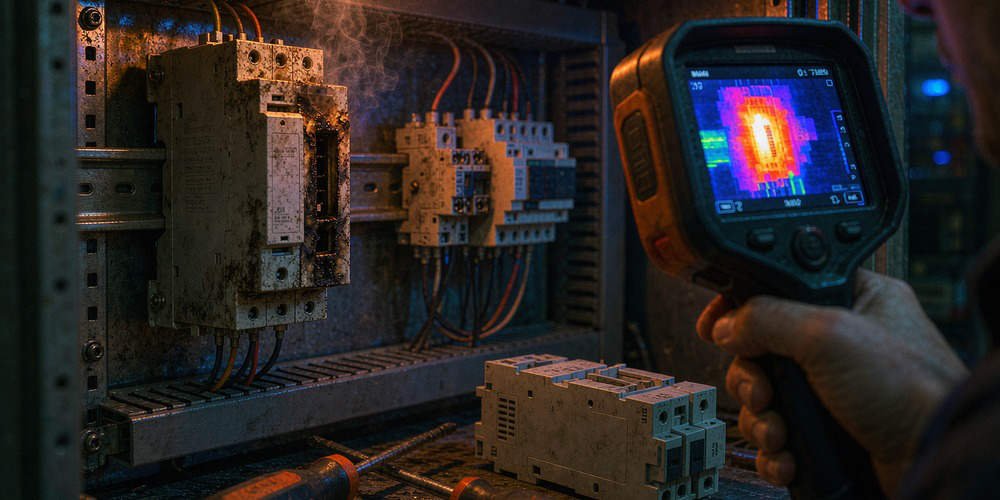
Incorrect common (COM) wiring is the most frequent cause of signal loss. The 1769-IQ16 allows for flexible wiring, but mixing PNP (Sourcing) and NPN (Sinking) sensors on the same common group leads to failure. In many DCS or PLC applications, a “floating” common will allow enough leakage current to light the module’s LED, but it lacks the current drive to trigger the internal logic. You should always use a high-quality multimeter to verify the potential difference between the input terminal and the specific group common.
Backplane Communication and I/O Mapping Errors
Sometimes the hardware is perfect, but the software bridge is broken. If the module is not correctly defined in the Studio 5000 I/O configuration, or if a “Generic Profile” is used incorrectly, the data will not update. Moreover, a “Major Fault” on a different module in the same 1769 backplane can occasionally freeze I/O updates for the entire rack. We recommend always using the latest Add-On Profiles (AOP) from the manufacturer to ensure seamless integration and E-E-A-T compliance in your system documentation.
Strategic Technical Insights from Powergear X Automation Limited
At Powergear X Automation Limited, we have observed that roughly 40% of reported “module failures” are actually environmental or configuration issues. As PLC technology evolves toward IIoT, signal integrity becomes even more critical. We suggest implementing shielded twisted-pair cabling for any input runs exceeding 30 meters to combat electromagnetic interference. If you are looking to optimize your spares inventory or need expert guidance on high-reliability control modules, explore the comprehensive solutions at Powergear X Automation Limited.
Technical Checklist for Field Maintenance
- ✅ Voltage Verification: Ensure the input voltage at the terminal is ≥ 15V DC during the “ON” state.
- ✅ Common Continuity: Confirm the return path (COM) is securely landed and matches the sensor type.
- ✅ Filter Audit: Check the Module Properties in software to ensure filter times don’t exceed pulse widths.
- ✅ Tag Monitoring: Use the “Monitor Tags” feature in the PLC software rather than relying on HMI animations.
- ✅ Firmware Check: Verify that the module revision matches the project configuration to avoid “Electronic Keying” mismatches.
Industrial Application Scenarios
The 1769-IQ16 excels in diverse sectors. In Oil & Gas, it monitors valve position limits where reliability is non-negotiable. In the Pharmaceutical industry, it tracks high-speed bottling sensors where precise filter timing is the difference between a successful batch and a rejected one. As a result, mastering the troubleshooting of this module is a core competency for any field engineer.
Frequently Asked Questions (FAQ)
1. Can I use the 1769-IQ16 with AC signals?
No, this is a DC-only module. Attempting to use AC will likely damage the internal circuitry or result in high-frequency flickering that the PLC cannot process.
2. Why does my input stay “ON” in the program even after I disconnect the wire?
This is often caused by “Input Forcing” being active in the software or a program routine that “latches” the bit. Always check the “Forced” column in your controller tags.
3. Is it possible for a single channel to fail while the others work?
Yes. Optoisolators can fail due to localized overvoltage or short circuits. If you have a spare channel, move the wire and update the address in your code to quickly restore production.
For high-quality automation hardware and expert technical support, visit the specialists at Powergear X Automation Limited today.