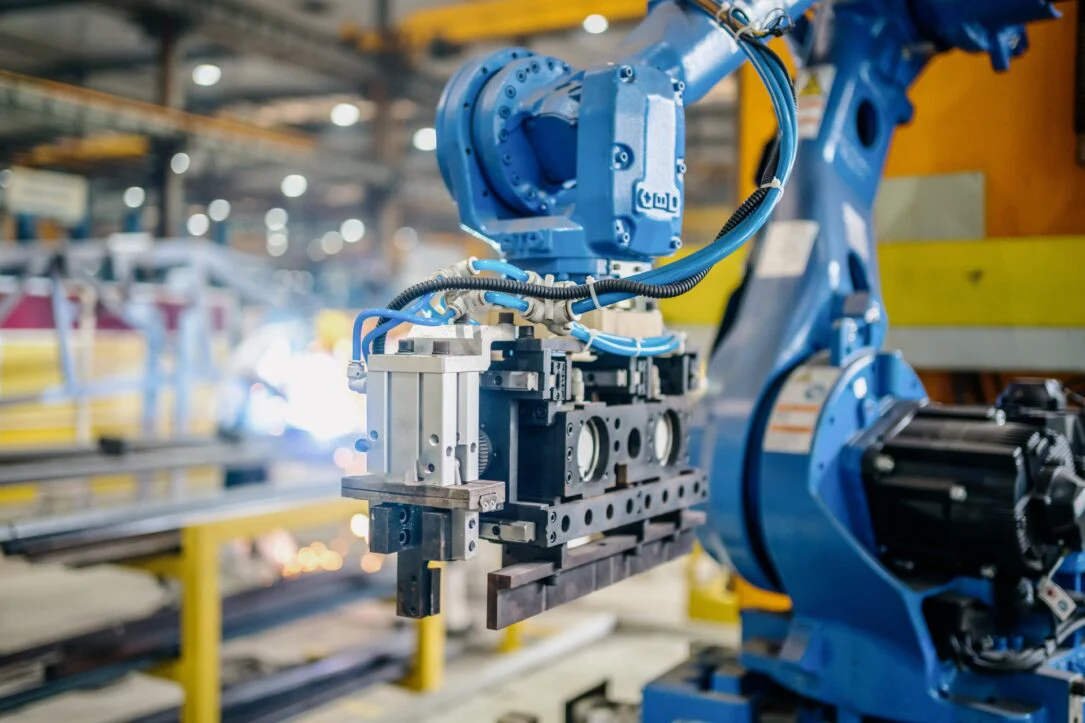
Over 50,000 hot-selling automation module components.
Allen-Bradley ControlLogix 5570 Guide: 1756-L71 to L75 Models

Allen-Bradley ControlLogix 5570 Guide: 1756-L71 to L75 Models

Mastering Industrial Automation with Allen-Bradley ControlLogix 5570 Controllers

The Allen-Bradley ControlLogix 5570 series by Rockwell Automation remains a cornerstone of modern factory automation. These Programmable Automation Controllers (PACs) bridge the gap between traditional PLC systems and complex DCS environments. At Powergear X Automation, we’ve observed that the 5570 series (1756-L7x) continues to be the “workhorse” for engineers who prioritize reliability and modularity in demanding control systems.

Allen-Bradley ControlLogix 5570 Guide: 1756-L71 to L75 Models

Unlocking Performance: The Core Strength of 1756-L7x Models

The 5570 family delivers significant leaps in processing speed compared to its predecessors. These controllers utilize a high-speed backplane to manage intensive data tasks. Therefore, they excel in industrial automation environments requiring rapid I/O updates. Furthermore, the 1756-L7x series integrates seamlessly with Studio 5000 Logix Designer software. This synergy allows engineers to develop sophisticated code while maintaining high system uptime.

The 1756-L71: Efficiency for Small-Scale Logic

The 1756-L71 serves as the entry point for the 5570 lineup. With 2 MB of user memory, it effectively handles localized machinery or basic factory automation cells. We recommend this model for standalone packaging units or small conveyor systems. It offers a cost-effective path for users migrating from older legacy hardware. However, ensure your tag database remains lean to maximize this controller’s potential.

The 1756-L72 and L73: Balancing Power and Scalability

For mid-sized operations, the 1756-L72 (4 MB) and 1756-L73 (8 MB) are the preferred choices. The 1756-L73, in particular, is a global industry favorite for automotive assembly lines. These models manage increased communication throughput across EtherNet/IP and ControlNet. Moreover, they support more complex motion control profiles. Consequently, they provide the necessary “headroom” for future system expansions without requiring immediate hardware upgrades.

The 1756-L75: High-Capacity Solutions for Large Plants

The 1756-L75 represents the peak of the 5570 series, boasting 16 MB of user memory. It thrives in massive industrial automation projects like oil refineries or power generation plants. This controller handles thousands of I/O points and dozens of motion axes simultaneously. In our experience at Powergear X Automation, the L75 is essential for data-heavy applications involving extensive diagnostic logging and complex interlocking.

Technical Excellence: Shared Features of the 5570 Family

Every controller in this series shares a robust architecture designed for harsh industrial climates. They all fit into standard 1756 ControlLogix chassis, ensuring hardware flexibility.

  • Support for high-speed Integrated Motion over EtherNet/IP.
  • No battery required thanks to energy storage modules.
  • Onboard USB port for easy firmware updates.
  • Advanced security features to protect intellectual property.
  • Seamless integration with FactoryTalk View HMI software.

Strategic Insights: 5570 vs. The Newer 5580 Series

While the newer ControlLogix 5580 series offers embedded gigabit Ethernet, the 5570 series remains highly relevant. Many facilities prefer the 5570 for its proven stability and lower current market price. Additionally, the 5570 is often easier to integrate into existing 1756-based racks without redesigning the entire network. At Powergear X Automation, we suggest the 5570 for maintenance-heavy environments where reliability outweighs the need for raw gigabit speeds.

Real-World Application: The Automotive Assembly Solution

In a recent automotive project, a tier-one supplier utilized the 1756-L73 to coordinate 20 motion axes. The controller managed real-time safety signals and production data simultaneously. By leveraging the 5570’s memory, the plant reduced cycle times by 15%. This scenario proves that choosing the right memory capacity is vital for long-term operational efficiency.

For more technical guides and high-quality automation components, visit the Powergear X Automation website to optimize your facility today.

Frequently Asked Questions (FAQ)

1. How do I decide between an L73 and an L75 for my project?
Focus on your long-term data requirements. If your application involves heavy “Recipe Management” or extensive HMI logging directly on the controller, the 16 MB memory of the L75 is safer. For standard high-speed logic with moderate motion, the L73 usually suffices and saves budget.

2. Can I replace an old L6 series controller with a 5570 model directly?
Yes, the 5570 series is backward compatible with most 1756 chassis. However, you must update your Studio 5000 project to the correct firmware revision. Also, check your power supply capacity, as the L7 series has different power draw characteristics.

3. Does the 5570 series require a battery for program backup?
No. Unlike the older L6 series, the 5570 uses a 1756-ESMC energy storage module. This capacitor-based system eliminates the need for lithium batteries, reducing your long-term maintenance costs and environmental impact.

How to Upgrade to ControlLogix 5570 in Legacy 1756 Racks

How to Upgrade to ControlLogix 5570 in Legacy 1756 Racks

Upgrading Legacy Infrastructure: Installing ControlLogix 5570 Controllers in 1756-A10 Chassis

Upgrading industrial control systems often presents a dilemma between total replacement and incremental modernization. Many engineers ask if the modern ControlLogix 5570 series can function within the aging 1756-A10 chassis. This hardware compatibility is a cornerstone of Rockwell Automation’s “Integrated Architecture” philosophy. At Powergear X Automation, we frequently see facilities successfully breathe new life into old systems using this exact path.

The Technical Evolution of ControlLogix 5570 Series

The 5570 family, including the popular 1756-L71 and 1756-L73 models, represents a massive leap in factory automation power. These controllers utilize the Logix 5000 platform to deliver superior processing speeds and expanded memory capacities. Moreover, they handle complex motion control and high-speed communication better than their predecessors. Transitioning to the 5570 series allows users to leverage modern Studio 5000 features while maintaining a familiar hardware footprint.

Understanding the 1756-A10 Chassis Mechanics

The 1756-A10 serves as a 10-slot foundation for industrial automation modules. This chassis functions primarily as a passive backplane, providing mechanical support and electrical distribution. Since it contains no active logic processing, it remains remarkably versatile across different hardware generations. Consequently, the backplane focuses on routing data signals and power rather than limiting specific controller types.

Seamless Hardware Compatibility and Physical Integration

You can indeed install a ControlLogix 5570 controller into a 1756-A10 chassis without mechanical modifications. Rockwell designed the 1756 module form factor to remain consistent over decades. Therefore, the physical alignment and backplane connectors match perfectly between the new CPU and the legacy rack. This backward compatibility ensures that your existing physical investment remains valuable during a control systems migration.

Critical Pre-Upgrade Checklist for Power and Software

While the physical fit is guaranteed, successful integration requires careful planning of secondary factors. First, evaluate your current power supply, such as the 1756-PA75, to ensure it meets the 5570’s demands. In addition, you must upgrade your programming environment to Studio 5000 Logix Designer. Using outdated RSLogix 5000 versions will prevent you from accessing the advanced features of the L7 series.

Expert Insight: Powergear X Automation Technical Commentary

From our perspective at Powergear X Automation, the 1756-A10 remains one of the most reliable “workhorses” in the industry. However, we suggest checking the age of the backplane itself during the upgrade. If the chassis has been in a high-vibration environment for over 15 years, consider replacing it to prevent intermittent connection issues. Modernizing the CPU is an excellent cost-saving strategy, but the surrounding “passive” hardware must still be robust.

Technical Best Practices for Installation

  • Verify the current draw for the 5570 CPU against the power supply limits.
  • Confirm that all legacy I/O modules have compatible firmware for Studio 5000.
  • Inspect the chassis backplane pins for signs of corrosion or bending.
  • Ensure the enclosure cooling can handle the increased heat from faster processors.
  • Update your system documentation to reflect the new hardware configuration.

Industrial Application Scenario: Food and Beverage Plant

Consider a large bottling facility using legacy 1756-L61 controllers in 10-slot racks. The plant experienced frequent “Watchdog” timeouts due to increasing logic complexity. By swapping only the CPU for a 1756-L73 in the existing 1756-A10 chassis, they reduced scan times by 40%. This approach avoided the massive labor costs associated with rewiring the entire I/O system or replacing the physical enclosure.

Frequently Asked Questions (FAQ)

Q: Can I keep my old 1756-A10 power supply when moving to a 5570 controller?
A: In most cases, yes. However, we recommend calculating the total mA draw of the new CPU and existing I/O modules. Newer CPUs sometimes draw more peak current during startup than older L6 models.

Q: Will my existing 1756-ENBT communication modules work with the new L7 controller?
A: Yes, they will communicate. However, the 5570 series pairs best with 1756-EN2T or EN3T modules to fully utilize the increased backplane data rates.

Q: Do I need to replace the battery when I switch to a 5570 series?
A: The 5570 series uses an 1756-ESMNSE or ESM cap module instead of a traditional lithium battery. This is a major maintenance advantage as it eliminates the need for periodic battery changes.

For more technical guides or to source high-quality ControlLogix components, visit the experts at Powergear X Automation. We provide the parts and expertise to keep your DCS and PLC systems running at peak performance.

Top PLC Brands Driving Industrial Automation Smart Factory Race

Choosing the Best PLC: A Guide to Industrial Automation Control Systems

The Evolving Role of PLCs in Industry 4.0

Industrial automation systems rely heavily on PLCs (Programmable Logic Controllers). These controllers are fundamental to modern production. However, smart technologies are rapidly changing manufacturing criteria. Today’s PLCs offer real-time data analytics, monitoring, and control. They enable predictive maintenance, in-built alarms, and trend analysis. Furthermore, they ensure smooth machine communication. They achieve this by integrating with cloud, AI systems, and IoT devices. Therefore, choosing the right PLC brand is crucial for a successful smart factory journey.

Top PLC Brands Driving Industrial Automation Smart Factory Race

Siemens: The Global Leader in Digital Twin Technology

Siemens stands out as a top PLC brand worldwide. They dominate markets in Europe and the Middle East. Their Simatic S7 series is widely used across various sectors. This is due to its reliable performance and compatibility. It supports PROFINET and OPC UA protocols. Siemens also leads in edge computing and digital twin technologies. Consequently, they are a primary choice for many smart factories. Their focus on comprehensive digital solutions sets a high industry standard.

Allen-Bradley (Rockwell Automation): A North American Powerhouse

Allen-Bradley, a division of Rockwell Automation, is immensely popular. This brand leads the North American industrial automation market. Their ControlLogix and CompactLogix series are well-known. They excel in the automotive and food processing sectors. Rockwell focuses on scalable control systems and digital transformation. They are a major player in Industry 4.0 evolution. Most American facilities utilize this brand in their factory automation. This strong regional preference reflects its proven dependability.

Top PLC Brands Driving Industrial Automation Smart Factory Race

Mitsubishi Electric: Speed and Compactness in Asia-Pacific

Mitsubishi Electric is a distinguished PLC manufacturer. They particularly thrive in high-speed electronic systems. The MELSEC series is notable for its fast processing speed. It also offers reliable connections and a small footprint. Mitsubishi supports protocols like OPC UA and CC-Link IE Field. This ensures great interoperability in Industry 4.0. Their commitment to energy efficiency makes them a formidable competitor. They dominate the Asia-Pacific region’s factory automation.

Schneider Electric: Sustainability and Open Protocols

Schneider Electric’s Modicon PLCs offer impressive technical features. Their adaptability suits various Industry 4.0 systems. Schneider champions digital transformation and sustainability. Their current lineup features cloud integration and remote control. These PLCs support open protocols like Modbus and Ethernet/IP. This flexibility allows their use in many industrial settings. They are a top choice for integrating water and pumping stations. Therefore, environmentally conscious businesses often prefer Schneider’s solutions.

Omron: Integrating AI for Predictive Control

Omron is a progressive Japanese PLC brand. They are known for precision control and continuous innovation. Their NX and CJ series are common in robotics and packaging. Omron integrates AI and Deep Learning into its systems. This integration delivers predictive analytics and adaptive control. They emphasize smart sensing and HMI communication. Omron is a key participant in the Japanese automotive industry’s transformation. This technical foresight drives their market position.

Top PLC Brands Driving Industrial Automation Smart Factory Race

The Global PLC Landscape: Key Industry 4.0 Competitors

Other strong contenders shape the market. ABB focuses on large-scale applications with its AC500/AC800 series. ABB integrates PLCs with its Ability Platform for cloud analytics. Panasonic’s FP series is known for its affordability and compact size. This makes it a great choice for manufacturers on a budget. Delta Electronics from Taiwan focuses on intelligent, energy-efficient control. They are quickly expanding in various sectors. B&R Automation, now part of ABB, integrates PLCs with motion control. Bosch Rexroth emphasizes high-performance control and open architecture. Each brand brings unique strengths to the smart factory ecosystem.

Future-Proofing Your Factory Automation Investment

Successful PLC brands share common, vital characteristics. They feature strong hardware and open communication protocols. Cutting-edge software and cloud integration are essential. Support for IEC 61131-3 programming guarantees flexibility. Features like cybersecurity and predictive maintenance are now mandatory. Edge computing and redundant technologies give a competitive advantage. Furthermore, seamless integration with SCADA, ERP, and MES systems is critical. Continuous innovation remains the only path to market leadership. Manufacturers must select the specific PLC that meets their unique operational requirements.

Discover Advanced Automation Solutions

Are you ready to elevate your industrial automation systems? Powergear X Automation Limited offers high-quality products and bespoke solutions. We help you integrate the latest PLC and control systems into your operations.

Explore our product range and take the next step in your smart factory journey!

Click here to view Powergear X Automation Limited’s innovative products and solutions.

Back to Top
Product has been added to your cart