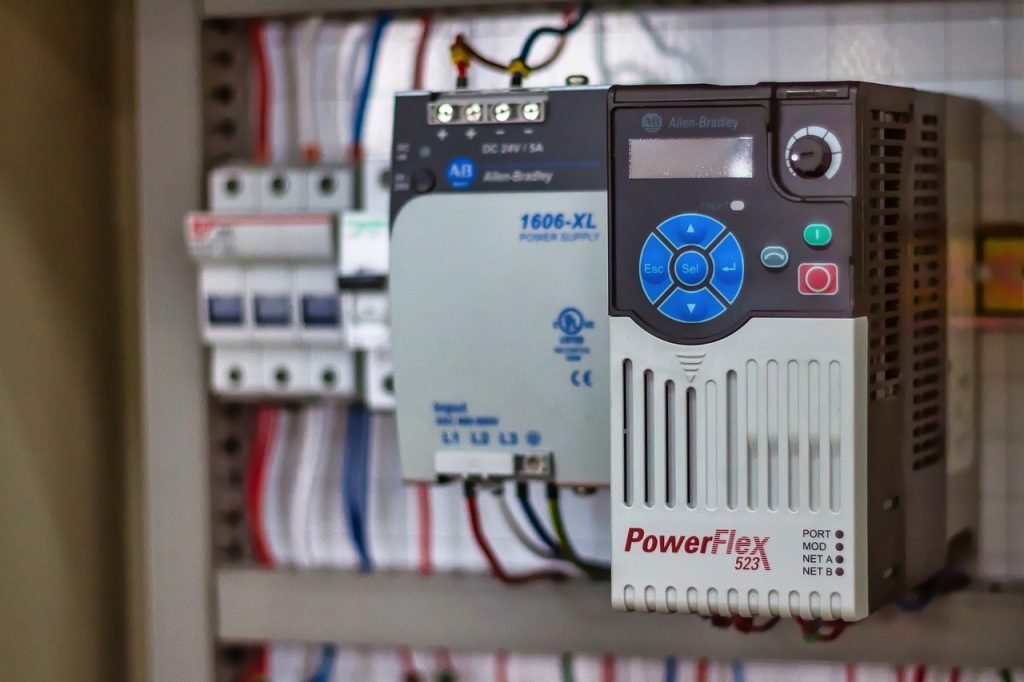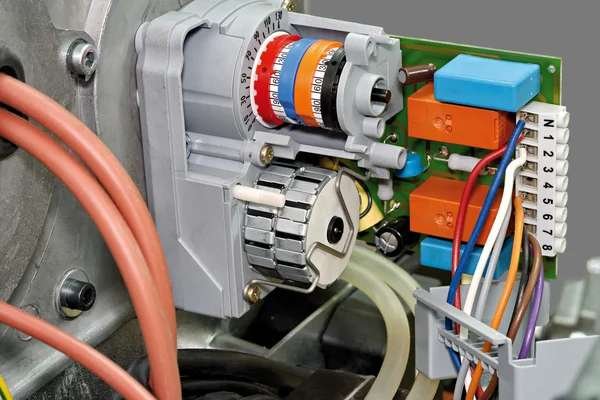

Over 50,000 hot-selling automation module components.
Where High-Performance Industrial Automation Is Essential

Where High-Performance Industrial Automation Is Essential

Decoding the Dominance: Industries Reliant on Quantum PLCs in Industrial Automation

Quantum Programmable Logic Controllers (PLCs), a heritage technology from Modicon now central to Schneider Electric’s automation ecosystem, represent a benchmark for high-performance control systems. These controllers excel due to their robust modularity, dependable reliability, and powerful processing capability. They are specifically engineered to manage large-scale, complex, and mission-critical industrial processes, distinguishing them from standard factory automation PLCs. This analysis, informed by my experience at Powergear X Automation, explores the key sectors and demanding application environments where Quantum PLCs consistently deliver optimal control.

Where High-Performance Industrial Automation Is Essential

The Backbone of Process Industries: Chemical, Oil & Gas, and Water

The process industries mandate controllers capable of managing continuous, often volatile, operations with extreme precision. Quantum PLCs are the preferred choice here.

Refining and Chemical Manufacturing

Chemical and petrochemical facilities require exacting control over variables like temperature, pressure, flow rate, and chemical mixing. Quantum PLCs are extensively deployed to manage these continuous processes.

They provide the necessary reliability for high-risk operations.

Moreover, they integrate seamlessly with Distributed Control Systems (DCS) and SCADA platforms, a crucial feature for enterprise-wide process visibility.

This strong integration capacity, according to a recent IEEE report on industrial control stability, positions the Quantum line as a reliable bridge between field devices and supervisory systems.

Oil, Gas, and Midstream Operations

In the energy sector, from upstream extraction to downstream refining, reliability in harsh environments is non-negotiable.

Quantum PLCs actively automate critical functions across this value chain:

  • Pipeline monitoring and compressor station automation.
  • Refinery unit process control.
  • Managing non-Safety Instrumented System (SIS) controls—though often paired with SIS solutions for complete protection.

The PLC’s robust design allows it to operate reliably in extreme heat, cold, or remote, unconditioned locations, providing tangible operational experience.

Municipal and Industrial Water Treatment

Water and wastewater treatment plants are inherently distributed operations requiring constant, system-wide supervision. Quantum PLCs handle the sophisticated logic required for:

  • Pumping station sequences and lift station control.
  • Precise filtration and chemical dosing processes.
  • System-wide flow and level regulation.

Expert Insight: The Quantum platform’s inherent scalability suits municipalities with numerous remote, distributed sites. Its large I/O capacity efficiently consolidates control, avoiding the need for countless smaller controllers.

Power Generation and Large-Scale Energy Management

The complexity of power plant operation—be it fossil fuel, nuclear, or large-scale renewables—demands a controller with high I/O density and robust communication features.

Thermal and Renewable Power Plants

Quantum PLCs provide stable, high-availability control for critical power processes:

  • Boiler and combustion control systems in thermal power stations.
  • Turbine governor and auxiliary systems.
  • Substation automation and grid synchronization systems.
  • Monitoring and control of large wind and solar farms.

Key Technical Advantages:

  • ✅ High I/O Count Handling: Manages thousands of physical and virtual I/O points efficiently.
  • ⚙️ Network Versatility: Communicates reliably over Modbus TCP/IP, Ethernet/IP, and proprietary fieldbuses, essential for utility applications.

Heavy Industrial Manufacturing: Metals and Pulp/Paper

Manufacturing sectors characterized by continuous, high-speed material transformation rely on the Quantum for its speed and redundancy features.

Metals and Steel Production

Steel mills and primary metals processing require intense, real-time control.

  • Furnace control systems demand high processing speed and temperature accuracy.
  • Rolling mill automation relies on high-speed I/O processing to maintain product gauge and quality during rapid throughput.
  • Material-handling systems, particularly large cranes and conveyors, use the PLC’s complex logic capability.

Pulp and Paper Mills

The pulp and paper industry is defined by extensive continuous processes and high synchronization requirements.

  • Quantum PLCs manage the sequential and analog control of pulp digestion and chemical recovery.
  • They control the demanding processes of the paper machine wet and dry ends, requiring precise speed and tension control for consistent sheet formation.

Author’s Comment: The ability of Quantum PLCs to support CPU redundancy ensures maximum uptime in these 24/7 continuous operations, a critical factor given the high cost of unscheduled downtime in paper production.

Infrastructure and Large Machinery Automation

The stability of the Quantum platform makes it highly suitable for complex infrastructure and significant capital equipment.

Transportation and Smart Infrastructure

In large-scale public and private infrastructure, system reliability is paramount.

  • Transportation systems: Control for rail signaling, metro logistics, and automated baggage handling at airports.
  • Tunnel ventilation and fire safety systems.
  • District heating/cooling networks and large-building mechanical systems.

Its ability to manage physically distributed I/O across vast areas makes it an excellent choice for city-scale projects.

Heavy Equipment and Assembly Lines

Large machinery applications leverage the PLC’s robust architecture for complex, repetitive logic.

  • Automating gantry and overhead cranes.
  • Control systems for heavy mining machinery.
  • Managing complex sequencing on large automotive or aerospace assembly lines.

The capacity for handling complex motion and massive I/O points makes the Quantum an enduring choice for specialized machine builders.

Conclusion and Next Steps

Quantum PLCs maintain a dominant position in the demanding world of industrial automation. They specifically target applications that require high reliability, expansive process control, and seamless integration with supervisory systems. Industries like petrochemicals, power generation, heavy metals manufacturing, and critical infrastructure consistently choose the platform for its stability and scalability.

If you are currently evaluating a robust control system for a large-scale project—whether it involves continuous process control or complex machine automation—the Quantum family offers proven performance and longevity.

Interested in exploring how this high-performance technology can be specifically integrated into your facility? Click here to visit the Powergear X Automation website for detailed solutions and application case studies: https://www.powergearx.com/

Frequently Asked Questions (FAQ)

Q1: How does a Quantum PLC differ from a smaller, compact PLC in practical experience?

A: The main difference lies in scale and power. In my experience, a Quantum PLC handles significantly more complexity. It supports a much greater number of I/O points, offers built-in redundancy options (dual CPUs), and processes logic much faster, which is essential for continuous processes like distillation or rolling mills. Compact PLCs are generally limited to smaller machines or isolated automation tasks.

Q2: Can Quantum PLCs be used as a primary Safety Instrumented System (SIS)?

A: While the standard Quantum PLC is highly reliable and handles many non-SIS safety functions, it is generally not certified for use as a primary SIS component. For TÜV-certified functional safety (SIL 2/3), users should integrate dedicated Safety PLCs (like Schneider Electric’s own Triconex or specialized safety relays) with the Quantum, which acts as the primary process controller.

Q3: What role does its networking capability play in modern plant operations?

A: Its advanced networking is crucial. A Quantum PLC’s ability to use protocols like Modbus TCP/IP allows it to connect massive numbers of field devices and integrate seamlessly with higher-level systems (SCADA, MES, ERP) across an Ethernet plant network. This high-level connectivity facilitates data acquisition for analytics and digital transformation initiatives, which is vital for modern predictive maintenance and efficiency improvements.

Choosing BN 3500 Modules for Industrial Vibration Monitoring

Choosing BN 3500 Modules for Industrial Vibration Monitoring

Choosing the Right Bently Nevada Monitor: 3500/40M vs. 3500/42M for Industrial Automation

Selecting the optimal machinery protection module is vital for system reliability in industrial automation environments. Bently Nevada’s 3500 series offers two primary choices for vibration monitoring: the 3500/40M Proximitor® Monitor and the 3500/42M Proximitor®/Seismic Monitor. Although both are cornerstones of a robust control systems setup, their capabilities and ideal applications differ significantly. Understanding these distinctions ensures you select the best fit for your factory automation needs.

Choosing BN 3500 Modules for Industrial Vibration Monitoring

The Specialized Focus of the 3500/40M Proximitor Monitor

The 3500/40M, a four-channel monitor, maintains a precise and focused application scope. It exclusively manages input from proximity probes (Proximitors). This design targets machines where shaft movement relative to the bearings or housing is the most critical measurement. We primarily see the 40M utilized in high-speed turbomachinery, such as steam and gas turbines, or critical large compressors. It excels at measuring:

  • Shaft Relative Vibration: Detecting radial movement of the rotating shaft.
  • Shaft Position: Monitoring axial (thrust) position.
  • Keyphasor Signals: Providing critical phase reference for diagnostic analysis.

This module is a gold standard where the protection strategy hinges entirely on relative shaft vibration measurements, a common practice in API 670 compliance for critical assets.

Expanded Versatility with the 3500/42M Proximitor/Seismic Monitor

The 3500/42M offers a much broader set of features, reflecting its dual-purpose design. It is also a four-channel module, but its key differentiator is the flexibility in sensor input. The 42M accepts not only proximity probes but also seismic sensors. This makes it suitable for equipment requiring both shaft and casing vibration monitoring simultaneously.

The 42M can measure:

  • Shaft Relative Vibration and Position (using Proximitors).
  • Casing Absolute Vibration (using velocity or acceleration transducers).

Therefore, the 42M module is a preferred choice for monitoring “balance-of-plant” equipment. This includes motors, pumps, fans, and gearboxes, assets that often require casing vibration monitoring for condition assessment. Moreover, the ability to mix sensor types within a single module significantly simplifies the PLC or DCS I/O integration.

Key Technical Differences: Sensor Compatibility and Measurement Scope

The primary technical divergence lies in the sensor compatibility, which directly dictates the module’s application scope.

  • The 3500/40M is limited to Proximitor inputs. Consequently, its measurements are inherently relative to the sensor mount.
  • However, the 3500/42M supports a mixed configuration. It handles Proximitor, seismic velocity, and seismic acceleration sensors.

This flexibility allows the 42M to deliver both relative (shaft) and absolute (casing) vibration readings, providing a more comprehensive view of machine health. In addition, the 42M’s advanced signal processing adapts easily to the different dynamics of various sensor types, offering a more versatile tool for maintenance engineers.

Application Scenarios: Turbomachinery vs. General-Purpose Machinery

The selection between the 40M and 42M often comes down to the machinery type and criticality.

  • 3500/40M for Critical Turbomachinery: When monitoring large, critical assets like turbines or hydrogen compressors, the protection philosophy focuses on preventing contact between the shaft and stationary parts. The 40M provides the precise, dedicated proximity measurements needed.
  • 3500/42M for Flexible Monitoring: For general-purpose machinery, such as an ANSI pump or a cooling tower fan, casing vibration provides sufficient data for condition monitoring. The 42M offers an economical, multi-sensor solution for these assets, consolidating diverse inputs into one industrial automation rack.

Author’s Insight: From a system design perspective, I believe the 42M offers superior long-term value in an expanding plant. While the 40M is perfect for pure API 670 compliance on a turbine, the 42M is far more future-proof. It allows the plant to easily integrate new sensor types (like accelerometers for gearbox fault detection) without adding an entirely new monitoring chassis.

Choosing the Right Module: A Practical Decision Matrix

Consider these practical points before making your final selection:

Choose the 3500/40M if:

  • Your equipment is critical, high-speed turbomachinery.
  • You require pure proximity measurements (shaft vibration, thrust).
  • API 670 compliance based on relative vibration is the main goal.

Choose the 3500/42M if:

  • You need to monitor both shaft and casing vibration.
  • The system requires mixed sensors (e.g., proximity for thrust, velocity for bearing caps).
  • Your plant has many different machinery types (pumps, motors, fans, gearboxes).
  • You prioritize flexibility and consolidation of inputs.

In summary, the 40M is specialized for high-fidelity shaft monitoring, while the 42M is the Swiss Army knife of general-purpose machinery protection.

Technical Power Features of the 3500/42M

The 3500/42M’s added capabilities provide significant operational advantages in complex control systems:

  • Compatibility: Accepts 2-wire and 3-wire proximity probes, velocity sensors, and accelerometers.
  • Mixed Monitoring: Capable of combining different sensor types within the four channels.
  • Enhanced Diagnostics: Supports both absolute (casing) and relative (shaft) vibration analysis.

As a result, the 42M provides a richer data set for predictive maintenance strategies.

Solution Scenario: Gearbox Monitoring

Consider a gearbox paired with a large motor.

  • Motor Monitoring: A 3500/42M channel can monitor casing vibration on the motor using a velocity sensor.
  • Gearbox Monitoring: The same 42M module can use an accelerometer to detect high-frequency gear mesh faults.
  • Thrust Protection: An additional channel can use a proximity probe to monitor the gearbox input shaft’s thrust position.

This single 3500/42M module delivers comprehensive protection and condition monitoring across multiple fault modes, enhancing the overall industrial automation safety profile.

The team at Powergear X Automation Limited can assist you in selecting and integrating the ideal Bently Nevada 3500 solution for your specific application. Learn more about our comprehensive machinery protection and control system integration services by clicking here: https://www.powergearx.com/

Frequently Asked Questions (FAQ)

Q1: How does the choice impact the overall control system (PLC/DCS) integration?

A: Minimal impact on the control system itself. Both the 40M and 42M communicate with the PLC or DCS via their TMR or redundant communication modules (like the 3500/92). The main difference lies in the number of Bently Nevada racks required. If you consolidate multiple sensor types onto a 42M, you reduce the physical footprint and I/O count dedicated to machinery monitoring, potentially simplifying the factory automation system architecture.

Q2: Can I upgrade a 3500/40M to a 3500/42M?

A: No, you cannot simply upgrade the firmware or configuration. They are distinct hardware modules with different internal circuitry to handle the different sensor signal types. If your monitoring needs expand to include seismic measurements, you must purchase and install a new 3500/42M module into the rack. This is a common maintenance upgrade when migrating from solely protection-focused to combined protection and condition monitoring strategies.

Q3: Is one module more complex to configure than the other?

A: The 3500/42M requires slightly more complex configuration due to its versatility. The technician must specify the sensor type (proximity, velocity, or accelerometer) for each of the four channels, along with the correct integration and scaling settings. The 3500/40M is simpler; all channels are proximity-based, limiting the configuration options primarily to scale factors and alarm setpoints. I typically recommend the 42M only be configured by personnel experienced in machinery vibration and sensor characteristics to ensure accuracy.

DCS Integration Choosing 3500-42M Communication Gateway or Analog

DCS Integration: Choosing 3500/42M Communication Gateway or Analog

Communication Gateway vs. 4–20 mA: The Best Way to Transfer Bently Nevada 3500/42M Data to a DCS

The Bently Nevada 3500/42M Proximitor/Seismic Monitor is a cornerstone of critical machinery protection in industrial automation. This robust module reliably manages vibration and position data. A critical engineering decision, however, is determining the optimal path to transmit this protection data to a central Distributed Control System (DCS). Should you rely on the legacy 4–20 mA analog output, or is a modern digital communication gateway the definitive solution?

This article, brought to you by Powergear X Automation, dissects these two options. We will explore their technical capabilities and limitations, providing a clear recommendation to support your factory automation and control systems strategy.

DCS Integration Choosing 3500-42M Communication Gateway or Analog

Understanding the Essential Data from the 3500/42M

The 3500/42M module generates complex data vital for both protection and condition monitoring. The module processes raw sensor input to provide several key metrics.

  • Primary Measurement Values: This includes proximity (gap) or seismic vibration measurements.
  • Processed Variables: Operators rely on calculated values like Overall Vibration, Peak-to-Peak amplitude, $1\times$ and $2\times$ amplitude components, and DC Gap voltage.
  • Protection Status: Crucially, the module issues trip statuses such as OK, Alert, and Danger.
  • Diagnostic Information: The module provides internal health and system diagnostic data accessible via the 3500 rack backplane.

To effectively integrate this into a DCS, the chosen method must efficiently deliver the required data points and maintain adequate update rates.

Option 1: Utilizing 4–20 mA Analog Outputs

The 4–20 mA loop represents a traditional and highly reliable method for data transfer. It converts a measured variable into a proportional current signal.

How the 4–20 mA Output Works

To use this option, the 3500 rack requires optional I/O modules, specifically the Bently Nevada 3500/92 or 3500/96 Analog Output modules. Each analog channel is configured to represent one selected variable—for instance, the overall vibration level—as a continuous 4–20 mA current signal.

Advantages of Analog Transfer

  • Simplicity and Universality: The DCS or PLC (Programmable Logic Controller) requires only standard analog input cards, which are universally supported.
  • Noise Resistance: The current-based signal is inherently resistant to electrical noise over long cable runs.
  • Electrical Isolation: This approach offers excellent isolation between the protection system and the control system.

Limitations of Analog Transfer

However, the 4–20 mA method presents significant constraints when dealing with modern machinery monitoring needs.

  • Single-Variable Constraint: You can transmit only one variable per channel. To get overall vibration and DC Gap, you need two separate analog loops.
  • Data Exclusion: Alarm statuses, event data, diagnostic information, and essential waveform or spectrum data are entirely lost.
  • High Wiring Complexity: A large installation requiring dozens of variables translates into a complex, costly, and resource-intensive wiring process involving numerous analog input cards.
  • Resolution and Speed: The resolution is limited by the DCS/PLC analog-to-digital converter, and the update rate is relatively slow compared to digital protocols.

Use Case: Choose 4–20 mA only if you need minimal data integration, such as displaying the overall vibration value for basic trending on a DCS faceplate.

Option 2: Leveraging a Communication Gateway

For comprehensive integration and modern maintenance practices, a digital communication gateway is the superior solution. This approach transforms the protection system data into a standardized digital protocol.

How Digital Gateway Communication Works

Bently Nevada offers solutions like the 3500/95 or 3500/91 Ethernet Communication Gateway modules. These modules capture all internal data from the 3500 rack via the backplane and present it using industrial protocols like Modbus TCP/RTU, OPC UA, or other Ethernet-based standards.

Advantages of Digital Gateway Transfer

The digital gateway overcomes all the limitations of the analog approach, providing a future-proof link.

  • Full Data Access: Access to all measurement parameters from every channel, not just one processed value.
  • Critical Status Information: Includes all crucial data points: ✅ Alarm statuses (Alert/Danger trips) ✅ Channel OK status ✅ Configuration and system diagnostics
  • High Performance: Features a high data update rate, suitable for detailed trending and fast-acting alarms.
  • Scalability and Efficiency: A single Ethernet cable replaces dozens or hundreds of analog signal wires, drastically reducing installation complexity and cost.
  • Monitoring Platform Support: Facilitates integration with specialized condition monitoring systems, such as GE’s System 1 platform.

Limitations of Digital Gateway Transfer

This option is not without its own requirements.

  • Increased Configuration: Requires networking knowledge and protocol configuration (e.g., Modbus address mapping).
  • DCS/Network Dependency: The DCS or SCADA system must natively support the chosen industrial protocol (e.g., Modbus TCP).
  • Network Reliability: Performance depends entirely on the stability and reliability of the industrial network infrastructure.

Use Case: Choose a communication gateway when multiple variables are required, diagnostic integration is essential, or when transmitting a large number of measurement points.

Best Practice Recommendation and Expert Insight

In the landscape of modern industrial automation, our recommendation is decisive: The Communication Gateway is the preferred solution.

The industry trend, validated by reports from ISA and MarketsandMarkets, shows a clear shift toward digital integration for its scalability and comprehensive data access. While 4–20 mA has a place in legacy or extremely basic systems, it fails to meet the data demands of predictive maintenance and holistic asset management.

⚙️ Use 4–20 mA for:

  • Minimalist Requirements: Displaying only one single, slow-changing overall value.
  • Legacy Systems: Facilities where existing wiring and control systems lack networking capability.

🔧 Use a Communication Gateway for:

  • Comprehensive Diagnostics: Accessing all parameters for advanced asset health monitoring.
  • Efficiency and Scalability: Eliminating massive analog card and wiring infrastructure.
  • Modern Standards: Integration with digital protocols in line with modern PLC and DCS architecture.

Author Comment (Powergear X Automation): Relying solely on 4–20 mA for critical machinery data is like buying a Ferrari but only using the speedometer. The true value of the Bently Nevada 3500/42M lies in its full spectrum of data—alarms, diagnostics, and multiple parameters. The communication gateway unlocks this value, making it a crucial component for maximizing machine uptime and embracing the principles of Industry 4.0.

Practical Solution Scenario: Advanced Asset Management

Imagine a large turbine package. The protection system generates eight key values (Overall, 1x, Gap, Phase) for each of the four bearings, plus two thrust position measurements.

  • Analog Scenario: You would need (8 x 4) + 2 = 34 separate analog loops and 34 analog input channels on the DCS. This creates complexity and cost.
  • Digital Gateway Scenario: A single Ethernet cable from the 3500/95 gateway can deliver all 34 values, plus all associated alarm statuses and diagnostic information, using only one DCS network port. This greatly simplifies wiring, reduces hardware cost, and provides richer data for sophisticated analysis in systems like GE’s System 1.

Frequently Asked Questions (FAQ)

Q1: Can I use both 4–20 mA and the Communication Gateway simultaneously?
A: Yes. Many clients choose a hybrid approach. They use the 4–20 mA output for a few primary, overall vibration values needed immediately on the basic DCS Human-Machine Interface (HMI) screen. Meanwhile, the communication gateway provides the full diagnostic dataset to a separate condition monitoring platform (System 1), effectively separating the protection and diagnostic data streams.

Q2: What is the main configuration hurdle when implementing a Communication Gateway?
A: The primary configuration challenge is accurately mapping the Modbus register addresses within the DCS or SCADA system. Each Bently Nevada variable (e.g., Overall Vibration Channel 1) corresponds to a specific register address in the gateway. This mapping must be meticulously configured to ensure the DCS is reading the correct value, requiring close coordination between the machinery protection specialist and the DCS engineer.

Q3: Does the Communication Gateway replace the need for physical relay outputs for trips?
A: No. The communication gateway is primarily for data transfer to the DCS/SCADA system. For critical machinery trip actions, the physical relay outputs (3500/32 Relay Module) must still be used. Protection systems operate independently and rapidly based on hardware logic; digital communication is too slow and network-dependent to be the primary means of shutdown protection.

To learn more about optimizing your machinery protection integration and leveraging the power of industrial communication, visit Powergear X Automation at https://www.powergearx.com/.

Troubleshooting Bently Nevada 3500/22M TDI

Flashing 3500/22M TDI Fault: Causes and Fixes for Communication Module Failure

Decoding the Fault: Why the 3500/22M’s ‘OK’ LED is OFF While ‘TX/RX’ Flashes

The Bently Nevada 3500 Machinery Protection System is a cornerstone of critical asset monitoring in industrial automation. The 3500/22M Transient Data Interface (TDI) module is essential for data exchange and system interface, acting as the primary communication gateway between the rack and external systems, often a DCS or PLC. When its ‘OK’ LED is unlit (OFF) and the ‘TX/RX’ LED is rapidly flashing, it signals a critical state: the module has power and is attempting communication, yet it is fundamentally blocked from achieving a healthy, fully operational status.

This situation demands immediate attention to prevent system downtime. As observed in many factory automation environments, the causes typically fall into software missteps, firmware issues, or subtle hardware failures.

Troubleshooting Bently Nevada 3500/22M TDI

Configuration Mismatches Block Healthy Operation

The most frequent culprit behind a failed ‘OK’ LED is a configuration issue. The module must pass rigorous self-checks against its loaded setup to achieve a healthy state. If the control systems configuration is invalid or incomplete, the module cannot proceed.

Key configuration pitfalls include:

Missing or Corrupted Configuration: The module has no valid or intact operating parameters loaded.

Incorrect Slot Assignment: The physical placement of the module does not match the assigned slot in the configuration software.

System Parameter Discrepancies: A mismatch exists in the configured rack address, essential communication parameters, or the designated TDI role.

The persistent flashing of the ‘TX/RX’ LED in this state shows that the module is still trying to exchange limited packets, perhaps for network discovery, but the system does not recognize it as a properly configured device.

Outdated or Corrupt Firmware Prevents Boot-up

The integrity and compatibility of firmware across the entire 3500 rack are non-negotiable for stable operation. Firmware issues can easily prevent the module from reaching an ‘OK’ status.

Common firmware-related barriers:

Version Incompatibility: The module’s firmware version is obsolete relative to the current rack configuration or the System 1 software.

Firmware Image Corruption: The internal software of the module itself is damaged.

Database Mismatch: The module’s firmware does not align with the 3500 Module Database used by the configuration application.

In these specific scenarios, the system’s protective logic disables the ‘OK’ status. This keeps the module from going online and potentially compromising the integrity of the protection system. This is a crucial safety feature in machinery monitoring.

Subtle Hardware Failures Impact Core Functionality

If software validations all pass, engineers must investigate potential hardware integrity issues. A completely OFF ‘OK’ LED often points to a failure within the physical components.

Hardware failure indicators:

Internal Circuit Board Fault: Failure of core components like memory chips or the processor.

Module Power Rail Issues: Internal power supply regulation failures within the 3500/22M.

Backplane Connector Damage: Bent pins or damaged seating on the module or the backplane slot.

The Author’s Insight: The ‘TX/RX’ LED might still flicker because the basic transmitter/receiver circuitry often operates independently of the main processor’s full operational readiness. This is a valuable diagnostic clue showing that basic I/O power is present.

Backplane Communication Interruptions

The 3500/22M relies on the rack’s backplane for stable internal communication and power distribution. If the backplane link is interrupted, the module cannot successfully achieve a healthy operational state.

Common backplane causes:

Poorly Seated Module: The module is not fully or correctly inserted into the slot.

Contaminated Connectors: Oxidation or foreign debris on the gold-plated connectors.

Faulty Rack Slot: The physical slot on the backplane itself is damaged.

Power Distribution Irregularities: Unstable or insufficient voltage delivered via the backplane.

Even if the module receives enough power to flicker the ‘TX/RX’ LED, a loss of the critical backplane communication path forces the ‘OK’ LED to remain OFF.

External Network Link Faults

The flashing ‘TX/RX’ indicates active attempts to communicate with external systems (like a DCS or a historian). However, if this external link is unstable or incorrectly configured, the module’s initialization sequence can stall.

Potential external communication issues:

Incorrect Network Parameters: Misconfigured IP addresses, baud rates, or protocol settings.

Damaged or Miswired Cable: A fault in the physical Ethernet or serial communication cable.

External System Conflicts: Errors or conflicts when interfacing with external systems, often seen in complex control systems networks.

Rack Interface Module (RIM) Identification Problems

The 3500 Rack Interface Module (RIM) or TDI is responsible for recognizing and managing all other modules in the rack. If the RIM fails to properly identify the 3500/22M, the ‘OK’ status will be suppressed.

Causes related to module recognition:

Incomplete Initialization: The 3500/22M fails to complete its identification handshake with the RIM.

Incorrect Module Sequencing: The physical or configured order of modules is wrong.

RIM Fault: A failure within the Rack Interface Module itself affects module identification services.

Addressing Power Instability Within the Rack

While the flashing ‘TX/RX’ confirms some power is present, insufficient or unstable power can easily prevent the module from completing its resource-intensive boot sequence.

Power supply related reasons:

Weak Rack Power Supply: The overall power supply unit is aged or operating below specification.

Overloaded Power Bus: Too many high-draw modules are installed, straining the power capacity.

Internal Power Distribution Faults: Short circuits or loose wiring within the rack’s power distribution.

Solutions & Next Steps

A systematic troubleshooting approach is key to resolving this critical module state:

✅ Configuration Validation: Always start by verifying the configuration file against the physical installation and ensuring firmware compatibility. ⚙️ Reseating the Module: Power down the rack (if safe) and reseat the 3500/22M module to rule out a loose connection. 🔧 Checking Backplane Integrity: Inspect the backplane slot for any bent pins or contamination. ✅ Communication Path Review: Confirm external network settings (IP, baud rate) are correct and test cables for continuity.

If your team is facing chronic issues with Bently Nevada systems, our experts at Powergear X Automation can provide specialized support and integration services. Visit Powergear X Automation here for advanced troubleshooting guides and system consultation.

Frequently Asked Questions (FAQ)

Q1: The ‘TX/RX’ LED is flashing, but communication software still shows the module offline. Why?

The ‘TX/RX’ LED is a low-level indication that the transmitter and receiver circuits are active and attempting to send or receive data packets. However, if the module’s main processor or its operating system has failed to boot (often due to a configuration or firmware lock-out), the module cannot execute the higher-level application protocol needed to be recognized as ‘online’ by the external monitoring software.

Q2: Does this fault state indicate that my machinery is completely unprotected?

Not necessarily, but it is a serious warning. The 3500/22M is the communication module; its failure means that transient data, alarms, and diagnostics are not being sent to the control room (DCS/Historian). However, the other 3500 protection modules (like the 3500/40 or 3500/50) are typically designed to continue performing their localized monitoring and protective trip functions independently of the 3500/22M’s communication status. You lose visibility and logging, not immediate protection.

Q3: Based on experience, which cause should I check first for the quickest fix?

In our field experience, the single most common and easiest issue to verify is Module Seating/Configuration Mismatch. After a maintenance window or module swap, technicians sometimes overlook a correct reseat or load an old configuration file. Always verify the configuration file’s integrity and the module’s physical seating before moving on to more complex checks like firmware updates or hardware replacement.

3500/22M TDI vs 3500/92 Gateway: Modbus in Industrial Automation

3500/22M TDI vs 3500/92 Gateway: Modbus in Industrial Automation

The Role of the 3500/22M Transient Data Interface (TDI)

The Bently Nevada 3500/22M TDI is a critical component in the 3500 industrial automation rack. It functions primarily as the system’s interface module. This module occupies Slot 1, right next to the power supplies. Its main purpose involves configuration, data acquisition, and transferring data to host software. Specifically, the TDI gathers both steady-state and transient/waveform data. It replaces the older 3500/20 Rack Interface Module and external communications processors. The TDI communicates using Ethernet (10Base-T or 100Base-TX) and optionally fiber optics (100Base-FX). Importantly, it utilizes a proprietary “BN Host Protocol” or “TDI Protocol” over TCP/IP. Therefore, the 3500/22M TDI is fundamentally designed for communication with Bently Nevada’s dedicated monitoring and configuration software, such as System 1.

3500/22M TDI vs 3500/92 Gateway: Modbus in Industrial Automation

The Need for the 3500/92 Communication Gateway Module

However, when integrating the 3500 rack into plant-wide control systems, the 3500/92 Communication Gateway becomes essential. This module is specifically engineered to link Bently Nevada data with external platforms. These external systems include process-control, SCADA, DCS, and PLC systems. The 92 Gateway supports industry-standard protocols. It offers both serial (RS-232 / RS-422 / RS-485) Modbus RTU and Ethernet Modbus TCP/IP. In addition, the gateway translates the rack’s monitored values, statuses, and alarms into a Modbus-compatible format. This translation makes it straightforward for industrial automation engineers to map these critical values into their control logic.

Does the 3500/22M TDI Support Modbus Communication?

The short answer is no; the 3500/22M TDI does not inherently offer Modbus communication for integration with DCS/PLC systems. Official documentation for the 22M TDI confirms its communication is restricted to the proprietary BN Host Protocol. This protocol is strictly for communication with Bently Nevada’s own monitoring and configuration tools. There is no mention of support for standard automation protocols like Modbus RTU or Modbus TCP in the TDI specifications. System-level documentation further clarifies this distinction. It indicates that digital communications intended for process control must originate from a dedicated Communication Gateway module. Consequently, the TDI serves its vital role in high-fidelity data collection and analysis, not in plant-level control interfacing.

The Critical Requirement for DCS/PLC Integration

You need the 3500/92 Communication Gateway whenever you must export Bently Nevada data to a non-native system. This integration is common in modern factory automation environments.

  • ✅ Export Measurements: Send vibration levels, alarms, and channel health to a DCS, PLC, or SCADA system via standard protocols like Modbus RTU or Modbus TCP.
  • ✅ Real-time Trending: Perform real-time data logging, alarm forwarding, and execute control logic based on the 3500 rack data.
  • ✅ Plant-wide Integration: Integrate the 3500 machinery protection system into a centralized plant automation system.

Therefore, if an organization relies solely on the 3500/22M TDI, they can only interface with the manufacturer’s software like System 1. They cannot natively send standardized Modbus data directly to a third-party PLC or DCS. According to recent studies, the integration of condition monitoring data with DCS systems significantly improves asset performance management across industries (source: MarketsandMarkets Industry Report on Industrial Control Systems).

Table: Key Differences in 3500 Communication Modules

ModulePurpose / RoleSupports Modbus?Typical Use-case
3500/22M TDIRack Interface, Configuration, High-Speed Data Collection (transient/waveform)No (Uses proprietary BN/TDI protocol over Ethernet/USB)Data logging, condition monitoring, advanced waveform analysis, System 1 interface
3500/92 GatewayExports rack values/status to external plant control/automation systemsYes (Supports Modbus RTU and Modbus TCP)DCS/SCADA/PLC integration, historian logging, interlocks for process control, industrial automation

Author’s Insight: Choosing the Right Module for Industrial Automation

Powergear X Automation Comment: Many new industrial automation engineers mistakenly assume the 3500/22M TDI is sufficient for all communications. However, they soon discover this limitation when attempting to map the 3500 data into their Rockwell, Siemens, or Emerson PLCs or DCSs. The TDI’s focus on high-speed, proprietary data for advanced analysis (System 1) differs completely from the gateway’s focus on robust, standardized protocol export (Modbus). Moreover, relying on a dedicated gateway like the 3500/92 separates the machine protection function from the process control function. This design choice aligns with industry best practices, ensuring a failure in the DCS communication link does not compromise the vibration monitoring system’s integrity. To understand more about robust protocol integration in factory automation, we invite you to explore our solutions at Powergear X Automation.

Practical Application Scenario: Maximizing Uptime

Consider a critical turbine application. The 3500/22M TDI continuously streams high-resolution vibration data to the System 1 software for deep diagnostics and predictive maintenance. Meanwhile, the 3500/92 Communication Gateway simultaneously sends essential parameters—the overall vibration level and the ‘Alert’ alarm status—to the plant’s DCS via Modbus TCP/IP. This dual setup allows plant operators to monitor immediate, actionable status from their familiar DCS console while expert reliability engineers perform detailed analysis using the System 1 platform. This strategy optimizes both operational response time and long-term asset health management.

Frequently Asked Questions (FAQ)

Q: Why can’t Bently Nevada simply integrate Modbus into the TDI to reduce hardware?
A: The TDI is engineered for high-bandwidth, proprietary communication to support advanced waveform analysis and configuration. Integrating the processing power required for a reliable, multi-client Modbus server, along with the necessary data mapping and protocol stacks, would significantly complicate the TDI’s core task and potentially compromise its performance. The dedicated 3500/92 Gateway separates these concerns, ensuring optimal performance for both high-fidelity monitoring and standard industrial control integration.

Q: If I use the 3500/92, do I still need the 3500/22M TDI?
A: Yes, you typically need both. The 3500/22M TDI performs the essential function of rack configuration and high-speed data collection from the monitoring modules. Without the TDI, you cannot configure the rack or collect the detailed transient data needed for advanced condition monitoring software like System 1. The 3500/92 Gateway only handles the translation and export of selected data points to external systems.

Q: What is the main advantage of using Modbus TCP over a proprietary protocol in automation?
A: Modbus TCP/IP is an internationally accepted, open standard protocol. Its main advantage is interoperability. It allows you to seamlessly connect the 3500 system to almost any major brand of PLC, DCS, or SCADA system (e.g., Siemens, Schneider, Honeywell, ABB) without needing special drivers or custom software. This reduces engineering time, simplifies maintenance, and promotes consistency across the entire factory automation infrastructure.

Bently Nevada 21000 Probe: On-Site Testing for Industrial Automation

Bently Nevada 21000 Probe: On-Site Testing for Industrial Automation

Comprehensive On-Site Testing: Verifying Bently Nevada 21000 Probe Systems for Reliable Industrial Automation

Installing Bently Nevada 21000 Series Probe Housings is crucial for machine protection. However, installation is just the start. Thorough on-site testing confirms mechanical integrity and signal quality. This verification is essential for reliable industrial automation systems. It ensures accurate data for predictive maintenance and machinery diagnostics.

The Critical Role of Commissioning Checks in Control Systems

Testing after installation validates the entire proximity probe system. It ensures probe housings are secure and properly aligned. Moreover, it confirms the proximity probes maintain the correct target gaps. Reliable signal paths are vital for integrating with a DCS or PLC. Data accuracy is the foundation of effective machine protection.

✅ Expert Insight: API 670, the standard for Machinery Protection Systems, mandates verification. This includes functional testing before a machine starts. Adhering to this standard ensures system reliability and compliance.

Bently Nevada 21000 Probe: On-Site Testing for Industrial Automation

Essential Pre-Test Safety and Equipment Preparation

Safety must always come first in factory automation. Always follow Lockout/Tagout (LOTO) procedures. Confirm the machinery is completely locked down and cannot move. Verify that the Bently Nevada probe model matches the housing and proximitor. Experienced field engineers prioritize calibrated tools.

Necessary Tools for Field Testing:

Calibrated digital multimeter (DMM).

A precision proximity probe gap meter.

Oscilloscope or a portable vibration analyzer.

Detailed Mechanical Verification of Probe Housing Integrity

Begin with a thorough mechanical inspection. Ensure the 21000 housing is mounted perfectly perpendicular to the shaft. Proper alignment minimizes signal distortion. Check all O-ring seals for any potential contamination. Furthermore, confirm that all mounting bolts meet the specified torque values. Incorrect torque can lead to housing shift during operation. Misalignment exceeding 1° to 2° significantly impacts eddy-current sensor accuracy.

Electrical Continuity: A Cornerstone of Signal Trust

After mechanical checks, electrical testing confirms system health. Technicians must verify proper cable routing. This includes checking for correct shielding and grounding practices. Use a DMM to test continuity from the probe to the proximitor terminals. Look for abnormal resistance readings. High resistance often indicates damaged insulation or loose connections. This testing prevents hidden issues common from improper cable pulling during setup.

Setting the Precise Gap Voltage for Optimal Performance

The proximity probe’s gap voltage is the system’s baseline. Power the system and adjust the probe until the target DC voltage is achieved. This is typically -10  VDC± 1  VDC for Bently Nevada systems. Always measure this voltage at the proximitor output. In addition, perform a linear range check. Apply a known shim offset and verify that the voltage change matches the probe’s calibration curve. This confirms the system operates within its most accurate range.

⚙️ Practical Tip: Staying strictly within the linear operating range prevents signal clipping. This ensures that the vibration monitoring system delivers true amplitude readings.

Dynamic Signal Validation and Noise Assessment

Dynamic testing proves the system performs under load. If possible, perform a slow machine roll or a “bump test.” Observe the waveform stability on the vibration monitor. A clean signal is critical for accurate fault detection. Moreover, check for signal noise spikes or drift. Excessive AC noise when the machine is stationary often points to grounding or shielding problems. A stable DC bias confirms system integrity for dynamic monitoring.

System Integration and Monitor Calibration for Control Systems

The final phase involves integrating the monitoring data into your control systems. Verify that the monitor’s scaling precisely matches the probe and proximitor specifications. Alarm and trip setpoints must align with the site’s condition monitoring strategy. Conduct a full loop test: Sensor → Proximitor →Monitor→ DCS. This confirms real-time readings transfer accurately. It also verifies that simulated alarm and trip events successfully activate plant protection protocols.

Establishing a Reliable Baseline and Documentation

Complete the commissioning by collecting baseline data. Record stable vibration and position readings under normal, no-load conditions. Save all waveform and spectrum data as reference files. Finally, log all final gap voltages and physical orientations. Thorough documentation supports warranty compliance and API 670 acceptance. This baseline is invaluable for long-term predictive maintenance programs.

Ubest Automation Limited: Your Partner in Industrial Automation

Ubest Automation Limited specializes in supplying reliable hardware and expertise for machine protection systems. We understand that the integrity of your industrial automation systems, including your Bently Nevada installations, is non-negotiable. Our goal is to provide high-quality components that support data-driven reliability strategies.

Click here to explore our full range of PLC, DCS, and Factory Automation solutions at Ubest Automation Limited and elevate your machine monitoring capabilities.

Application Scenario: Turbo-Compressor Protection

In a major petrochemical plant, a newly installed turbo-compressor requires protection. Our team implemented Bently Nevada 21000 systems. After completing all checks—from mechanical seating to loop testing with the main DCS—we achieved a stable baseline. This rigorous process guaranteed that the turbine’s protection system was fully functional before the critical start-up, safeguarding an asset valued at over $20 million.

Frequently Asked Questions (FAQ)

Q1: What is the most common commissioning error with Bently Nevada probe systems?

A: The most frequent issue we encounter is incorrect scaling between the protection monitor and the plant’s main control systems (DCS/PLC). The hardware may be perfect, but if the monitor’s output range is improperly configured to the input card’s scaling, the system will provide inaccurate, meaningless readings. This is why a full loop test is mandatory.

Q2: How does improper grounding affect the dynamic signal from a proximity probe?

A: Improper grounding or shielding introduces high-frequency noise and 50 Hz/60 Hz line frequency interference into the signal. This noise can mask actual, low-amplitude machine faults, such as early-stage bearing wear. A clean, stable DC bias with minimal AC noise (less than 1 mV peak-to-peak) when the machine is at rest is the gold standard for reliable signal quality.

Q3: Why is it crucial to check the linear range, even if the gap voltage is set correctly?

A: Setting the nominal gap voltage (e.g., 10 VDC) is insufficient. The linear range check confirms that the probe has sufficient travel margin in both directions before hitting the non-linear “clipping” points. If the probe is too close to a clipping point, a large vibration event could be severely distorted, leading to under-reporting of a dangerous vibration amplitude. This margin ensures accurate measurement of high vibration amplitudes.

Allen-Bradley PowerFlex 40P Drive - Industrial Control

PowerFlex 40P: Essential Motor Control for Automation

Optimizing Motor Control: Why the Allen-Bradley PowerFlex 40P is Key for Industrial Automation

The Allen-Bradley PowerFlex 40P series is a highly reliable and efficient motor control solution. It delivers exceptional performance across many industrial applications. From basic localized systems to complex, medium-scale operations, this drive ensures consistent output. It offers flexible power options, advanced I/O, and intelligent communication capabilities. Therefore, the PowerFlex 40P provides a strategic balance of power, versatility, and affordability. Plant managers and OEMs value its compact, rugged design for managing pumps, conveyors, and general machinery. This drive truly simplifies factory automation.

Allen-Bradley PowerFlex 40P Drive - Industrial Control

Flexible Power for Diverse Industrial Applications

The PowerFlex 40P supports a wide array of voltage classes and horsepower ratings. This broad compatibility helps facilities streamline their drive inventory. As a result, standardizing control systems becomes much simpler.

Low Voltage (200–240V AC): These drives range from 0.4 to 7.5 kW (0.5 to 10 HP). They handle 2.3 to 33 Amps. These units are perfect for small machines and localized motor control.

Mid-Range Voltage (380–480V AC): Power options cover 0.4 to 11 kW (0.5 to 15 HP). They draw 1.4 to 24 Amps. This makes them ideal for mid-range operational needs.

High Voltage (500–600V AC): These robust models offer 0.75 to 11 kW (1 to 15 HP). They manage 1.7 to 19 Amps. Moreover, they suit high-demand equipment like pumps and compressors.

Author’s Comment (Powergear X Automation): In an era where the cost of capital equipment is rising, an engineer must select a drive that matches the load exactly. This series allows for precision selection, avoiding the common mistake of over-specifying power and increasing project costs unnecessarily. This design philosophy aligns perfectly with lean industrial automation practices.

Advanced Input/Output Enhances PLC Integration

The PowerFlex 40P supports extensive I/O configurations. This reduces the need for external relays and complex panel wiring significantly. Therefore, system setup time is greatly reduced.

Digital Inputs: Two semi-programmable inputs simplify basic start/stop control. In addition, five fully programmable digital inputs enable deep customization for specific application logic.

Output Flexibility: Two opto outputs and a programmable Form C relay output provide critical real-time motor feedback and status.

Analog Signals: Analog input/output options (0–10V or 0–20mA) are selectable via a DIP switch. This ensures accurate control signals for modern DCS and PLC systems.

These streamlined I/O capabilities simplify the process of integration. They also offer users greater flexibility when tailoring drive behavior for unique control environments.

Seamless Industrial Communication for Smart Factories

The PowerFlex 40P series supports modern industrial networks natively. This often eliminates the need for expensive, extra communication hardware.

Network Support: Optional communication cards provide native support for major protocols. This includes DeviceNet, EtherNet/IP, ControlNet, PROFIBUS DP, and LonWorks.

Remote Access: Wireless Bluetooth access is available through the DSI Wireless Interface Module (WIM). This allows for easy remote monitoring and adjustment.

As a result, seamless connectivity to PLCs and HMIs reduces engineering overhead and system downtime. This feature promotes faster commissioning and diagnostics across the factory automation layer. A 2024 IEEE report highlighted that standardized fieldbus communication shortens industrial project timelines by up to 15%.

Energy Management and Precision Feedback Control

Engineers designed the PowerFlex 40P to manage dynamic loads while improving energy efficiency. It ensures consistent motor performance at all times.

Encoder Feedback: The drive auto-detects encoder feedback with 5V, 12V, or 24V DC line driver signals. This enables highly accurate speed and position control.

Smooth Operation: Moreover, PWM frequency can reach 250 kHz. This ensures very smooth and acoustically quiet operation.

Power Reliability: Ride-through functionality uses half-DC bus operation. This is critical for keeping motors running during brief power disturbances.

Energy Sharing: DC bus sharing and pre-charge control improve energy utilization. This is particularly effective across multiple drives in shared bus systems.

These energy-conscious features are key for facilities focused on achieving sustainability goals.

Built for Durability in Harsh Industrial Environments

The PowerFlex 40P series features an engineered design for durability and operational flexibility. It performs reliably in challenging field conditions.

Braking Capacity: Integrated brake resistors support rapid load deceleration. This is essential for safe operation in hoisting and high-speed conveyor applications.

Thermal Resilience: Compact frames, such as the 22D-B3P0N104, operate without extra cooling up to 50°C ambient temperatures.

Mounting Versatility: It offers flexible mounting options, including DIN rail. Enclosure ratings range from NEMA 1/IP30 to NEMA 4/IP66.

For heat-sensitive or space-constrained setups, the PowerFlex 40P offers a high-performance drive in an efficient package. This minimizes the footprint required in crowded control panels.

Versatile Motor Control for Complex Motion Profiles

The PowerFlex 40P supports both open-loop and closed-loop control methods. This gives users flexibility for various motion control requirements.

Precision Control: Closed-loop control with encoder feedback allows for high-precision speed regulation.

Motion Sequencing: Local Position Control (StepLogic) supports basic motion profiles. The drive can store up to eight steps internally.

Smooth Transitions: Zero-cross performance optimization ensures smooth motion transitions in bipolar mode.

Reference Inputs: Multiple speed references can come from analog signals or network commands. This is invaluable for coordinated drive groups in complex control systems.

These built-in features allow the drive to handle everything from basic V/Hz control to more complicated positioning tasks without expensive, external components.

Featured Applications: Real-World Solution Scenarios

The PowerFlex 40P is suitable for numerous applications across industrial automation. Here are two prime examples:

Case 1: HVAC System Optimization (Allen-Bradley 22D-B012N104)

This model operates on 208–240V AC 3-phase power. It provides 3 HP (2.2 kW) and 12 Amps of output current.

Key Features: It includes robust PID control with auto-tuning, transient protection, and integrated dynamic braking. Setup for general-purpose use is simplified.

Best Use: This unit is ideal for cost-effective motor control in small-scale applications. Think of it in HVAC systems, light conveyors, and pump stations. Its reliability and energy efficiency are critical for these uses.

Case 2: High-Demand Material Handling (Allen-Bradley 22D-B033F104)

This model runs on 240V AC 3-phase power. It delivers 10 HP (7.5 kW) and 33 Amps of output.

Key Features: It features RS485 communication, StepLogic for sequencing, and enhanced diagnostics via a 4-digit display and 10 LED indicators. Moreover, it supports Zero Stacking and DIN rail mounting.

Best Use: This is perfect for high-inertia loads and medium-to-high-demand industrial applications, such as mixers and bulk material handling. Its enhanced diagnostics ensure maximum uptime in critical processes.

Final Thoughts: The Strategic Choice for Drive Optimization

The Allen-Bradley PowerFlex 40P series is a highly strategic investment for industrial teams. It allows them to optimize motor control performance without overspending. Its robust feature set, flexible power ranges, and compact form factor meet critical requirements for value and reliability. The 40P delivers dependable operation and built-in intelligence, satisfying the high demands of both maintenance professionals and design engineers.

If you are looking for in-depth technical guides, training, or tailored system integration for your PowerFlex drives, we invite you to explore the expertise offered by Powergear X Automation.

Click here to find your next automation solution: https://www.powergearx.com/

Frequently Asked Questions (FAQ)

Q1: What is the main operational advantage of using the PowerFlex 40P over a standard V/Hz drive in a pumping application?

A: The primary advantage lies in the closed-loop control capability, particularly its PID function and encoder feedback support. A standard V/Hz drive simply controls voltage and frequency. However, the 40P can precisely adjust its output based on real-time process feedback (like pressure or flow). This provides stable process control and ensures the pump runs at the optimal speed for energy savings, which a basic drive cannot achieve.

Q2: My facility uses an older DeviceNet network. How easily can the PowerFlex 40P integrate without major upgrades?

A: Integration is straightforward. Unlike some modern drives that only offer native EtherNet/IP, the PowerFlex 40P explicitly supports optional communication cards for older fieldbuses, including DeviceNet and ControlNet. You simply install the appropriate card, and the drive becomes a native node on the existing network. This is a massive benefit for brownfield upgrades, preventing the need for costly and disruptive network overhauls.

Q3: I am an OEM building small, heat-sensitive machines. What is your experience with the drive’s thermal performance?

A: Based on our experience, the PowerFlex 40P’s ability to run up to 50°C ambient without derating (for the compact frames) is a significant design strength. This high thermal tolerance, coupled with Zero Stacking capability, means you can place the drives right next to each other in a small, sealed panel without the usual concern of a heat-related fault trip. This translates directly to a smaller overall machine footprint and reduced panel cooling costs.

Bently Nevada 3500/22M TDI Evaluation for Industrial Automation

Bently Nevada 3500/22M TDI Evaluation for Industrial Automation

Evaluating Your Bently Nevada 3500/22M TDI: Replacement vs. Reconfiguration in Industrial Automation

The Bently Nevada 3500 Machinery Protection System is a cornerstone of critical asset monitoring in heavy industry. At its core, the 3500/22M Transient Data Interface (TDI) acts as the central nervous system. This module is vital for configuration management, transient data capture, and communication within complex industrial automation and control systems. When operational issues arise, maintenance engineers face a crucial decision: Is this a simple fix via reconfiguration, or does the TDI require a full replacement? Making the wrong call leads to unnecessary downtime and increased costs, impacting overall factory automation efficiency.

Bently Nevada 3500/22M TDI Evaluation for Industrial Automation

The Critical Role of the 3500/22M TDI in Machine Protection

The TDI is more than a simple gateway; it is the data traffic controller for the entire rack. Its primary duties include storing the rack configuration, managing high-speed data transfer to System 1 condition monitoring software, and ensuring reliable Modbus TCP/IP and Ethernet communications. Moreover, it coordinates module diagnostics and provides essential time synchronization. Because its function is so pervasive, any error in this module directly compromises the integrity of machine protection. Therefore, a structured diagnostic approach is essential for maintaining reliable PLC and DCS integration environments.

Symptoms Suggesting a Simple Reconfiguration is Sufficient

  • Many common TDI issues stem from software glitches or data integrity problems, not hardware failure. When you observe these symptoms, a simple configuration reload or firmware update is typically the most effective solution:
  • Intermittent Communication Failure: The system may experience occasional Modbus drops or System 1 connection losses. This often presents as data timeout warnings. Crucially, the TDI’s front-panel LEDs remain green, and no hard fault lights appear.
  • Configuration Integrity Errors: Look for “Configuration Not Valid” messages or issues during upload/download with the 3500 Configuration Software. These errors usually follow an interrupted transfer or an improper configuration change.
  • Firmware Mismatch and Corruption: If the TDI was recently updated, or if rack modules and the TDI have mismatched firmware versions, communication warnings are common. Reloading the firmware often resolves these versioning inconsistencies.
  • Temporary Recovery After Power Cycling: If cycling the rack power temporarily restores full operation, the underlying hardware is generally sound. The issue is likely a software lock-up or memory error, a scenario often remedied by a re-initialization process.

Clear Indicators That a TDI Replacement is Necessary

Hardware failures are definitive and cannot be resolved with software fixes. If your TDI exhibits the following signs, prepare for a full module replacement to restore system functionality:

Hard Fault Indicators on the Module: The presence of a continuously illuminated red “Module Fault” LED, or a red “OK” LED, signals a severe internal component failure. Also, if all LEDs remain off after powering the rack, internal power supply or circuit damage is suspected.

Irrecoverable Communication Hardware Failure: This means the Ethernet port is physically non-functional. The link lights on both ports will not illuminate, even after verifying cables and network switches are working. The module is detected, but it cannot physically transmit or receive data.

Failure Persistence After Full Diagnostic Sequence: If you have attempted a firmware reload, a configuration reload, and a rack power cycle, and the module still fails system diagnostics, hardware degradation is highly likely.

Thermal or Power-Related Failures: Visible signs such as a burnt smell, PCB discoloration, excessive overheating, or random, continuous resets despite stable power indicate a failure in the internal voltage regulator circuitry. According to industry data, aging voltage regulators are a common failure point for modules over ten years old.

A Field-Proven 5-Step Diagnostic Workflow

Engineers at Powergear X Automation recommend this structured approach to swiftly differentiate between software and hardware problems:

  • Check the TDI’s Front-Panel LEDs:
  • Green: Proceed with configuration and firmware checks.
  • Red or Off: Halt software attempts; prepare for replacement.
  • Verify Communication Recovery Attempts: Try swapping cables and connecting directly with a laptop. If the link restores, the issue is external (network).
  • Reload the Configuration File: Upload the current file and immediately re-download it back to the rack. This corrects common configuration inconsistencies that lead to instability.
  • Update or Reinstall the Firmware: A fresh firmware installation can resolve subtle memory or instruction set corruption.
  • Test System After Rack Power Cycle: If the module fails diagnostics immediately after the rack is fully powered up and re-initialized, the fault is almost certainly hardware-based.

Author’s Insight: When Proactive Replacement is Smart

While cost is always a factor, a proactive replacement can be the better long-term strategy for critical assets. The 3500/22M TDI plays an active role in transient data capture, which is essential for detailed diagnostics. If your TDI has served for over a decade, or if your site experiences repeated, inexplicable rack-wide communication issues, consider an upgrade. IEEE reliability standards often suggest a Mean Time Between Failures (MTBF) reduction after ten years of continuous operation, especially in harsh environments. The cost of a spare module is negligible compared to the financial impact of unplanned shutdown of a critical turbomachinery train. Maintaining a spare TDI in inventory is a standard best practice in DCS and PLC environments.

Technical Best Practice Checkpoints

  • Firmware Alignment: Ensure the TDI firmware version is fully compatible with all installed I/O modules (e.g., 3500/42M).
  • Voltage Stability: Use a multimeter to verify stable rack power supply output if random resets occur.
  • Direct Connection: When troubleshooting, always bypass network infrastructure by connecting directly to the TDI Ethernet port for a reliable communication test.
  • Transient Buffer: Unreliable transient capture in System 1 is a strong indicator of an aging TDI communication processor.

Case Study: Addressing Chronic Data Loss

A petrochemical plant running an older 3500 rack began experiencing intermittent gaps in vibration data sent to System 1. The module lights were all green, suggesting a configuration problem. However, multiple configuration and firmware reloads failed to solve the chronic data loss, indicating the communication issues were not being corrected at the software level. The engineers decided to replace the 3500/22M TDI. Post-replacement, the data stream became instantly stable, confirming a low-level hardware component—likely the Ethernet PHY chip—was degrading and causing packet loss without triggering a hard fault. This averted a potential loss of critical machine data.

Frequently Asked Questions (FAQ)

Q1: How can I definitively rule out the network before blaming the TDI for communication issues?

The simplest way is to connect a laptop with the 3500 Configuration Software directly to the TDI’s Ethernet port using a cross-over or straight-through cable (depending on the model). If you achieve a stable, continuous connection and can communicate with the module, the network infrastructure (switch, patch panel, cable run) is the source of the problem. If the direct link is unstable, the TDI hardware is the suspect.

Q2: My TDI is over 12 years old but appears to be working. Should I replace it anyway?

While continuous operation is a good sign, an older module, especially one that handles transient data, is operating on borrowed time. Industry experience shows that passive components (capacitors, resistors) degrade over time, affecting signal integrity and power regulation. A proactive replacement prevents an unplanned failure, which is almost always more expensive than a scheduled replacement. Keep the old module as a low-priority, non-critical spare or consider it for immediate disposal.

Q3: What’s the most common configuration error that mimics a TDI hardware failure?

The most common and confusing error is a version mismatch between the rack configuration file and the firmware loaded on the TDI. If the file was created with an older software version or the rack I/O modules were updated but the TDI wasn’t, the TDI will often become unstable, dropping communication. Always ensure your configuration software, rack firmware, and System 1 version are all compatible before concluding a hardware failure.

For more in-depth solutions, training, and spares for your Bently Nevada 3500 systems and to improve your overall industrial automation strategy, we invite you to explore the resources available at Powergear X Automation.

5-Step Servo Drive Troubleshooting Guide

Servo Drive Repair vs. Replacement in Industrial Automation

Overview

Servo drives are the unsung heroes of precision manufacturing, providing the speed and accuracy necessary for robotics, CNC machinery, and high-speed packaging lines.When a drive malfunctions, production grinds to a halt quickly. Whether your facility relies on a Mitsubishi MR-J2S, Yaskawa SGDH, or FANUC A06B series drive, fast and effective troubleshooting is crucial. A systematic approach determines the difference between a fleeting inconvenience and a costly, extended shutdown. This expert guide walks you through a structured, five-step diagnostic process. We highlight common brand-specific failure signatures. Finally, we provide clear criteria for deciding whether to repair, replace, or escalate the issue within your factory automation system.

Step 1: Systematically Identify Failure Symptoms

Before reaching for a multimeter or a manual, you must gather detailed, observable symptoms. Simply noting “drive fault” is insufficient for accurate diagnostics. Specificity saves time.

Observable Indicators:

A specific alarm or fault code appears on the drive’s display.

The motor is completely unresponsive or exhibits erratic, jittering movement.

Motion unexpectedly stops mid-cycle, disrupting the PLC sequence.

A distinct burnt odor is present, or the drive housing feels excessively hot.

The drive shows no display and has no power indicator lights.

Pro Tip from the Field: Document the exact drive model number and the displayed alarm code immediately. Moreover, record the system’s behavior just before the failure. This information is vital for accurately isolating the root cause and defining the next course of action.

Step 2: Eliminate External Factors First (Power and Wiring)

In industrial automation, internal drive failures account for fewer issues than external problems. Before investigating complex fault codes, eliminate the simplest, most common external causes first.

Fundamental Electrical Checks:

Verify Input Voltage: Use a true RMS multimeter to confirm the drive receives the correct input voltage at the terminals.

Inspect Connections: Check all cables and terminals for loose connections, corrosion, or signs of arcing and heat damage.

Check for Shorts/Ground Faults: A short circuit in the motor winding or cabling often triggers immediate drive overcurrent alarms.

Powergear X Automation Insight: We estimate that over 40% of all reported “drive faults” are resolved by simply correcting power or wiring issues. For instance, on a Yaskawa SGDH drive, an A.C. alarm frequently points to a shorted output or incorrect motor wiring. Therefore, always confirm good grounding, especially on older legacy systems like the Mitsubishi MR-J2S, after any maintenance.

5-Step Servo Drive Troubleshooting Guide

Step 3: Interpret Drive Alarm Codes and Fault History

Servo drives incorporate sophisticated self-diagnostic capabilities. The alarm or fault code displayed on the panel is your most important clue. Different brands use distinct codes for similar failures.

Key Fault Codes by Brand:

Mitsubishi MR-J2S:

  • AL.37: Indicates Overcurrent during deceleration—often a mechanical issue or tuning problem.
  • AL.33: Points to an Encoder error—a feedback problem.

No Display: Often suggests a blown fuse or power board failure.

Yaskawa SGDH:

  • A.C.: Output short circuit—check motor/cable integrity.
  • A.E.: Overvoltage—frequently caused by poor regeneration handling.

Solid Red LED: Indicates a severe internal hardware failure.

FANUC A06B:

  • AL-1: Overcurrent—a common indication of a shorted load or motor.
  • AL-3: Regenerative error—the drive cannot dissipate energy effectively.
  • No LED: Suggests an issue with the control or power board.

Expert Tip: Many modern drives and even some legacy control systems store a fault history log. Reviewing this log helps identify patterns. In addition, recurring errors suggest environmental factors like heat, vibration, or unstable input power.

Step 4: Isolate the Problem to the Motor or the Drive

The servo drive and motor operate as a synchronized, closed-loop system. A fault originating in the motor (e.g., a shorted coil or a damaged encoder) will cause the drive to trip, masking the true source.

Motor Testing Methods:

  • Known-Good Swap: The quickest diagnostic method is temporarily swapping the suspect motor with a functional, known-good spare unit.
  • Electrical Verification: Perform a Megger test to check for shorts to ground and use a multimeter to confirm equal resistance across all motor phases.

Brand-Specific Motor Failure Notes:

  • MR-J2S: Encoder feedback problems are prevalent. Always check the integrity of the encoder cable and connector pins.
  • SGDH: Persistent A.E. or A.C. alarms often require checking for open or shorted motor windings.
  • A06B: Motors with shorts to the ground are a leading cause of damage to the power output section of the drive.

Solution Scenario: If on-site motor testing is impractical, specialized facilities offer bench testing and joint drive-motor evaluations to diagnose system interaction issues accurately before further equipment is damaged.

Step 5: Make the Informed Decision: Repair, Replace, or Retest

Downtime is costly. Your final decision—repair or replace—must balance cost-effectiveness against required recovery speed. Statista data shows that the cost of unplanned downtime in manufacturing can exceed $10,000 per hour.

ActionJustification
Repair the DriveThe failure is clearly internal (e.g., blown component). The model is obsolete or legacy (like MR-J2S) and expensive to replace. A cost-effective fix is needed, and you can tolerate a few days of turnaround time. You must retain the original application settings or custom wiring.
Replace the DriveThe same fault has recurred multiple times. There is visible, catastrophic damage (burned components, cracked boards). Immediate recovery is mandatory to prevent production line delays. You are actively upgrading the control systems to newer, supported models.
Retest or EscalateThe fault is intermittent or only happens under high load. You have replaced the drive, but the problem persists. You strongly suspect external factors like EMI or grounding issues.

Powergear X Automation offers trusted, warranty-backed repair services for legacy and current industrial automation components, including the MR-J2S, SGDH, and A06B series.

Final Thoughts: Minimizing Downtime in Motion Control

Troubleshooting a servo drive failure is manageable when you follow a structured, step-by-step methodology. By systematically checking power, wiring, fault codes, and the motor condition, maintenance teams can quickly isolate the true issue. This allows for a pragmatic decision regarding repair or replacement, minimizing the overall impact on production.

Powergear X Automation helps manufacturers maintain continuous operation by providing essential services:

Thousands of in-stock servo drives for immediate replacement.

Trusted, expert repair services for obsolete and current models.

Fast turnaround and same-day shipping on critical spares.

Don’t let a drive failure dictate your production schedule.

Need expert support, quick diagnostics, or a rapid replacement for your industrial automation components? Contact our certified team today. Click the link to explore our solutions: Powergear X Automation

Frequently Asked Questions (FAQ)

Q1: What is the significance of the “No Display” fault on a Mitsubishi MR-J2S drive, and what should I check first?

A: A “No Display” on the MR-J2S typically signifies that the low-voltage control power supply on the drive’s power board has failed. Before concluding the drive needs repair, always check the incoming control voltage fuse. If the fuse is intact, the failure is usually internal (e.g., a power supply circuit failure), requiring the unit to be sent to a dedicated repair center.

Q2: My Yaskawa SGDH drive trips on an “A.E.” (Overvoltage) alarm only when the machine decelerates quickly. Why is this happening?

A: This is a classic symptom of a failure in the regenerative circuit, which handles the energy fed back from the motor during deceleration. The drive is unable to dissipate this energy, causing the DC bus voltage to spike. The issue could be a faulty internal braking transistor, a failed external braking resistor unit (if used), or incorrect wiring to the external resistor. Check the resistor’s continuity and connections, as this is a more common point of failure than the drive’s internal components.

Q3: We have recurring encoder errors (AL.33 on MR-J2S) after a major machine vibration event. Can I fix this without replacing the drive or motor?

A: Recurring encoder errors, especially after a physical shock, suggest mechanical damage or a connection problem, not necessarily a motor coil failure. First, meticulously check the encoder cable and its connector at both the motor and the drive end for any bent pins or abrasions in the shielding. If the error persists, the encoder head or disk inside the motor is likely misaligned or damaged. Replacing the motor’s encoder unit or the entire motor is usually the required course of action, as internal encoder repair on-site is difficult.

HMI SCADA

Industrial Automation Systems: IIoT, Hybrid-Cloud & Predictive Analytics

The Evolution of Control Systems: Beyond Simple Monitoring

Factories no longer view Human-Machine Interfaces (HMIs) and Supervisory Control and Data Acquisition (SCADA) systems as mere display panels. They were once simple windows showing if a motor was running or a valve was closed. Today, these control systems operate as the nerve center of modern industrial facilities. Their function has shifted from basic data visualization to sophisticated analysis, prediction, and seamless integration across the enterprise. This transformation is driven by several powerful trends: the rise of Industrial IoT (IIoT), the adoption of hybrid-cloud technology, advanced analytics, and the crucial requirement for IT/OT convergence. At the core of this shift are new SCADA platforms and HMIs that are smarter, incredibly intuitive, and deeply embedded in daily operational decisions. Powergear X Automation supports this critical market evolution. We provide cutting-edge HMI panels and essential components from trusted industry leaders such as Allen-Bradley, Siemens, and Mitsubishi, empowering plants to sustain a competitive edge.

Leveraging IIoT for Real-Time Operational Visibility

The Industrial Internet of Things (IIoT) completely changes how operators interact with HMIs and SCADA. Systems now display much more than simple on/off status. They integrate massive sensor data streams from every machine across production lines. This provides real-time visibility into crucial metrics like overall performance, product quality, and critical energy consumption. For instance, pairing a robust Siemens Comfort Panel with an S7-1500 PLC allows operators to instantly visualize energy trends specific to each asset. This proactive insight helps managers eliminate inefficiencies long before they become expensive cost overruns. Furthermore, the Allen-Bradley PanelView family offers seamless connectivity with ControlLogix and CompactLogix PLCs, creating unified dashboards for all critical Key Performance Indicators (KPIs).

Enhanced Anomaly Detection: Teams spot minor issues faster.
Performance Benchmarking: Compare machine or shift efficiency easily.
Integrated Data Flow: Connect floor data with MES/ERP for smarter, business-level decisions.
HMI SCADA

Hybrid-Cloud SCADA: The Best of Both Worlds

Historically, SCADA systems ran on local, on-premise servers. While reliable, this architecture severely limited scalability and secure remote access. Hybrid-cloud architectures provide an intelligent compromise: reliable local control paired with the inherent flexibility of the cloud. This design enables secure remote monitoring, much easier system scaling, and enhanced resilience against system failures. Plants can implement modernization in phases. They keep extremely latency-sensitive control functions on-premise while utilizing cloud services for global fleet dashboards, multi-site reporting, and secure data backups. Mitsubishi GOT2000 panels, for example, are perfectly suited for integration with secure remote-access tools, which extends operational visibility beyond the physical plant walls.

Proactive Maintenance Powered by Predictive Analytics

The future of SCADA is defined by being proactive, not reactive. Analytics models are now actively flagging subtle patterns that indicate an impending failure, moving beyond just waiting for an alarm to trip. This allows maintenance teams to plan necessary interventions long before a catastrophic breakdown forces production to stop. Consider a PanelView dashboard that displays subtle vibration trends on a critical motor. Connected advanced analytics can identify minor bearing wear several weeks in advance. This crucial heads-up enables perfectly planned downtime and efficient, smarter parts staging.

Minimize Unplanned Downtime: Early warning indicators provide critical lead time.
Optimize Repair Costs: Fixing issues before minor damage escalates into systemic failure.
Streamline Inventory: Better prediction of parts needs optimizes scheduling and inventory levels.

In the face of volatile supply chains and increasing budget pressures, adopting predictive maintenance is not merely an option—it is an absolute necessity for competitive operations.

Intuitive HMIs: Role-Based and Mobile-Optimized Design

The era of confusing, monochrome screens and overwhelming alarm notifications is ending. Modern HMIs prioritize clean, role-based views. These new interfaces emphasize superior usability and mobility. They ensure that operators can take action faster while minimizing the potential for human error.

Modern Touch Interfaces: Multi-language support shortens training time.
Role-Specific Dashboards: Eliminate screen clutter and highlight only actionable KPIs.
Native Mobile Support: Supervisors securely monitor real-time status using tablets or smartphones.

High-performance options include the Allen-Bradley PanelView 5310 for tight, efficient integration with Logix controllers. Similarly, Siemens Comfort Panels offer highly customizable and flexible screen layouts suitable for diverse applications.

Cybersecurity as a Fundamental Design Requirement

As connectivity expands, so does the security risk landscape. Today’s HMI/SCADA platforms must incorporate security-first features. These features include robust encrypted communications, strict role-based access controls, multi-factor authentication, and sophisticated anomaly detection tools. The primary goal is always to protect operational uptime.

The Mitsubishi GOT2000 series provides user authentication and precise access control directly at the panel level.

Furthermore, engineering environments from all major vendors now centralize security settings. This approach significantly reduces the risk of “configuration drift.” As we move deeper into Industry 4.0, security is no longer an optional add-on; it is an integrated design principle.

IT/OT Convergence: A Unified Operational Strategy

The rigid division between Operational Technology (OT) and Information Technology (IT) is rapidly disappearing. Modern SCADA and HMI platforms must natively connect with higher-level business systems. This integration allows leaders to align real-time production status with critical supply chain, quality, and financial data.

Unified Visibility: Track performance from the machine line all the way to enterprise-level KPIs.
Agile Response: Implement faster reactions to sudden supply-chain shortages or shifts in demand.
Enhanced Collaboration: Promote stronger working relationships between IT and controls engineering teams.

The crucial practical takeaway: Select HMIs and controllers that use communication standards compatible with your existing business systems. Plan your network and security architectures with IT/OT convergence as the central objective.

Conclusion: Building a Resilient Future with Smart SCADA

The current generation of industrial automation systems is shaped by powerful forces: deep IIoT integration, flexible hybrid-cloud deployments, sophisticated predictive analytics, highly modern interfaces, fundamental cybersecurity, and IT/OT convergence. These factors together are fundamentally redefining how today’s factories operate and compete globally.

Ready to accelerate your plant’s digital transformation?

Powergear X Automation can expertly assist you in evaluating your options, quickly sourcing in-stock panels, and ensuring fast shipment of components from top brands.

Click here to explore our wide range of HMI and SCADA solutions at Powergear X Automation and take the essential next step toward smarter, more resilient factory automation.

Application Scenario: Optimized Pump Station Monitoring

A municipality uses a Powergear X Automation solution to monitor remote water pump stations. Instead of sending technicians to check pumps weekly, a Siemens Comfort Panel acts as the local HMI, sending pump vibration and energy data via a secure, low-latency hybrid-cloud connection to a central SCADA system. The system uses a predictive model to alert maintenance 3-4 weeks before a pump bearing is expected to fail. This enables a shift from costly emergency repairs to scheduled, efficient component replacement during off-peak hours, dramatically reducing operational costs and unplanned downtime. This is a practical example of the Expertise and Experience we bring to real-world industrial challenges.

Frequently Asked Questions (FAQ)

Q1: How does a hybrid-cloud SCADA setup actually affect my system’s latency for critical control?

A: A well-designed hybrid-cloud architecture keeps critical, immediate control loops (like emergency stops or fast process regulation) entirely on the local PLC/DCS, guaranteeing low latency. The cloud component is used for non-critical, high-level functions like historical data aggregation, trend analysis, and remote reporting, where slightly higher latency is acceptable. The local network always retains core real-time control.

Q2: What is the single biggest operational benefit I can expect from upgrading to a modern HMI panel?

A: The most significant benefit is the reduction in human error and the increase in operator speed. Modern panels use intuitive, role-based graphics (high-resolution, customizable graphics) that reduce training time and eliminate screen clutter. This focused design means an operator can correctly identify a fault and initiate the correct response significantly faster than on an older, text-based system.

Q3: I have a mix of old and new PLCs (Allen-Bradley and Mitsubishi). Is IT/OT convergence possible without replacing everything?

A: Yes, convergence is definitely possible. It requires a strategic approach using modern middleware or specialized SCADA servers that can translate data across various industrial protocols (like Modbus, EtherNet/IP, PROFINET, etc.) and then structure that data into common IT-friendly formats (like OPC UA or MQTT). Focus on upgrading the communication gateway/SCADA layer first, rather than ripping and replacing every PLC or DCS component.

Back to Top
Product has been added to your cart