Over 50,000 hot-selling automation module components.
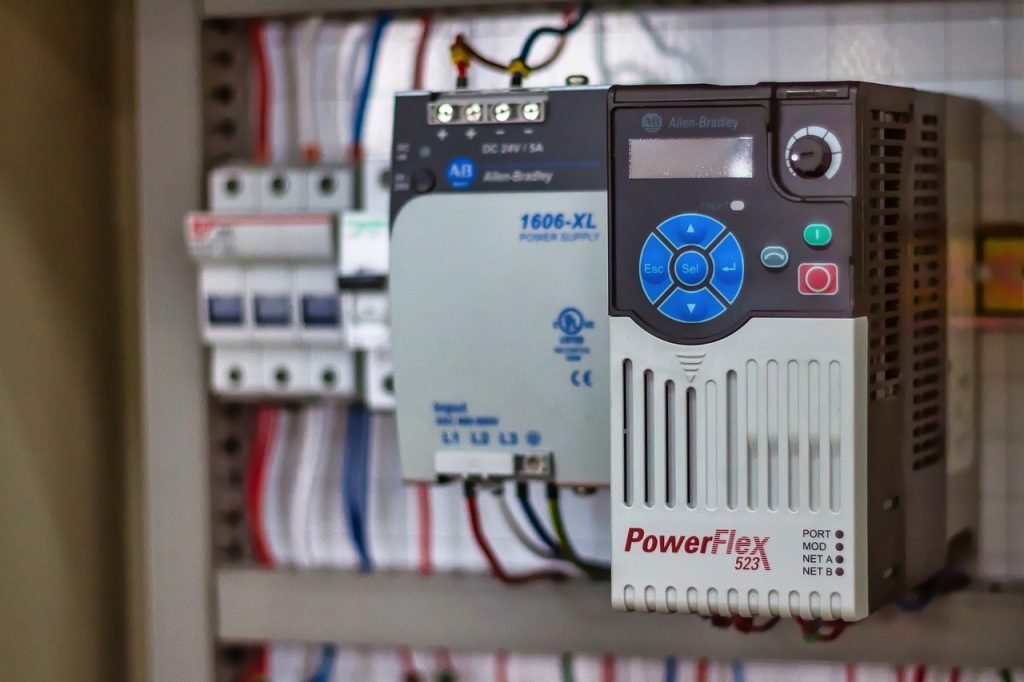
Allen-Bradley PowerFlex 40P Drive - Industrial Control

PowerFlex 40P: Essential Motor Control for Automation

Optimizing Motor Control: Why the Allen-Bradley PowerFlex 40P is Key for Industrial Automation

The Allen-Bradley PowerFlex 40P series is a highly reliable and efficient motor control solution. It delivers exceptional performance across many industrial applications. From basic localized systems to complex, medium-scale operations, this drive ensures consistent output. It offers flexible power options, advanced I/O, and intelligent communication capabilities. Therefore, the PowerFlex 40P provides a strategic balance of power, versatility, and affordability. Plant managers and OEMs value its compact, rugged design for managing pumps, conveyors, and general machinery. This drive truly simplifies factory automation.
Allen-Bradley PowerFlex 40P Drive - Industrial Control

Flexible Power for Diverse Industrial Applications

The PowerFlex 40P supports a wide array of voltage classes and horsepower ratings. This broad compatibility helps facilities streamline their drive inventory. As a result, standardizing control systems becomes much simpler.

Low Voltage (200–240V AC): These drives range from 0.4 to 7.5 kW (0.5 to 10 HP). They handle 2.3 to 33 Amps. These units are perfect for small machines and localized motor control.

Mid-Range Voltage (380–480V AC): Power options cover 0.4 to 11 kW (0.5 to 15 HP). They draw 1.4 to 24 Amps. This makes them ideal for mid-range operational needs.

High Voltage (500–600V AC): These robust models offer 0.75 to 11 kW (1 to 15 HP). They manage 1.7 to 19 Amps. Moreover, they suit high-demand equipment like pumps and compressors.

Author’s Comment (Powergear X Automation): In an era where the cost of capital equipment is rising, an engineer must select a drive that matches the load exactly. This series allows for precision selection, avoiding the common mistake of over-specifying power and increasing project costs unnecessarily. This design philosophy aligns perfectly with lean industrial automation practices.

Advanced Input/Output Enhances PLC Integration

The PowerFlex 40P supports extensive I/O configurations. This reduces the need for external relays and complex panel wiring significantly. Therefore, system setup time is greatly reduced.

Digital Inputs: Two semi-programmable inputs simplify basic start/stop control. In addition, five fully programmable digital inputs enable deep customization for specific application logic.

Output Flexibility: Two opto outputs and a programmable Form C relay output provide critical real-time motor feedback and status.

Analog Signals: Analog input/output options (0–10V or 0–20mA) are selectable via a DIP switch. This ensures accurate control signals for modern DCS and PLC systems.

These streamlined I/O capabilities simplify the process of integration. They also offer users greater flexibility when tailoring drive behavior for unique control environments.

Seamless Industrial Communication for Smart Factories

The PowerFlex 40P series supports modern industrial networks natively. This often eliminates the need for expensive, extra communication hardware.

Network Support: Optional communication cards provide native support for major protocols. This includes DeviceNet, EtherNet/IP, ControlNet, PROFIBUS DP, and LonWorks.

Remote Access: Wireless Bluetooth access is available through the DSI Wireless Interface Module (WIM). This allows for easy remote monitoring and adjustment.

As a result, seamless connectivity to PLCs and HMIs reduces engineering overhead and system downtime. This feature promotes faster commissioning and diagnostics across the factory automation layer. A 2024 IEEE report highlighted that standardized fieldbus communication shortens industrial project timelines by up to 15%.

Energy Management and Precision Feedback Control

Engineers designed the PowerFlex 40P to manage dynamic loads while improving energy efficiency. It ensures consistent motor performance at all times.

Encoder Feedback: The drive auto-detects encoder feedback with 5V, 12V, or 24V DC line driver signals. This enables highly accurate speed and position control.

Smooth Operation: Moreover, PWM frequency can reach 250 kHz. This ensures very smooth and acoustically quiet operation.

Power Reliability: Ride-through functionality uses half-DC bus operation. This is critical for keeping motors running during brief power disturbances.

Energy Sharing: DC bus sharing and pre-charge control improve energy utilization. This is particularly effective across multiple drives in shared bus systems.

These energy-conscious features are key for facilities focused on achieving sustainability goals.

Built for Durability in Harsh Industrial Environments

The PowerFlex 40P series features an engineered design for durability and operational flexibility. It performs reliably in challenging field conditions.

Braking Capacity: Integrated brake resistors support rapid load deceleration. This is essential for safe operation in hoisting and high-speed conveyor applications.

Thermal Resilience: Compact frames, such as the 22D-B3P0N104, operate without extra cooling up to 50°C ambient temperatures.

Mounting Versatility: It offers flexible mounting options, including DIN rail. Enclosure ratings range from NEMA 1/IP30 to NEMA 4/IP66.

For heat-sensitive or space-constrained setups, the PowerFlex 40P offers a high-performance drive in an efficient package. This minimizes the footprint required in crowded control panels.

Versatile Motor Control for Complex Motion Profiles

The PowerFlex 40P supports both open-loop and closed-loop control methods. This gives users flexibility for various motion control requirements.

Precision Control: Closed-loop control with encoder feedback allows for high-precision speed regulation.

Motion Sequencing: Local Position Control (StepLogic) supports basic motion profiles. The drive can store up to eight steps internally.

Smooth Transitions: Zero-cross performance optimization ensures smooth motion transitions in bipolar mode.

Reference Inputs: Multiple speed references can come from analog signals or network commands. This is invaluable for coordinated drive groups in complex control systems.

These built-in features allow the drive to handle everything from basic V/Hz control to more complicated positioning tasks without expensive, external components.

Featured Applications: Real-World Solution Scenarios

The PowerFlex 40P is suitable for numerous applications across industrial automation. Here are two prime examples:

Case 1: HVAC System Optimization (Allen-Bradley 22D-B012N104)

This model operates on 208–240V AC 3-phase power. It provides 3 HP (2.2 kW) and 12 Amps of output current.

Key Features: It includes robust PID control with auto-tuning, transient protection, and integrated dynamic braking. Setup for general-purpose use is simplified.

Best Use: This unit is ideal for cost-effective motor control in small-scale applications. Think of it in HVAC systems, light conveyors, and pump stations. Its reliability and energy efficiency are critical for these uses.

Case 2: High-Demand Material Handling (Allen-Bradley 22D-B033F104)

This model runs on 240V AC 3-phase power. It delivers 10 HP (7.5 kW) and 33 Amps of output.

Key Features: It features RS485 communication, StepLogic for sequencing, and enhanced diagnostics via a 4-digit display and 10 LED indicators. Moreover, it supports Zero Stacking and DIN rail mounting.

Best Use: This is perfect for high-inertia loads and medium-to-high-demand industrial applications, such as mixers and bulk material handling. Its enhanced diagnostics ensure maximum uptime in critical processes.

Final Thoughts: The Strategic Choice for Drive Optimization

The Allen-Bradley PowerFlex 40P series is a highly strategic investment for industrial teams. It allows them to optimize motor control performance without overspending. Its robust feature set, flexible power ranges, and compact form factor meet critical requirements for value and reliability. The 40P delivers dependable operation and built-in intelligence, satisfying the high demands of both maintenance professionals and design engineers.

If you are looking for in-depth technical guides, training, or tailored system integration for your PowerFlex drives, we invite you to explore the expertise offered by Powergear X Automation.

Click here to find your next automation solution: https://www.powergearx.com/

Frequently Asked Questions (FAQ)

Q1: What is the main operational advantage of using the PowerFlex 40P over a standard V/Hz drive in a pumping application?

A: The primary advantage lies in the closed-loop control capability, particularly its PID function and encoder feedback support. A standard V/Hz drive simply controls voltage and frequency. However, the 40P can precisely adjust its output based on real-time process feedback (like pressure or flow). This provides stable process control and ensures the pump runs at the optimal speed for energy savings, which a basic drive cannot achieve.

Q2: My facility uses an older DeviceNet network. How easily can the PowerFlex 40P integrate without major upgrades?

A: Integration is straightforward. Unlike some modern drives that only offer native EtherNet/IP, the PowerFlex 40P explicitly supports optional communication cards for older fieldbuses, including DeviceNet and ControlNet. You simply install the appropriate card, and the drive becomes a native node on the existing network. This is a massive benefit for brownfield upgrades, preventing the need for costly and disruptive network overhauls.

Q3: I am an OEM building small, heat-sensitive machines. What is your experience with the drive’s thermal performance?

A: Based on our experience, the PowerFlex 40P’s ability to run up to 50°C ambient without derating (for the compact frames) is a significant design strength. This high thermal tolerance, coupled with Zero Stacking capability, means you can place the drives right next to each other in a small, sealed panel without the usual concern of a heat-related fault trip. This translates directly to a smaller overall machine footprint and reduced panel cooling costs.

Rockwell vs Siemens The Guide to Factory Automation PLCs

Allen-Bradley vs Siemens PLC: Choosing Your Industrial Control System

Two titans dominate the industrial automation landscape: Allen-Bradley (Rockwell Automation) and Siemens.

They both offer robust, scalable, and highly durable control systems that reliably power complex manufacturing plants globally. The real challenge is not about performance—it is determining which ecosystem best aligns with your long-term operational needs. This guide offers a deep dive beyond mere specification lists, providing practical, experience-based insights for real-world plant environments.

The Critical Ecosystem Choice: Why Your PLC Brand Matters

The selection of a core PLC brand dictates your entire factory automation ecosystem. Allen-Bradley (AB) enjoys immense popularity across North America. Many facilities standardized on Rockwell tools decades ago. Consequently, local maintenance teams already know the Studio 5000 environment, which guarantees faster adoption and troubleshooting. Conversely, Siemens stands as a global powerhouse, often the default choice for international Original Equipment Manufacturers (OEMs), particularly in Europe and Asia.

Expert Insight (Powergear X Automation): Choosing a PLC brand commits your facility to that vendor’s software, motor drives, Human-Machine Interfaces (HMIs), technical support, and spare parts supply for the next 10 to 15 years. Therefore, selecting a platform that contradicts your existing installed base or local talent pool will certainly inflate lifecycle costs and dramatically slow issue resolution during critical downtime.

Rockwell vs Siemens The Guide to Factory Automation PLCs

Engineering Software Battle: Studio 5000 vs. TIA Portal

The engineering software defines the user experience and development speed.

Allen-Bradley (Studio 5000 / RSLogix 5000): This platform emphasizes ladder logic (LD) and function block diagram (FBD) programming. These are programming languages very familiar to US-based technicians. Moreover, Studio 5000 integrates seamlessly with Rockwell’s FactoryTalk suite for Supervisory Control and Data Acquisition (SCADA), alarming, and data historization. If you currently use PanelView HMIs or FactoryTalk View, maintaining the AB stack avoids toolchain incompatibility.

Siemens (Totally Integrated Automation – TIA Portal): TIA Portal’s key strength is unifying PLCs, safety controllers, drives, and HMIs into one cohesive engineering environment. This platform excels using Structured Text (SCL), and it provides advanced, system-wide diagnostics. As a result, teams managing diverse assets under a single architecture benefit from TIA’s reduction in context-switching and its simplified version control across all devices.

✅ Guidance:
Choose AB if your priority is familiar programming, fast North American onboarding, and leveraging existing Rockwell infrastructure.
Choose Siemens if your team can access the expertise and you require a unified engineering platform for all your control systems components.

Hardware Scale and Network Standards: Matching the Right Controller

Both companies offer scalable hardware that meets various operational needs.

Allen-Bradley: The CompactLogix is a mid-range controller perfect for machine-level control, such as small production lines or standalone packaging cells. The ControlLogix represents the high-end, modular platform designed for plant-wide automation, large I/O counts, and high-speed applications. AB uses native EtherNet/IP, which integrates straightforwardly into common US facility networks.

Siemens: The S7-1200 offers an entry-to-mid-range option, providing a cost-effective choice for OEMs and compact system builds. The S7-1500 is the high-performance, modular PLC, featuring extremely fast processing and comprehensive diagnostics, making it prevalent in the automotive and process industries. Siemens leverages native PROFINET and PROFIBUS, which align well with European-sourced equipment and industrial networks.

Example Application: A small robotic pick-and-place station requires a CompactLogix or an S7-1200. Conversely, a multi-zone assembly line involving complex motion control and integrated safety demands a ControlLogix or an S7-1500 DCS equivalent.

Availability and Lifecycle: The Hidden Cost of Downtime

Component availability is often the most significant factor impacting emergency downtime costs.

Allen-Bradley: In the United States, obtaining AB spare parts quickly is usually easier. This is critical when production downtime costs easily reach thousands of dollars per hour. Resellers consistently stock both legacy and current CompactLogix and ControlLogix units for same-day or next-day shipping.

Siemens: Siemens enjoys broader global availability. However, quickly sourcing older S7-300/400 modules on short notice within North America can sometimes be slow. If your equipment fleet primarily uses European OEMs, Siemens may offer smoother long-term global support, even if a US-based spot-replacement takes longer.

🔧 Practical Recommendation: If minimizing downtime through rapid parts replacement in North America is mission-critical, AB often holds the advantage. If your business operates globally or relies heavily on European machine builders, Siemens provides smoother long-haul global integration.

Cost Analysis: Upfront Price vs. Total Lifecycle Expenditure

It is a common error to focus solely on the initial Purchase Price.

Allen-Bradley: Initial hardware prices are often higher. However, this cost is frequently offset by the extensive local expertise, a robust distributor network, and the faster, well-established US replacement pathways.

Siemens: Siemens hardware often carries a lower initial price tag. Any potential long-term savings, however, heavily depend on your team’s existing skillset and regional parts availability. Retraining costs or slower emergency sourcing can quickly erode any initial hardware savings.

Powergear X Automation advises evaluating the Total Lifecycle Cost (TLC). This calculation must include software licenses, staff training time, inventory for spares, the risk profile of downtime, and vendor response times—not just the CPU unit price.

Quick Comparison: Allen-Bradley vs. Siemens PLCs

FeatureAllen-BradleySiemens
Engineering SoftwareStudio 5000 (US familiar)TIA Portal (Unified platform)
Mid-Range PLCCompactLogixS7-1200
High-End PLCControlLogixS7-1500
Primary NetworkingEtherNet/IPPROFINET/PROFIBUS
StrengthNorth American support, fast onboardingGlobal standardization, unified tooling
Watch-OutsHigher initial price, potential OEM lead timesUS learning curve, legacy NA spare part sourcing

Solutions Scenarios: Which PLC Fits Your Project?

Scenario 1: High-Speed Packaging Line (North America)
Choice: Allen-Bradley ControlLogix or CompactLogix.
Reasoning: Leverage existing local training, use native EtherNet/IP for easier integration with peripherals, and guarantee fast spare part availability to minimize potential $10,000/hour downtime risk.

Scenario 2: New Production Facility (Global Standard)
Choice: Siemens S7-1500 with TIA Portal.
Reasoning: Maintain a global standard across multiple international plants, leverage the unified TIA Portal for engineering consistency across PLCs and drives, and simplify management of complex European-sourced machinery.

Frequently Asked Questions (FAQ) with Experience

  • Q1: Will mixing AB and Siemens controllers save money?
    A: Mixing brands rarely saves money in the long run. While you might save on the initial hardware cost of one unit, you introduce complexity into the support chain. You double your required software licenses, increase training costs for technicians, and complicate your spare parts inventory. The added engineering time and troubleshooting complexity often outweigh any initial savings.
  • Q2: My facility uses an old AB platform (PLC-5). Should I upgrade to AB or switch to Siemens?
    A: If your team is only familiar with legacy Rockwell platforms, upgrading to the ControlLogix/Studio 5000 ecosystem provides the fastest path to modernization. The transition, while significant, is much easier for an experienced technician than switching to an entirely new platform like TIA Portal. The quickest adoption will be with the brand your team already knows.
  • Q3: Is the networking standard (EtherNet/IP vs. PROFINET) a major factor?
    A: Yes, it is a significant factor. While both are modern Ethernet protocols, your choice will influence how easily you connect with other components. If your plant has invested heavily in EtherNet/IP-compatible smart devices (like motor starters or remote I/O), switching to PROFINET will require network gateways, adding a potential point of failure. Conversely, many advanced European robotic and motion systems are optimized for PROFINET. Stick with the network that dominates your facility’s existing infrastructure.

For in-depth analysis of these industrial automation systems and to discover solutions tailored to your specific operational needs, we encourage you to visit the expert platform at Powergear X Automation.

Our team can provide guidance on current in-stock options and safe substitution strategies for critical components.

The Best 6 PLC Brands for Industrial Automation in 2025

The Best 6 PLC Brands for Industrial Automation in 2025: Siemens, Allen-Bradley, and More

Choosing the Right PLC for Modern Industrial Automation

Picking the best PLC for your industrial automation project is vital. The market offers diverse options in 2025. Manufacturers now prioritize edge computing and better connectivity. Your choice impacts system performance and future scalability. Consider factors like cost, reliability, and programming ease. Moreover, project scope and industry sector are key drivers. This guide helps you navigate the top brands. We focus on features and application suitability.

The Best 6 PLC Brands for Industrial Automation in 2025

Top PLC Brands for Factory Automation and Their Strengths

Six major brands dominate the factory automation landscape. Each offers unique advantages for various control systems. Siemens provides high performance and excellent scalability. Therefore, it suits large industrial plants well. Allen-Bradley (Rockwell Automation) is known for premium precision and deep integration. This makes it ideal for complex, high-end applications. Mitsubishi Electric offers affordable, modular designs. As a result, it works for small-to-medium enterprises. Schneider Electric focuses on energy efficiency and is IoT-ready. This brand fits versatile industrial needs. ABB builds robust systems for heavy industries. Choose ABB for mining, oil, and gas sectors. Finally, Omron delivers compact PLCs, excellent for robotics. Understanding these strengths simplifies your selection process.

PLC Brand Comparison

BrandKey FeaturesCost RangeIdeal For
SiemensHigh performance, scalability$500 – $2,000+Large industrial plants
Allen-BradleyPremium precision, integration$1,000 – $5,000+Complex, high-end applications
Mitsubishi ElectricAffordable, modular designs$300 – $1,500Small-to-medium enterprises
Schneider ElectricEnergy-efficient, IoT-ready$400 – $2,000+Versatile industrial needs
ABBRobust for heavy industries$800 – $3,000+Mining, oil & gas sectors
OmronCompact, robotics-ready$200 – $1,000Small-scale automation

Advanced Features in 2025 Control Systems: Edge Computing and AI

Modern control systems now embrace new technology trends. Edge computing integration is rapidly increasing. It allows faster data processing at the machine level. This reduces latency and boosts response times. AI integration is another critical factor. It enables smart maintenance and better quality control. For instance, AI cuts downtime by up to 40%. It also improves process quality significantly. Additionally, robust cybersecurity measures are essential. New PLCs must comply with standards like IEC 62443. This protects systems from increasing cyber threats.

The Best 6 PLC Brands for Industrial Automation in 2025

Comparing Top-Tier PLCs: Siemens S7-1500 vs. Allen-Bradley ControlLogix

The Siemens S7-1500 and Allen-Bradley ControlLogix are industry leaders. They target large factories and advanced projects. The S7-1500 boasts faster processing and superior memory. It supports modern protocols like OPC UA and MQTT. Therefore, it is ideal for Industry 4.0 applications. ControlLogix offers solid performance in discrete manufacturing. It integrates seamlessly within the Rockwell ecosystem. Its strength lies in North American factory automation. However, Siemens provides stronger built-in cybersecurity features. The choice often depends on geographic location and required speed.

Feature Comparison

FeatureAllen Bradley ControlLogixSiemens S7-1500
CPU PerformanceUp to 0.1ms per 1000 Boolean instructionsUp to 0.04ms per 1000 instructions
Programming UsabilityStudio 5000 environmentUnified, user-friendly TIA Portal
CybersecurityBasic cybersecurity featuresSecure boot, role-based access

Value and Total Cost of Ownership in PLC Selection

The purchase price is only part of the cost. You must also consider the total cost of ownership (TCO). This includes direct costs like maintenance and training. Indirect costs, like the learning curve, are also important. Furthermore, hidden costs, such as vendor lock-in, can be significant. Mitsubishi Electric and Schneider Electric often offer excellent value. Their modular designs allow phased upgrades. This prevents expensive system overhauls. A smarter initial investment focuses on long-term value. Always select a PLC that aligns with your operational goals.

Author’s Insight: Prioritizing Future-Proofing and Scalability

My professional experience shows a clear trend toward flexibility. Software-defined PLCs are emerging as a major force. They allow control logic changes without new hardware. This provides immense long-term adaptability. Always choose a system with inherent scalability. It must accommodate future growth and technological shifts. This future-proofing approach maximizes your investment. For demanding environments, the ABB AC500 remains highly reliable. For smaller, fast-paced automation, the Omron NX1 shines. Therefore, match the brand’s core expertise to your specific needs.

The Best 6 PLC Brands for Industrial Automation in 2025

Enhance Your Industrial Automation Strategy

Selecting the right PLC is crucial for operational success. Review the features, costs, and application suitability carefully. A well-chosen control system improves efficiency and reduces TCO.

Ready to implement a best-in-class industrial automation solution for your facility? Explore proven, high-quality DCS and PLC products.

Discover how Powergear X Automation Limited can optimize your systems today.

Click Here to Explore Powergear X Automation Limited Products

Top PLC Brands Driving Industrial Automation Smart Factory Race

Choosing the Best PLC: A Guide to Industrial Automation Control Systems

The Evolving Role of PLCs in Industry 4.0

Industrial automation systems rely heavily on PLCs (Programmable Logic Controllers). These controllers are fundamental to modern production. However, smart technologies are rapidly changing manufacturing criteria. Today’s PLCs offer real-time data analytics, monitoring, and control. They enable predictive maintenance, in-built alarms, and trend analysis. Furthermore, they ensure smooth machine communication. They achieve this by integrating with cloud, AI systems, and IoT devices. Therefore, choosing the right PLC brand is crucial for a successful smart factory journey.

Top PLC Brands Driving Industrial Automation Smart Factory Race

Siemens: The Global Leader in Digital Twin Technology

Siemens stands out as a top PLC brand worldwide. They dominate markets in Europe and the Middle East. Their Simatic S7 series is widely used across various sectors. This is due to its reliable performance and compatibility. It supports PROFINET and OPC UA protocols. Siemens also leads in edge computing and digital twin technologies. Consequently, they are a primary choice for many smart factories. Their focus on comprehensive digital solutions sets a high industry standard.

Allen-Bradley (Rockwell Automation): A North American Powerhouse

Allen-Bradley, a division of Rockwell Automation, is immensely popular. This brand leads the North American industrial automation market. Their ControlLogix and CompactLogix series are well-known. They excel in the automotive and food processing sectors. Rockwell focuses on scalable control systems and digital transformation. They are a major player in Industry 4.0 evolution. Most American facilities utilize this brand in their factory automation. This strong regional preference reflects its proven dependability.

Top PLC Brands Driving Industrial Automation Smart Factory Race

Mitsubishi Electric: Speed and Compactness in Asia-Pacific

Mitsubishi Electric is a distinguished PLC manufacturer. They particularly thrive in high-speed electronic systems. The MELSEC series is notable for its fast processing speed. It also offers reliable connections and a small footprint. Mitsubishi supports protocols like OPC UA and CC-Link IE Field. This ensures great interoperability in Industry 4.0. Their commitment to energy efficiency makes them a formidable competitor. They dominate the Asia-Pacific region’s factory automation.

Schneider Electric: Sustainability and Open Protocols

Schneider Electric’s Modicon PLCs offer impressive technical features. Their adaptability suits various Industry 4.0 systems. Schneider champions digital transformation and sustainability. Their current lineup features cloud integration and remote control. These PLCs support open protocols like Modbus and Ethernet/IP. This flexibility allows their use in many industrial settings. They are a top choice for integrating water and pumping stations. Therefore, environmentally conscious businesses often prefer Schneider’s solutions.

Omron: Integrating AI for Predictive Control

Omron is a progressive Japanese PLC brand. They are known for precision control and continuous innovation. Their NX and CJ series are common in robotics and packaging. Omron integrates AI and Deep Learning into its systems. This integration delivers predictive analytics and adaptive control. They emphasize smart sensing and HMI communication. Omron is a key participant in the Japanese automotive industry’s transformation. This technical foresight drives their market position.

Top PLC Brands Driving Industrial Automation Smart Factory Race

The Global PLC Landscape: Key Industry 4.0 Competitors

Other strong contenders shape the market. ABB focuses on large-scale applications with its AC500/AC800 series. ABB integrates PLCs with its Ability Platform for cloud analytics. Panasonic’s FP series is known for its affordability and compact size. This makes it a great choice for manufacturers on a budget. Delta Electronics from Taiwan focuses on intelligent, energy-efficient control. They are quickly expanding in various sectors. B&R Automation, now part of ABB, integrates PLCs with motion control. Bosch Rexroth emphasizes high-performance control and open architecture. Each brand brings unique strengths to the smart factory ecosystem.

Future-Proofing Your Factory Automation Investment

Successful PLC brands share common, vital characteristics. They feature strong hardware and open communication protocols. Cutting-edge software and cloud integration are essential. Support for IEC 61131-3 programming guarantees flexibility. Features like cybersecurity and predictive maintenance are now mandatory. Edge computing and redundant technologies give a competitive advantage. Furthermore, seamless integration with SCADA, ERP, and MES systems is critical. Continuous innovation remains the only path to market leadership. Manufacturers must select the specific PLC that meets their unique operational requirements.

Discover Advanced Automation Solutions

Are you ready to elevate your industrial automation systems? Powergear X Automation Limited offers high-quality products and bespoke solutions. We help you integrate the latest PLC and control systems into your operations.

Explore our product range and take the next step in your smart factory journey!

Click here to view Powergear X Automation Limited’s innovative products and solutions.

Harnessing the Power of Ethernet/IP with the PowerFlex 525 Drive

Harnessing the Power of Ethernet/IP with the PowerFlex 525 Drive

Introduction

In industrial automation, connecting devices is key. The PowerFlex 525 drive is a true game-changer. It offers seamless integration with Ethernet/IP. This guide helps you unlock its full potential. You can achieve better control and efficiency. As an engineer, I’ve seen firsthand how this drive simplifies complex systems. Its built-in Ethernet/IP port makes setup a breeze. You can manage your motor and system data effortlessly. This capability is crucial for modern manufacturing. It helps you stay competitive and agile.

Harnessing the Power of Ethernet/IP with the PowerFlex 525 Drive

Product Overview

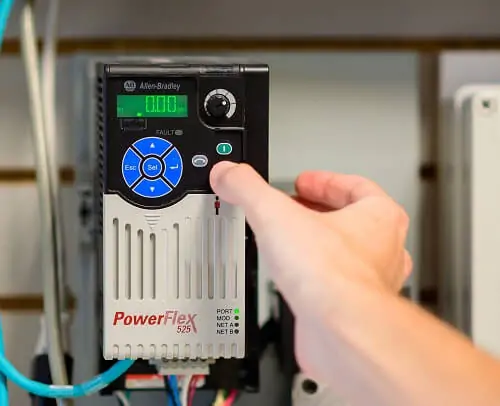
The PowerFlex 525 is a versatile AC drive. It’s designed for global applications. This drive has a compact, space-saving design. It also features a modular control and power section. This design allows for quick installation and setup. The PowerFlex 525 can be mounted vertically. It’s also easy to mount side-by-side. The drive works in temperatures up to 70°C. It’s a reliable solution for tough environments. Its integrated Ethernet/IP port is a major benefit. It provides easy network connectivity.

Technical Specifications

  • Ethernet/IP is a standard feature.
  • This drive supports Zero Stacking.
  • It has flexible motor control options.
  • The voltage range is 100 to 600V.
  • The power range is 0.4 to 22 kW.
  • It has an ambient temperature rating of 70°C.
  • The drive features a removable keypad.
  • The keypad allows for easy programming.
  • It includes a built-in EMI filter.
  • The filter reduces electromagnetic interference.

Key Benefits and Unique Insights

The PowerFlex 525 drive offers big advantages. Its most powerful feature is the integrated Ethernet/IP. This port eliminates the need for extra communication modules. This saves you money and panel space. I’ve found this feature invaluable. It simplifies wiring and configuration tasks. You can quickly add the drive to your network. This speeds up your project timeline. Another unique benefit is its Dual-Port Ethernet/IP option. This allows for ring topology (DLR). DLR makes your network more fault-tolerant. If one link fails, data still gets through. This is critical for uptime and reliability.

Harnessing the Power of Ethernet/IP with the PowerFlex 525 Drive

Choosing the Right Drive

Selecting the right drive is important. Consider your application’s needs. The PowerFlex 525 is great for many tasks. It works well for conveyors, fans, and pumps. Its fast setup time is a huge plus. This drive also supports Connected Components Workbench. This software simplifies programming. You can configure and monitor the drive easily. I often recommend this drive for new projects. It offers a great balance of features and value. It’s a smart investment for the future.

This guide should help you understand the PowerFlex 525. It’s more than just a motor controller. It is a vital part of your automation system. We have genuine Allen-Bradley products. They are available for a great price.

Click below links to explore our PowerFlex 525 drives. Enhance your automation systems today.

ModelTitleLink
25A-E012N104Allen-Bradley PowerFlex 523 AC Drive (600V AC)Learn More
25A-E019N104Allen-Bradley PowerFlex 523 AC DriveLearn More
25B-B062N104Allen-Bradley PowerFlex 525 Drive (20HP)Learn More
25B-E027N104Allen-Bradley PowerFlex 525 AC Drive (0.4kW)Learn More
25B-D1P4N104Allen-Bradley PowerFlex 525 AC DriveLearn More
Allen-Bradley PowerFlex 40P Frequency Drive

Troubleshooting Common Issues in Allen Bradley PowerFlex 40 AC Drives Guide

Introduction

Hello there! As an experienced controls engineer, I know how frustrating it can be when a drive stops working. The Allen Bradley PowerFlex 40 is a reliable workhorse, but like any piece of equipment, it can run into problems.

This guide will walk you through the most common issues and give you practical steps to get your system back up and running. Remember, safety first! Always de-energize the drive and wait for the DC bus capacitors to discharge completely before working on it.

Allen-Bradley PowerFlex 40P Frequency Drive

Troubleshooting Common Issues in Allen Bradley PowerFlex 40 AC Drives

The goal here isn’t just to fix the problem; it’s to understand why it happened so you can prevent it from happening again. I’ve found that paying attention to these small details saves a lot of headaches in the long run.

Under- and Overvoltage Faults (F6, F7)

These are probably the most common faults you’ll encounter.

  1. Undervoltage (F6): This means the DC bus voltage has dropped below a safe operating level.
  • Common Causes: The input power supply is low, there’s a loose connection, or a power outage occurred.
  • My Tip: Don’t just reset the fault. Grab your multimeter and check the input voltage at the drive’s L1, L2, and L3 terminals while the system is powered on. Compare it to the drive’s rating. If it’s consistently low, the issue is with your incoming power, not the drive itself.
  1. Overvoltage (F7): The DC bus voltage is too high.
  • Common Causes: A long deceleration time on a high-inertia load (like a fan or flywheel), or a problem with the braking resistor.
  • My Tip: For overvoltage faults, check your deceleration time parameter (parameter 41). If it’s set too short for your application, the motor’s kinetic energy is being fed back into the drive, causing the voltage to spike. Lengthening the deceleration time often solves this. If that doesn’t work, you might need a dynamic braking resistor.

Overcurrent Faults (F3)

This fault means the drive is drawing too much current.

  • Common Causes: A sudden load change, a short circuit in the motor windings, or a mechanical issue with the equipment.
  • My Tip: Before you assume the drive is bad, disconnect the motor leads from the drive and check the motor with a megohmmeter (megger). I’ve seen countless times where the motor itself had a winding short to ground, and the drive was just doing its job by tripping on overcurrent. Also, check for mechanical binding. Can you spin the motor shaft by hand?

Ground Faults (F5)

This happens when current leaks from the system to the ground.

  • Common Causes: Damaged motor insulation, a short circuit in the cabling, or water ingress in the motor or terminal box.
  • My Tip: This is a serious fault. Always check the motor and the motor cabling first. Use a megohmmeter to test the insulation resistance between each motor phase and ground. A good motor should show a very high reading (in the megaohms). If you get a low reading, you’ve found your culprit.
PowerFlex 40P AC Drive

PowerFlex 40P AC Drive

Getting Back to Work

Remember, these are just starting points. A detailed fault code in the drive’s manual will give you more specific guidance. The key is to be systematic in your troubleshooting. Don’t just hit the reset button over and over. Find the root cause!

For any parts or replacement drives you might need, you can rely on Powergear X Automation Limited for quality products and fast shipping.

Browse our selection of Allen Bradley PowerFlex 40 drives and accessories today!

ModelTitleLink
22B-D4P0N104Allen-Bradley PowerFlex 40 AC Drive (230V)Learn More
22B-D017H204Allen-Bradley PowerFlex 40 AC Drive (230V)Learn More
22B-D024F104Allen-Bradley PowerFlex 40 AC Drive (230V)Learn More
22B-D024H204Allen-Bradley PowerFlex 40 AC Drive (230V)Learn More
22B-D024N104Allen-Bradley PowerFlex 40 AC Drive (230V)Learn More

Step-by-Step Setup Guide for Allen-Bradley PowerFlex 40P AC Drives in Industrial Automation

Step-by-Step Setup Guide for Allen-Bradley PowerFlex 40P AC Drives in Industrial Automation

Welcome, fellow engineers! This practical guide walks you through setting up Allen-Bradley PowerFlex 40P AC Drives, sharing hands-on insights for efficient commissioning in industrial systems.

Understanding the PowerFlex 40P: My Perspective

The PowerFlex 40P delivers exceptional balance between features and simplicity. Its sensorless vector control and compact design make it ideal for applications requiring precise speed control without encoder feedback, especially where panel space is limited.

Essential Pre-Installation Checks

Critical preparations before wiring:

  • Power Verification: Confirm voltage/current ratings match supply – check nameplate to prevent damage
  • Environment: Ensure clean, dry, cool location – avoid dust, moisture and excessive heat
  • Motor Compatibility: Verify motor HP, voltage, and current ratings match drive capabilities

Wiring the PowerFlex 40P: Practical Tips

Power Wiring (L1/L2/L3 to T1/T2/T3):
Use oversized wires for better current handling and heat dissipation. Connect AC power to L terminals and motor to T terminals.

Control Wiring:

  • Separate control wires from power cables to prevent noise interference
  • Always use shielded cables for analog signals

Grounding Protocol:
Connect ground terminal directly to earth ground – critical for safety and noise reduction.

Allen-Bradley PowerFlex 40P Frequency Drive

Basic Configuration and Parameter Setup

Initial Power-Up:
After securing connections, apply power – keypad should illuminate.

Motor Data Entry:
Set these parameters precisely from motor nameplate:

  • P031 [Motor NP Volts]
  • P033 [Motor NP Amps]
  • P034 [Motor NP Freq]
  • P035 [Motor NP RPM]

Control Source Selection:
Configure A041 [Start Source A] for keypad (initial testing), digital inputs (PLC), or analog input.

Speed Reference Scaling:
For analog inputs:

  • Set P038 [Analog Input 1 Sel]
  • Scale with A051 [Anlg In1 Scale Lo] and A052 [Anlg In1 Scale Hi]

Advanced Considerations and Troubleshooting

Auto-Tune Optimization:
Execute P040 [Motor Auto Tune] to measure motor characteristics for peak performance.

Acceleration/Deceleration:
Balance P044 [Accell Time 1] and P045 [Decel Time 1] to avoid trips or sluggish operation.

Fault Management:
Interpret common codes – address root causes of overcurrent, overvoltage, and ground faults.

Preventive Maintenance:

  • Keep cooling fins dust-free
  • Regularly check terminal tightness

Conclusion: Empowering Your Industrial Automation

Mastering PowerFlex 40P setup requires attention to wiring detail, accurate parameter entry, and proactive troubleshooting – essential skills for robust automation systems.

Ready to upgrade your industrial control systems? Click here to explore Allen-Bradley PowerFlex 40P AC Drives and automation solutions from Powergear X Automation Limited.

China’s Industrial Outlook: Global Leader’s Optimistic View

Future Outlook: Opportunities and Challenges for Automation Engineers

China’s industrial outlook is optimistic, with continued technological integration and increased demand for automation engineers. Opportunities in robotics, AI, and smart manufacturing are expanding as the industry evolves. Professionals must stay updated with the latest trends and continuously enhance their skills to remain competitive.

Technological Advancement: Core Driver of Industrial Automation

China Industry heavily invests in technological progress, particularly in industrial automation. The adoption of robotics and AI significantly boosts production efficiency. Widespread digitalization enhances product quality and reduces costs, making it essential for automation engineers to continuously learn and adopt new technologies to provide efficient solutions.

Industry Perspective: Balanced Development and Continuous Innovation

Despite the prevailing optimism, there is intense competition and a constant need for innovation in China’s manufacturing sector. Automation engineers must address these challenges by driving innovation and remaining competitive. Solving complex problems and collaborating across various fields are crucial for fostering industrial progress.

Infrastructure and Policy: Key Elements Supporting Industrial Growth

China’s robust infrastructure and favorable government policies significantly support industrial development. Efficient logistics systems attract investment and drive innovation. It is essential for automation engineers to understand these policies deeply, as they play a critical role in optimizing systems and promoting upgrades within the industry.

Market Confidence: China’s Strengths and Potential

Global industry leaders express rising confidence in China’s manufacturing sector, driven by its strong industrial base and significant growth potential. China’s pivotal role in the global supply chain attracts substantial investment, while the large market and consumer demand present vast opportunities. Automation engineers need to grasp these dynamics to effectively provide technical support and solutions.

Check below popular items for more information in PowergearX Technology.

ModelTitleLink
22D-D010F104Allen-Bradley AC Drive PowerFlex 40PLearn More
22D-D010H204Allen-Bradley AC Drive PowerFlex 40PLearn More
22D-D012F104Allen-Bradley AC Drive PowerFlex 40PLearn More
22D-D012H204Allen-Bradley AC Drive 5.5 kW / 7.5 HPLearn More
22D-D012N104Allen-Bradley AC Drive PowerFlex 40P 480V ACLearn More
22D-D017F104Allen-Bradley AC Drive PowerFlex 40PLearn More
22D-D017H204Allen-Bradley AC Drive PowerFlex 40PLearn More
22D-D017N104Allen-Bradley AC Drive PowerFlex 40PLearn More


A Comparison of CompactLogix vs. ControlLogix Processors

A Comparison of CompactLogix vs. ControlLogix Processors

Introduction to CompactLogix and ControlLogix Processors

Allen-Bradley’s CompactLogix and ControlLogix processors are key players in industrial automation systems. While both offer robust control solutions, they cater to different applications based on system complexity and size. Let’s explore their unique features to better understand which suits your needs.

A Comparison of CompactLogix vs. ControlLogix Processors

CompactLogix: A Compact Solution for Smaller Applications

CompactLogix processors are known for their versatility and cost-efficiency. Available in modular and all-in-one formats, they are well-suited for small to medium applications. Popular models include the L23, L30ER, and L35X. These controllers are designed to be ready for immediate use, with features like a built-in SD card slot, USB port, and embedded supercapacitor.

The ControlLogix: Built for Complex, High-Demand Systems

The ControlLogix series, originally released in 1999, is designed for larger, more intricate systems. These modular controllers provide expanded scalability with a power supply, processor, chassis, and communication modules. As the platform has evolved, newer models like the 5580 series offer significantly faster processing and enhanced communication capabilities, making them ideal for high-performance applications.

A Comparison of CompactLogix vs. ControlLogix Processors

Key Differences in Memory and Communication

Memory capacity is one of the most notable differences between these two families. The ControlLogix 5580 boasts up to 20 MB of user memory, while the CompactLogix 5380 reaches a maximum of 10 MB. Both processors offer enhanced communication options, including high-speed Ethernet and USB ports, but the ControlLogix 5580 provides up to 1 Gbps Ethernet, significantly improving communication speed.

Performance Enhancements in Newer Models

The latest CompactLogix 5380 and ControlLogix 5580 models offer substantial upgrades in performance. The CompactLogix 5380 comes with a 1 Gbps Ethernet port and improved memory, while the ControlLogix 5580 outperforms earlier models with its increased speed and memory capacity. The ControlLogix 5580 offers an impressive 20 times faster program scanning compared to previous versions.

A Comparison of CompactLogix vs. ControlLogix Processors

Comparison Table: CompactLogix vs. ControlLogix

FeatureControlLogix 5580ControlLogix 5570CompactLogix 5380CompactLogix 5370 L3
Controller Tasks32/1000 programs/task32/1000 programs/task32/1000 programs/task32/1000 programs/task
User Memory3 MB to 20 MB + 6 MB safety2 MB to 8 MB + 4 MB safety0.6 MB to 10 MB + 5 MB safety1 MB to 5 MB + 1.5 MB safety
Built-in PortsSingle-port Ethernet (1 Gbps)Dual-port Ethernet (100 Mbps)2 Ethernet ports (1 Gbps)Dual-port Ethernet (100 Mbps)
Communication OptionsEtherNet/IP, ControlNet™, DeviceNet™, USBEtherNet/IP, ControlNet™, DeviceNet™, USBEtherNet/IP, USBEtherNet/IP, USB
Controller ConnectionsNot Applicable500 ConnectionsNot Applicable256 Connections

Choosing the Right Processor for Your System

When selecting between CompactLogix and ControlLogix, consider your system’s size and complexity. For smaller systems with moderate I/O, CompactLogix offers a cost-effective, reliable option. On the other hand, for large-scale, high-performance applications, ControlLogix provides more robust capabilities and scalability.

Back to Top
Product has been added to your cart