

Compatibility and Performance: Supported Remote I/O Adapters for ABB CI801
The Vital Role of the CI801 in Industrial Automation Networks
The ABB 3BSE022366R1 CI801 serves as a high-performance PROFIBUS-DP communication interface for AC 800M controllers. Its primary mission involves connecting the central processor to distributed Remote I/O and intelligent field devices. Consequently, this module enables reliable long-distance signal expansion across large process plants and refineries. By using CI801, engineers can significantly reduce the size of marshalling cabinets and shorten installation times. This flexibility proves essential in the oil and gas, chemical, and pharmaceutical sectors. Therefore, the CI801 remains a cornerstone for achieving scalable and deterministic DCS architectures.

Supported Remote I/O Adapters and Protocol Compatibility
The CI801 functions as a PROFIBUS-DP master, supporting a wide range of compliant Remote I/O adapters. The most frequent pairings include the following technical configurations:
- ✅ ABB S800 I/O Adapters: These provide the most seamless integration for cyclic data and advanced diagnostics.
- ✅ ABB S900 I/O: This variant is ideal for brownfield hazardous-area projects requiring PROFIBUS connectivity.
- ✅ Third-Party PROFIBUS-DP Slaves: This includes valve manifolds, drives, and MCC interfaces from diverse manufacturers.
- ✅ Standard GSD Compatibility: Any device with a valid GSD file can integrate into the CI801 segment.
Ensuring Deterministic Communication and Response Stability
Fast I/O update cycles are critical for maintaining control loop stability in pressure or temperature applications. The CI801 supports standard DP-V0 and DP-V1 protocols to ensure predictable timing for critical interlocks. However, improper baud rate selection or excessive slave counts can degrade network performance. At Powergear X Automation, we often see intermittent timeouts caused by bus overload rather than hardware failure. Therefore, system designers must carefully calculate the bus cycle time to meet the requirements of emergency shutdown logic. Stable communication directly reduces hidden maintenance costs caused by sporadic fieldbus errors.
Technical Depth: Electrical Robustness and Design Limits
ABB designed the CI801 to match the industrial tolerance of the AC 800M controller family. It supports extended operating temperatures and provides galvanic isolation to protect against electrical surges. Moreover, it integrates effortlessly into redundant controller architectures at the system level. This robustness is vital for continuous process industries where downtime results in significant revenue loss. In practice, the CI801 withstands the harsh conditions of VFD rooms and compressor stations. Consequently, it offers a reliable lifecycle that minimizes the need for frequent hardware replacements.
Installation and Maintenance Protocols for High-EMI Zones
Reliable factory automation depends on strict adherence to PROFIBUS topology rules. Follow these technical requirements to ensure a stable network:
- 🔧 Use only certified PROFIBUS cables and enforce correct termination at both physical ends.
- 🔧 Avoid star topologies unless you utilize dedicated DP couplers or active hubs.
- 🔧 Secure all connectors with screws to prevent micro-disconnects in high-vibration zones.
- 🔧 Install external surge protectors for any outdoor or long-distance cable runs.
- 🔧 Ensure the cabinet grounding strictly complies with IEC 61158 recommendations.
Author’s Insight: Solving Common PROFIBUS Communication Faults
In my experience, roughly 70% of CI801 communication faults originate from poor wiring or termination issues. Many technicians overlook the “shadow” effects of high-frequency noise from nearby large motors. We recommend using a PROFIBUS analyzer during commissioning to verify the signal-to-noise ratio. Additionally, maintaining a consistent baud rate across the entire segment prevents data collisions. While the hardware is highly durable, the physical layer remains the most common point of failure. Proactive maintenance of connectors and shields is the best way to ensure 99.9% uptime.
Strategic Procurement: Backward Compatibility and Lifecycle Tips
The CI801 provides excellent backward compatibility with legacy PROFIBUS-DP slaves, making it ideal for system migrations. However, procurement teams must verify the DP cycle time when upgrading controllers in existing facilities. Always ensure that third-party devices have validated GSD files before finalizing your purchase. While S800 I/O offers the best diagnostic integration within ABB 800xA, third-party flexibility prevents vendor lock-in. Consequently, the CI801 allows for a hybrid approach that balances performance with cost-effectiveness.
Application Scenario: Chemical Unit Expansion
A chemical facility recently expanded its production unit by adding 200 distributed I/O points over a 400-meter distance. By deploying CI801 interfaces with S800 Remote I/O, the plant avoided running heavy multi-core cables back to the control room. This strategy saved approximately 30% in installation labor and material costs. Furthermore, the integrated diagnostics allow operators to pinpoint field instrument faults directly from the 800xA HMI. This real-world application demonstrates how distributed I/O improves both scalability and operational visibility.
Expert FAQ: Operational and Technical Guidance
Q1: Does the CI801 support redundant PROFIBUS-DP lines?
The CI801 itself is a single interface module. For full line redundancy, you should consider the CI840 or CI840A modules. However, the CI801 can reside on a redundant AC 800M controller cluster to provide high-availability communication at the master level.
Q2: How many PROFIBUS slaves can I connect to one CI801 interface?
Standard PROFIBUS rules allow up to 126 addresses, but practical performance limits usually suggest fewer slaves. We recommend a limit of 32 slaves per segment without repeaters to maintain fast scan times. Exceeding this often leads to increased jitter in your analog control loops.
Q3: Can I mix different baud rates on a single CI801 network?
No, all devices on a PROFIBUS-DP segment must operate at the same baud rate. If you have legacy devices that only support lower speeds, the entire network must downshift to that rate. This can significantly impact the response time of your high-speed I/O modules.
Author’s Insight: Successful automation requires a deep understanding of the physical bus layer. The CI801 is a workhorse, but its performance depends entirely on the quality of your installation. For more technical guides and high-quality DCS parts, visit Powergear X Automation to secure your facility’s reliability.

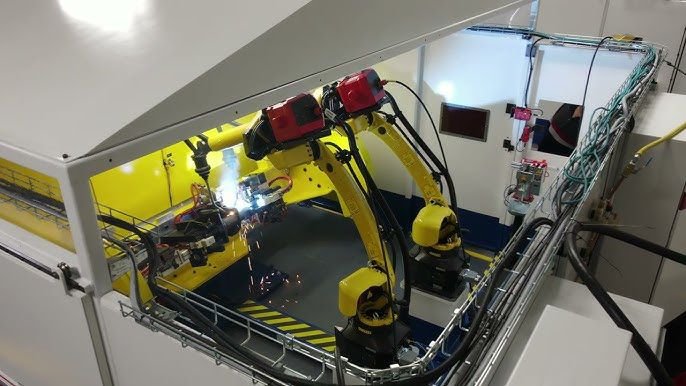



ABB’s focus on PROFIBUS DP integration, especially with modules like the CI801 (3BSE022366R1), underscores how critical robust fieldbus communication remains in industrial automation. PROFIBUS DP’s decentralized I/O approach reduces wiring complexity and enhances real-time control between PLCs and remote devices — a key factor in legacy and hybrid systems still dominating U.S. factories and plants. For example, at a Midwestern automotive OEM, leveraging PROFIBUS DP with ABB controllers improved diagnostic visibility and reduced downtime on critical stamping lines. This practical integration helps bridge older fieldbus infrastructure with modern control strategies.