Over 50,000 hot-selling automation module components.
Troubleshooting Schneider 140NOE77111 Ping Issues on Windows 10

Troubleshooting Schneider 140NOE77111 Ping Issues on Windows 10

Navigating IP Configuration and Subnet Segmentation

Here is the revised technical guide for the Schneider Electric 140NOE77111, optimized for industrial professionals and search engine visibility.

The Schneider Electric 140NOE77111 remains a cornerstone of Modicon Quantum PLC systems. It bridges the gap between field-level control and upper-level SCADA networks. However, engineers often face challenges when pinging these legacy modules from Windows 10 workstations. At Powergear X Automation, we believe that understanding the nuances of industrial networking can prevent costly, unnecessary hardware replacements.

The 140NOE77111 does not possess a default IP address out of the box. Consequently, if your Windows 10 PC resides on a different subnet, ICMP packets will fail to reach the PLC. In industrial automation, even a minor subnet mismatch isolates the PLC from the entire monitoring network. Therefore, you must ensure your workstation’s static IP aligns perfectly with the module’s configured range.

Troubleshooting Schneider 140NOE77111 Ping Issues on Windows 10

Analyzing ICMP Behavior in Legacy Firmware

Earlier firmware versions of the 140NOE77111 prioritize Modbus TCP traffic over diagnostic ICMP requests. As a result, the module might respond to data queries while appearing “dead” to a ping command. This behavior often leads technicians to misdiagnose a fully functional unit as faulty. In our experience, always verify communication using a Modbus scanner before assuming the hardware has failed.

Overcoming Windows 10 Network Security Barriers

Windows 10 implements much stricter security protocols than its predecessors, like Windows XP or 7. For instance, the OS often blocks ICMP Echo Requests by default to harden the system. Moreover, if your network profile is set to “Public,” the firewall will likely drop all incoming PLC responses. You must manually adjust these settings to ensure seamless integration with legacy factory automation hardware.

Best Practices for Commissioning and Maintenance

To ensure high reliability in oil & gas or chemical processing plants, follow these standardized maintenance steps:

Verify via Control Expert: Always confirm IP settings directly within EcoStruxure Control Expert software.

Adjust Firewall Rules: Set your PC network profile to “Private” and enable ICMP Echo Requests.

Isolate the Hardware: Use a direct Ethernet cable between your laptop and the module for testing.

Check Link Lights: Observe the “Link” and “Activity” LEDs to confirm physical layer integrity.

Update Firmware: Consider upgrading the module firmware to improve compatibility with modern IT infrastructures.

Powergear X Automation Technical Perspective

From the perspective of Powergear X Automation, the 140NOE77111 is a remarkably resilient piece of hardware. While the industry is shifting toward more advanced DCS and IoT-ready controllers, the Quantum series remains vital for many global operations. We recommend treating “no ping” issues as configuration hurdles rather than hardware failures. This mindset saves time and maintains the integrity of your control system’s lifecycle.

Application Scenarios and Solutions

SCADA Integration: Ensuring real-time data flow between the factory floor and the control room.

Remote Diagnostics: Allowing off-site engineers to troubleshoot PLC logic via secure VPN tunnels.

Legacy Expansion: Integrating new Windows 10 HMI stations into existing Modicon Quantum racks.

Frequently Asked Questions (FAQ)

Q1: What is the most common cause of a “Request Timed Out” error with this module?

In most field cases, the issue stems from the Windows Firewall or a mismatched Subnet Mask. Always check your PC’s local network adapter settings first.

Q2: How can I confirm the module is working if Ping is disabled?

Try connecting to the module via Port 502 using a Modbus TCP testing tool. If you can read registers, the module is healthy despite the lack of Ping response.

Q3: Is it worth buying a refurbished 140NOE77111 for system expansion?

Yes, provided the supplier offers a warranty and firmware verification. It is a cost-effective way to maintain legacy systems without a full-scale controller migration.

For high-quality industrial components and expert technical support, visit the Powergear X Automation website today.
Where High-Performance Industrial Automation Is Essential

Where High-Performance Industrial Automation Is Essential

Decoding the Dominance: Industries Reliant on Quantum PLCs in Industrial Automation

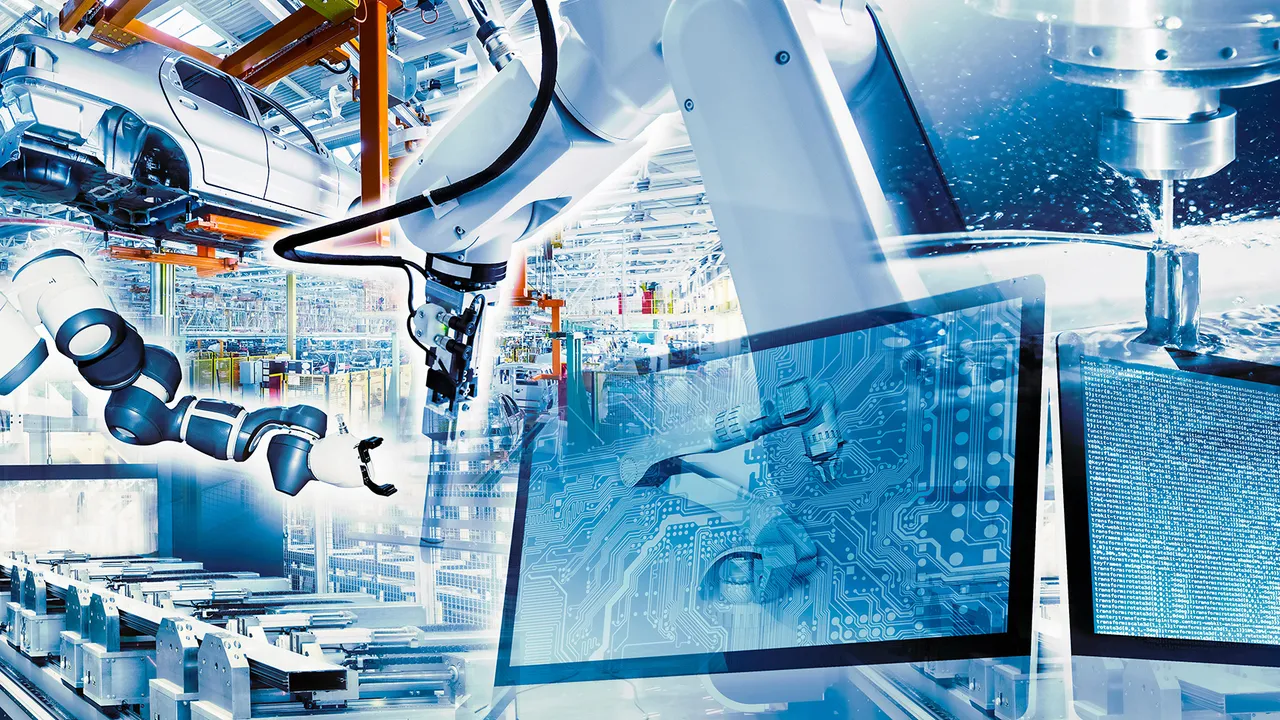
Quantum Programmable Logic Controllers (PLCs), a heritage technology from Modicon now central to Schneider Electric’s automation ecosystem, represent a benchmark for high-performance control systems. These controllers excel due to their robust modularity, dependable reliability, and powerful processing capability. They are specifically engineered to manage large-scale, complex, and mission-critical industrial processes, distinguishing them from standard factory automation PLCs. This analysis, informed by my experience at Powergear X Automation, explores the key sectors and demanding application environments where Quantum PLCs consistently deliver optimal control.

Where High-Performance Industrial Automation Is Essential

The Backbone of Process Industries: Chemical, Oil & Gas, and Water

The process industries mandate controllers capable of managing continuous, often volatile, operations with extreme precision. Quantum PLCs are the preferred choice here.

Refining and Chemical Manufacturing

Chemical and petrochemical facilities require exacting control over variables like temperature, pressure, flow rate, and chemical mixing. Quantum PLCs are extensively deployed to manage these continuous processes.

They provide the necessary reliability for high-risk operations.

Moreover, they integrate seamlessly with Distributed Control Systems (DCS) and SCADA platforms, a crucial feature for enterprise-wide process visibility.

This strong integration capacity, according to a recent IEEE report on industrial control stability, positions the Quantum line as a reliable bridge between field devices and supervisory systems.

Oil, Gas, and Midstream Operations

In the energy sector, from upstream extraction to downstream refining, reliability in harsh environments is non-negotiable.

Quantum PLCs actively automate critical functions across this value chain:

  • Pipeline monitoring and compressor station automation.
  • Refinery unit process control.
  • Managing non-Safety Instrumented System (SIS) controls—though often paired with SIS solutions for complete protection.

The PLC’s robust design allows it to operate reliably in extreme heat, cold, or remote, unconditioned locations, providing tangible operational experience.

Municipal and Industrial Water Treatment

Water and wastewater treatment plants are inherently distributed operations requiring constant, system-wide supervision. Quantum PLCs handle the sophisticated logic required for:

  • Pumping station sequences and lift station control.
  • Precise filtration and chemical dosing processes.
  • System-wide flow and level regulation.

Expert Insight: The Quantum platform’s inherent scalability suits municipalities with numerous remote, distributed sites. Its large I/O capacity efficiently consolidates control, avoiding the need for countless smaller controllers.

Power Generation and Large-Scale Energy Management

The complexity of power plant operation—be it fossil fuel, nuclear, or large-scale renewables—demands a controller with high I/O density and robust communication features.

Thermal and Renewable Power Plants

Quantum PLCs provide stable, high-availability control for critical power processes:

  • Boiler and combustion control systems in thermal power stations.
  • Turbine governor and auxiliary systems.
  • Substation automation and grid synchronization systems.
  • Monitoring and control of large wind and solar farms.

Key Technical Advantages:

  • ✅ High I/O Count Handling: Manages thousands of physical and virtual I/O points efficiently.
  • ⚙️ Network Versatility: Communicates reliably over Modbus TCP/IP, Ethernet/IP, and proprietary fieldbuses, essential for utility applications.

Heavy Industrial Manufacturing: Metals and Pulp/Paper

Manufacturing sectors characterized by continuous, high-speed material transformation rely on the Quantum for its speed and redundancy features.

Metals and Steel Production

Steel mills and primary metals processing require intense, real-time control.

  • Furnace control systems demand high processing speed and temperature accuracy.
  • Rolling mill automation relies on high-speed I/O processing to maintain product gauge and quality during rapid throughput.
  • Material-handling systems, particularly large cranes and conveyors, use the PLC’s complex logic capability.

Pulp and Paper Mills

The pulp and paper industry is defined by extensive continuous processes and high synchronization requirements.

  • Quantum PLCs manage the sequential and analog control of pulp digestion and chemical recovery.
  • They control the demanding processes of the paper machine wet and dry ends, requiring precise speed and tension control for consistent sheet formation.

Author’s Comment: The ability of Quantum PLCs to support CPU redundancy ensures maximum uptime in these 24/7 continuous operations, a critical factor given the high cost of unscheduled downtime in paper production.

Infrastructure and Large Machinery Automation

The stability of the Quantum platform makes it highly suitable for complex infrastructure and significant capital equipment.

Transportation and Smart Infrastructure

In large-scale public and private infrastructure, system reliability is paramount.

  • Transportation systems: Control for rail signaling, metro logistics, and automated baggage handling at airports.
  • Tunnel ventilation and fire safety systems.
  • District heating/cooling networks and large-building mechanical systems.

Its ability to manage physically distributed I/O across vast areas makes it an excellent choice for city-scale projects.

Heavy Equipment and Assembly Lines

Large machinery applications leverage the PLC’s robust architecture for complex, repetitive logic.

  • Automating gantry and overhead cranes.
  • Control systems for heavy mining machinery.
  • Managing complex sequencing on large automotive or aerospace assembly lines.

The capacity for handling complex motion and massive I/O points makes the Quantum an enduring choice for specialized machine builders.

Conclusion and Next Steps

Quantum PLCs maintain a dominant position in the demanding world of industrial automation. They specifically target applications that require high reliability, expansive process control, and seamless integration with supervisory systems. Industries like petrochemicals, power generation, heavy metals manufacturing, and critical infrastructure consistently choose the platform for its stability and scalability.

If you are currently evaluating a robust control system for a large-scale project—whether it involves continuous process control or complex machine automation—the Quantum family offers proven performance and longevity.

Interested in exploring how this high-performance technology can be specifically integrated into your facility? Click here to visit the Powergear X Automation website for detailed solutions and application case studies: https://www.powergearx.com/

Frequently Asked Questions (FAQ)

Q1: How does a Quantum PLC differ from a smaller, compact PLC in practical experience?

A: The main difference lies in scale and power. In my experience, a Quantum PLC handles significantly more complexity. It supports a much greater number of I/O points, offers built-in redundancy options (dual CPUs), and processes logic much faster, which is essential for continuous processes like distillation or rolling mills. Compact PLCs are generally limited to smaller machines or isolated automation tasks.

Q2: Can Quantum PLCs be used as a primary Safety Instrumented System (SIS)?

A: While the standard Quantum PLC is highly reliable and handles many non-SIS safety functions, it is generally not certified for use as a primary SIS component. For TÜV-certified functional safety (SIL 2/3), users should integrate dedicated Safety PLCs (like Schneider Electric’s own Triconex or specialized safety relays) with the Quantum, which acts as the primary process controller.

Q3: What role does its networking capability play in modern plant operations?

A: Its advanced networking is crucial. A Quantum PLC’s ability to use protocols like Modbus TCP/IP allows it to connect massive numbers of field devices and integrate seamlessly with higher-level systems (SCADA, MES, ERP) across an Ethernet plant network. This high-level connectivity facilitates data acquisition for analytics and digital transformation initiatives, which is vital for modern predictive maintenance and efficiency improvements.

Back to Top
Product has been added to your cart