
Yokogawa CP430T-ETH & Siemens S7: Integration Guide 2026
Yokogawa CP430T-ETH Compatibility: Integrating Siemens S7 into CENTUM VP
Engineers often ask if the Yokogawa CP430T-ETH control processor supports direct Siemens S7 communication. The short answer is no. While the “ETH” suffix confirms Ethernet connectivity, it does not imply native S7 protocol (RFC1006) support. This distinction is critical for system integrators. Misunderstanding this hardware limitation often leads to significant delays during the Factory Acceptance Test (FAT). At Powergear X Automation, we prioritize clear protocol mapping to ensure seamless industrial integration.
Understanding the CP430T-ETH Communication Framework
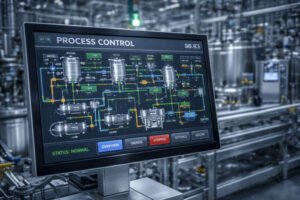
The CP430T-ETH serves as the high-availability heart of the Yokogawa CENTUM VP Distributed Control System (DCS). It utilizes the proprietary Vnet/IP protocol for internal deterministic control. Although it handles Modbus/TCP and OPC data, it cannot “speak” the S7comm language natively. Therefore, you must use an intermediary gateway or server for cross-brand communication. Relying on native Ethernet ports for third-party PLC polling without a driver is a common technical oversight.
Strategic Integration Using OPC and Modbus Gateways
To bridge the gap between Yokogawa and Siemens, experts recommend the OPC UA architecture. This method ensures data integrity and high security. Alternatively, hardware protocol converters can translate S7 signals into Modbus/TCP for the CP430T-ETH. However, these gateways require careful configuration to prevent latency issues. We have observed that robust network segmentation protects the DCS from Siemens-side broadcast storms. Always isolate the Vnet/IP domain from the general factory automation network.
Prioritizing Deterministic Control and System Safety
Yokogawa designs the CP430T-ETH for mission-critical industries like petrochemicals and pharmaceuticals. These environments demand deterministic cycles, usually between 100ms and 500ms. Siemens S7 communication is often request-based and non-deterministic. By excluding non-native protocols, Yokogawa maintains a highly stable and secure control environment. This design choice aligns with IEC 62443 cybersecurity standards. It reduces the attack surface by limiting unnecessary open-port communication within the processor firmware.
Author Commentary: The Powergear X Automation Perspective
In our experience at Powergear X Automation, attempting to “force” direct communication often compromises long-term system reliability. The industrial automation landscape is shifting toward standardized open protocols like OPC UA. We believe that decoupling vendor lifecycles through an abstraction layer is the smartest move for brownfield plants. It simplifies future upgrades. If you are designing a mixed-vendor architecture, prioritize clear data ownership between the DCS and PLC levels to avoid logic conflicts.
Technical Best Practices for Successful Implementation
- ⚙️ Standardize all data exchange via an OPC UA server.
- ⚙️ Document tag mapping and endian formats before commissioning.
- ⚙️ Implement industrial firewalls between Siemens and Yokogawa layers.
- ⚙️ Freeze the I/O list before starting FAT procedures.
- ⚙️ Define clear read/write authority for every shared tag.
- ⚙️ Use dedicated communication modules for high-frequency data polling.
Application Case: Chemical Plant Expansion
A recent project involved integrating ten Siemens S7-1500 PLCs into an existing Yokogawa CENTUM VP system. The engineering team deployed a redundant OPC server as the bridge. This allowed the CP430T-ETH to monitor motor status and temperatures without overloading the control processor. The result was a 100% uptime record during the first year of operation. For more insights on high-performance control systems, visit Powergear X Automation.
Frequently Asked Questions (FAQ)
Q: How can I choose the best gateway for Siemens to Yokogawa integration?
A: Focus on throughput and redundancy support. For critical loops, choose a gateway that supports redundant Modbus/TCP. For monitoring, an OPC UA server provides better scalability and easier tag management.
Q: Is there any firmware update that enables S7 support on CP430T?
A: No. Yokogawa maintains a strict protocol stack to ensure SIL-level reliability. Direct S7 integration would require custom drivers that are not supported by standard CENTUM VP firmware.
Q: What is the biggest risk of using third-party protocol converters?
A: The main risk is “Data Staleness.” If the converter hangs, the DCS might show the last known value instead of a failure. Always implement a “heartbeat” signal between the Siemens PLC and the Yokogawa DCS.