Over 50,000 hot-selling automation module components.
Yokogawa SCP461-51 vs ProSafe-RS: Critical Safety Differences

Yokogawa SCP461-51 vs ProSafe-RS: Critical Safety Differences

Yokogawa SCP461-51 vs. ProSafe-RS: Why Hardware Separation is Non-Negotiable

In the world of industrial automation, distinguishing between Basic Process Control Systems (BPCS) and Safety Instrumented Systems (SIS) is vital. Many procurement teams mistakenly seek a one-to-one equivalent for the Yokogawa SCP461-51 within the ProSafe-RS platform. However, these systems serve fundamentally different roles in plant architecture. At Powergear X Automation, we emphasize that substituting BPCS hardware for safety-certified components compromises both compliance and personnel safety.

Yokogawa SCP461-51 vs ProSafe-RS: Critical Safety Differences

The Fundamental Split Between BPCS and SIS Architecture

The SCP461-51 processor functions as the “brain” for the CENTUM VP and CS 3000 DCS environments. It prioritizes high availability and continuous process optimization. Conversely, the ProSafe-RS platform utilizes the SCP451 series, which are dedicated TÜV-certified safety controllers. Yokogawa intentionally separates these architectures to eliminate common-cause failures. This design ensures that a software glitch in the control layer does not disable the emergency shutdown system.

Functional Safety Standards and SIL 3 Certification

Regulatory compliance remains the biggest hurdle when selecting controllers. The SCP461-51 lacks Safety Integrity Level (SIL) certification because it manages standard process loops. In contrast, the ProSafe-RS SCP451 meets IEC 61508 and IEC 61511 standards for SIL 3 applications. Using non-certified hardware in a safety loop will lead to failed audits. Furthermore, it exposes the plant to massive liability in the event of an incident.

Redundancy Philosophy: Availability vs. Fail-Safe

The redundancy in an SCP461-51 focuses on keeping the plant running to maximize production uptime. However, ProSafe-RS redundancy prioritizes a “fail-safe” state. The SCP451 incorporates advanced diagnostics and independent watchdogs. These features force the system into a known safe state during a critical hardware failure. Powergear X Automation experts often observe that mixing these philosophies leads to dangerous “nuisance trips” or, worse, safety system dormancy.

Integration Without Compromising Integrity

Both systems utilize the Vnet/IP communication protocol, allowing them to share data seamlessly. Nevertheless, they maintain strict logical boundaries. The SCP461-51 acts as a BPCS node, while the SCP451 functions as a protected safety node. This integration allows operators to view unified alarms on a single HMI. However, the DCS cannot override the safety logic of the SIS, preserving the integrity of the safety lifecycle.

Technical Best Practices for Installation and Maintenance

  • Maintain strict logical separation between BPCS and SIS control logic.
  • Use independent power feeds for SCP451 cabinets to prevent noise.
  • Keep separate spare parts inventories for CENTUM and ProSafe-RS.
  • Verify physical grounding requirements during the Site Acceptance Test (SAT).
  • Ensure that safety-related Vnet/IP traffic is properly segmented.

Powergear X Automation Expert Insight

From our experience in the field, attempting to “unify” hardware to reduce costs is a high-risk strategy. While the initial capital expenditure for ProSafe-RS is higher, the long-term protection it offers is invaluable. Industry trends show that insurers now demand strict adherence to IEC 61511. We recommend investing in dedicated SCP451 controllers for any application involving flammable or high-pressure processes.

Industry Application Scenarios

  • Emergency Shutdown (ESD): Requires ProSafe-RS SCP451 for high-speed risk mitigation.
  • Burner Management Systems (BMS): Mandatory SIL-rated hardware for furnace and boiler safety.
  • Continuous Process Control: Ideal for SCP461-51 to manage temperatures and flows.
  • Fire and Gas Systems (F&G): Uses ProSafe-RS for reliable detection and suppression logic.

Frequently Asked Questions (FAQ)

Can I use a firmware update to turn an SCP461-51 into a safety controller?

No, this is impossible. The distinction is at the hardware and circuit-design level, including internal diagnostics and physical isolation.

What is the primary risk of sharing a UPS between these two systems?

Shared power sources can introduce harmonic noise. This noise often causes “nuisance trips” in sensitive safety controllers like the SCP451.

How should I plan my spare parts strategy for a mixed plant?

Never mix inventories. Label SCP451 modules clearly as “Safety Critical” to prevent technicians from using them in non-safety DCS slots.

For more technical specifications and high-quality automation components, visit the Powergear X Automation website to explore our full catalog.

Yokogawa CENTUM VP

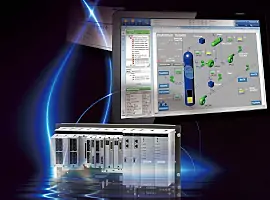
Yokogawa CENTUM VP: The Distributed Control System for High-Reliability Industrial Automation

Yokogawa’s CENTUM VP: The Global Standard in DCS

Yokogawa’s CENTUM VP is a globally recognized distributed control system (DCS). It is a leader in industrial automation and process control. This system offers unmatched reliability and superior performance. Moreover, the architecture provides a robust platform for complex operations.

The Evolving CENTUM VP DCS System and Network I/O (N-IO)

Yokogawa’s latest CENTUM VP R6 significantly improves the engineering environment. It drastically reduces time and effort for system setup. In addition, a new I/O system, the Network I/O (N-IO), enhances the lineup. The N-IO is the next-generation Smart Configurable I/O. Earlier systems used F-I/O (Field I/O) architecture. The high-speed Vnet/IP control network ensures rapid operator screen updates. Vnet/IP operates at one Gigabit per second, guaranteeing updates within one second. This network adheres to the IEEE 802.3 standard.

Yokogawa CENTUM VP

Distributed Control: The Core of CENTUM VP Architecture

CENTUM VP uses a true Distributed Control Architecture. It deliberately avoids a traditional Client/Server model. This design is highly advantageous for factory automation. The system database is fully distributed across each Field Control Station (FCS). Importantly, the FCS is completely redundant. This redundancy provides a switchover time of less than one millisecond. The Master Engineering Station (ENG) holds only a copy of this database. Consequently, the main database resides in the controller.

Key Advantages of Yokogawa’s Distributed Architecture

This distributed approach offers unique benefits over Client/Server models. Operator Stations (HIS) directly fetch data from the controllers. Therefore, the system update time remains at a fast one second. The architecture has no single point of failure, unlike server-based systems. Server failure would otherwise lead to data loss across all operator stations. Furthermore, individual plant units can undergo independent commissioning. Engineers can later merge the databases on the Master ENG. This design enhances system operability and availability.

Why CENTUM VP Redefines Industrial Automation Over Conventional DCS Technology

Vnet/IP: High-Reliability Control Network for Process Control

Vnet/IP is the critical control network connecting all CENTUM VP components. It ensures the real-time, high-reliability communication necessary for stable process control. Vnet/IP is a dual-redundant control network, utilizing Bus 1 and Bus 2. Bus 1 handles primary control data. If Bus 1 fails, communication automatically switches to Bus 2 without interruption. Importantly, Bus 2 can also handle open communication. This allows generic Ethernet connectivity with non-Centum components like printers. Loss of one bus does not restrict open communication.

Configurable N-IO and Its Impact on Field Wiring

The N-IO (Network I/O) offers significant flexibility and reduced footprints. The configurable I/O modules can handle various signal types. This eliminates the need for numerous dedicated I/O types. Field signal wires connect directly to the I/O modules. This design drastically reduces the required cabinets and inter-panel wiring. However, careful junction box grouping and cable management are essential. Engineers must meticulously plan the assignment of redundant and non-redundant signals. This directly impacts the system’s overall availability and simplifies maintenance planning.

Integrated Safety with ProSafe-RS and “One Solution” Concept

Yokogawa also offers the ProSafe-RS Safety Instrumented System (SIS). ProSafe-RS is IEC/TÜV certified for SIL 3 applications. This fail-safe, standalone system is typically integrated with CENTUM VP on the same Vnet/IP network. This seamless integration eliminates the need for a separate gateway. A common Human Machine Interface (HMI) serves both the DCS and the SIS functions. Operators access all safety and control data through a single window. ProSafe-RS truly implements the “One process, One Network, One Window, One solution” philosophy in industrial automation.

Why CENTUM VP Redefines Industrial Automation Over Conventional DCS Technology

Application Scenarios and Solutions

The robust and integrated nature of Yokogawa’s CENTUM VP and ProSafe-RS makes it ideal for critical industries. Refineries, petrochemical plants, and power generation facilities heavily rely on this architecture. The distributed database enhances operational continuity. Furthermore, the integrated safety system simplifies regulatory compliance.

Discover Advanced DCS Solutions

To leverage the power of advanced DCS and PLC solutions for your specific industrial challenges, click the link below. Powergear X Automation Limited offers expert design, integration, and support for your control systems needs.

Discover our range of industrial automation products and solutions at Powergear X Automation Limited

Back to Top
Product has been added to your cart