
Over 50,000 hot-selling automation module components.
Seamlessly Connect 3500/22M TDI to Your Industrial Control System

Seamlessly Connect 3500/22M TDI to Your Industrial Control System

The Critical Role of the 3500/22M in Plant Reliability

The Bently Nevada 3500/22M Transient Data Interface (TDI) is a cornerstone of machinery protection and condition monitoring for critical rotating assets like steam turbines, gas turbines, compressors, and large motors. The module excels at capturing high-resolution dynamic data and transmitting it to the proprietary System 1 platform. However, modern industrial automation demands a higher level of integration: directly linking the 3500/22M with the plant’s distributed control system (DCS) or supervisory control and data acquisition (SCADA) layer. This connection is not merely a convenience; it is an operational imperative for integrated plant management.

Seamlessly Connect 3500/22M TDI to Your Industrial Control System

Bridging the Gap Between Protection and Control

Integrating the monitoring system into the main control systems ensures that vital event data, real-time vibration levels, alarm statuses, and machine health flags become instantly accessible to control room operators. This accelerates the response to anomalies. Conversely, a lack of integration creates operational silos. Engineering teams frequently wrestle with technical obstacles, including signal incompatibility, mismatched communication protocols, data latency, and evolving cybersecurity requirements. This guide offers proven, practical methodologies to achieve efficient and reliable integration of the 3500/22M with your chosen DCS/SCADA platform.

  • Powergear X Automation Comment: Factory automation is moving towards complete data convergence. The days of separate, isolated monitoring systems are ending. Seamless data flow from the protection layer to the PLC and DCS is now a requirement for operational excellence.

Why Integration Drives Operational Resilience

Integrating the 3500/22M delivers measurable engineering and operational value. It centralizes visibility of machine condition, allowing operators to make timely decisions without navigating multiple proprietary software interfaces. This convergence significantly improves alarm and trip management, enabling a faster response to critical events. Moreover, by contextualizing vibration data with process variables (like pressure and temperature), the foundation for true predictive maintenance is established. Complying with standards such as API 670 for machinery protection also necessitates robust, auditable data integration, directly contributing to reduced unplanned downtime.

BenefitEngineering Value
Unified Machine Condition ViewFaster operator action; eliminating system switching.
Improved Event ResponseRapid alarm acknowledgment and trip management.
Data ContextualizationEnables actionable insights for predictive maintenance strategies.
Compliance & AuditabilitySupports industry standards and regulatory requirements.
Minimized Unplanned DowntimeEarlier detection of minor machine anomalies.

Understanding the Integration Architecture and Protocol Options

The 3500/22M module supports several standard communication paths essential for connecting to supervisory control systems. These typically include Modbus RTU (serial) and Modbus TCP (Ethernet). OPC via System 1 is also an option for high-level diagnostics. The standard architecture involves the 3500/22M communicating through a rack interface, over a network switch, and then to the DCS/SCADA server. Crucially, the TDI module handles the real-time status and register data using Modbus, while System 1 is dedicated to detailed waveform and advanced diagnostic analysis.

Selecting the Optimal Communication Protocol

  • Choosing the right protocol is the first critical decision.
  • Modbus TCP (Recommended for Modern Systems): This is the preferred choice for modern DCS and SCADA environments. It offers superior throughput and simplifies the mapping and scaling of data points. Use Modbus TCP if you have a stable Ethernet network, require multiple client access, and have implemented appropriate cybersecurity controls.
  • Modbus RTU (RS-485 Serial): This robust protocol remains relevant for noisy environments or where legacy SCADA masters only support serial inputs. Use RTU if network infrastructure is limited or for simple, point-to-point connections.
  • OPC via System 1 (For Analytics, Not Protection): OPC (most commonly OPC UA today) is ideal for connecting to plant historians and asset performance management (APM) systems. However, it should not be the primary link for protection alarms due to potential added software layers and latency. It is best used for long-term trending analytics and condition-based maintenance data.

A Structured Approach to Engineering Configuration

Successful integration follows a disciplined four-step process.

Step 1 — Defining the Necessary Data Signals

Determine precisely which data points must flow to the DCS/SCADA. This typically includes primary vibration levels (peak/RMS), Keyphasor speed, alarm flags, event statuses, and diagnostic parameters like probe gaps. A key engineering tip: Avoid sending high-resolution transient or waveform data; the SCADA layer does not require or effectively process this detailed information.

Step 2 — Configuring Modbus Mapping in the 3500 Rack

The TDI module requires meticulous configuration. Key tasks include assigning sequential register addresses, selecting the correct data type (e.g., FLOAT32), and accurately setting the byte order (Endianness). Using a test Modbus client to validate the channel-to-register map before final deployment is essential. Powergear X Automation recommends standardizing naming conventions early, such as “TBN_H2_VIB_RMS,” for maintainability.

Step 3 — Configuring the DCS/SCADA Endpoint

The required steps vary based on the vendor (Emerson DeltaV, Yokogawa, Honeywell, ABB, Siemens PCS7, etc.). You must create the Modbus device definition, configure the communication channel, and set an optimal polling rate (typically between 500 ms and 2000 ms). It is critical to apply scaling factors and validation routines consistent with the 3500 configuration.

Step 4 — Rigorous Testing and Validation

Thorough testing during the commissioning phase is non-negotiable.

  • Communication Handshake Test: Confirm Modbus client/server stability.
  • Value Trending Test: Verify stable, real-time signal trending with zero dropouts.
  • Alarm Simulation Test: Manually trigger alarms to ensure the SCADA receives them within acceptable latency bounds.
  • Failover Test: Ensure the integration does not compromise the integrity of the primary protection layer.

Troubleshooting Common Integration Challenges

ProblemRoot CauseSolution
Incorrect Data ScalingMisaligned engineering units (e.g., mm/s vs. in/s).Verify and align scaling in both TDI and SCADA configurations.
Byte Order MismatchEndianness incompatibility (Big-Endian vs. Little-Endian).Adjust the Modbus word/byte swap mode on the SCADA master.
Delayed AlarmsPolling rate is too slow for event-based data.Optimize the SCADA polling rate or use dedicated alarm status bits.
Data Dropouts on SerialElectrical noise, poor grounding, or improper cable routing.Use shielded twisted pair cable and ensure correct grounding practices.

Prioritizing Cybersecurity Best Practices

Because the 3500 system is intrinsically linked to critical protection logic, cybersecurity cannot be an afterthought. This system is part of your overall industrial automation network, and protecting it is paramount.

VLAN Segregation: Use Virtual Local Area Networks (VLANs) to separate condition monitoring and protection traffic from the general business network.

Disable Unused Ports: Turn off all unused physical ports and unnecessary services on network devices and the TDI module.

Access Control: Enforce strong password policies and apply access control only to authorized configuration personnel.

Documentation: Maintain up-to-date documentation of network topology and rigorous change control procedures for all configuration changes.

Application Scenario: Integrating Gas Turbine Health

In a major combined cycle power plant, the integration of the Bently Nevada 3500/22M on the main Gas Turbine (GT) provides real-time health metrics to the plant’s Siemens PCS7 DCS. This setup allows the GT’s vibration and thrust position data to be displayed alongside the gas turbine’s combustion and steam parameters. As a result, operators can observe a slight, sustained increase in axial position (thrust) that would otherwise be missed if they only relied on the proprietary monitoring system. The DCS triggers an intermediate alarm, prompting an inspection well before the vibration level reaches the API 670 trip setpoint. This is a clear demonstration of how integration shifts the paradigm from protection to true predictive capability.

Read More: For deeper insights into leveraging this data, visit Powergear X Automation’s comprehensive resources on industrial automation solutions. Click here to explore our solutions.

Frequently Asked Questions (FAQ)

Q1: How does the polling rate impact my data integrity and system performance?

A: A slower polling rate (e.g., > 3000 ms) can lead to stale data in the DCS, meaning you won’t see critical changes as quickly. However, a rate that is too fast (e.g., < 200 ms) can overload the Modbus server in the 3500/22M or congest the network. Based on our experience, a balanced rate between 500 ms and 2000 ms generally provides a good compromise between responsiveness and network stability.

Q2: Should I use a dedicated fiber optic link for the Modbus TCP connection?

A: While copper Ethernet is usually sufficient for short runs, a dedicated fiber optic link is highly recommended in environments with significant electromagnetic interference (EMI), such as near large motor control centers or variable frequency drives. This provides superior noise immunity and can prevent intermittent data dropouts, which are particularly frustrating to troubleshoot.

Q3: We only use System 1 for analysis. Why should we bother with the DCS integration?

A: System 1 is optimized for diagnostic analysis and long-term trending (data scientists and reliability engineers). DCS integration is for real-time situational awareness (control room operators). Operators are trained to manage the entire process from the DCS console. Forcing them to switch applications delays response time, increases the cognitive load, and introduces the risk of missing a critical process context. Integrating the data ensures the machine health is part of the operational safety and control loop.

Conclusion

Integrating the Bently Nevada 3500/22M TDI with modern DCS/SCADA systems transforms machine protection into a comprehensive component of industrial automation. This convergence provides real-time situational awareness, enhances operational reliability, and guarantees a quicker, more informed response to machinery anomalies. By adhering to best practices in protocol selection, structured Modbus mapping, rigorous cybersecurity measures, and disciplined testing, the integration will become a stable, scalable, and maintainable element of your plant’s ecosystem. This strategic approach supports both critical machinery protection and advanced predictive maintenance initiatives, ultimately aligning with standards of operational excellence.
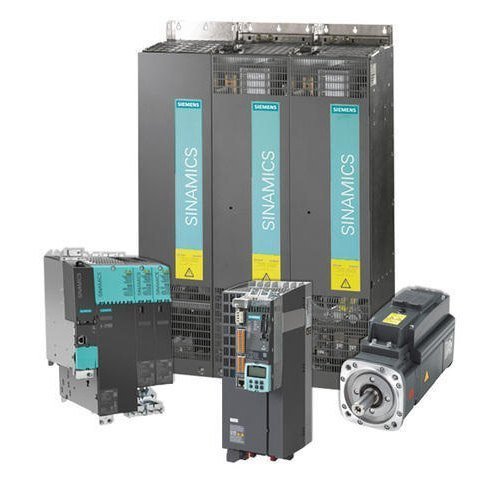
Siemens 6SL3100 SINAMICS S120 Line Module: Selection and Troubleshooting

Siemens 6SL3100 SINAMICS S120 Line Module: Selection and Troubleshooting

The Siemens 6SL3100 line module is the unsung hero of the SINAMICS S120 drive system.

This component serves as the power heart, converting incoming AC mains power into the critical DC link voltage. The DC link then supplies power to all connected motor modules. Sizing the 6SL3100 correctly ensures peak performance, energy efficiency, and reliable uptime in any industrial automation setup. Mismanagement of this sizing decision, however, directly jeopardizes your entire production line.

Siemens 6SL3100 SINAMICS S120 Line Module: Selection and Troubleshooting

Powergear X Automation Commentary on 6SL3100 Selection

Selecting the right line module is a foundational decision in designing robust control systems. Our experience at Powergear X Automation shows that inadequate sizing is a leading cause of premature drive failure and unnecessary downtime. The 6SL3100 series offers versatility, from high-speed packaging machines to heavy-duty factory automation in metals processing. Making the right choice is essential for smooth, cost-effective production.

Understanding Regenerative vs. Non-Regenerative Architectures

The first step in selection is defining the system’s braking demand. This fundamental choice significantly impacts overall energy consumption and heat generation.

Non-Regenerative (Basic Line Modules): These simply convert AC to DC. They are the ideal choice for applications with stable loads and minimal braking or deceleration. Examples include continuous conveyors, simple pumps, and fans. They dissipate braking energy as heat, usually through external braking resistors.

Regenerative Line Modules: These sophisticated units return excess braking energy back to the plant’s mains grid. This dramatically reduces heat output and eliminates the need for large, costly external brake resistors. Regenerative technology is essential for high-dynamic applications. Consider them for robotics, frequent start/stop systems, metal forming, and critical winding/unwinding processes. MarketsandMarkets reports show regenerative drives significantly improve energy profiles in industrial settings.

Decoding the SINAMICS 6SL3100 Part Number

Navigating the ordering process requires understanding the specific part number structure. The 6SL3100 code is a comprehensive technical signature.

Example Part Number Breakdown: 6SL3100-0BE31-2AB0

Code SegmentMeaningTechnical Detail
6SLDrive FamilySiemens Drive Technology
3100SeriesLine Module for SINAMICS S120
0BCapability ClassDefines Regenerative or Non-Regenerative function
E31RatingVoltage class and total power capacity
2AB0VariantSpecifies cooling method, hardware version, and design

Understanding this code ensures you order the exact module your PLC or DCS application requires. This attention to detail prevents costly misorders and project delays.

The Critical Selection Guide: Voltage, Power, and Cooling

Proper specification of the 6SL3100 minimizes operational risk and maximizes efficiency.

Key Technical Considerations:

Voltage Class: This must precisely match the incoming plant mains supply (e.g., 400 VAC or 480 VAC). Mismatching voltages will result in immediate system faults.

Power Rating: Calculate the combined maximum load of all motor modules connected to the common DC bus. Size the line module with a safety margin to handle this cumulative peak power demand.

Cooling Method: Standard cabinets utilize air-cooled modules. However, compact enclosures or harsh, dusty environments demand the use of liquid-cooled units for reliable heat dissipation.

Format Factor: Choose between Booksize (slim, vertical orientation) or Chassis (larger, high-power) formats to fit specific cabinet space and layout constraints.

Proactive Maintenance and Troubleshooting Techniques

Effective industrial automation relies on minimizing unexpected faults. Based on our field experience, the 6SL3100 series exhibits a few common, easily resolved fault codes.

Common 6SL3100 Faults & Solutions:

F3001 (Overvoltage): This often happens during rapid deceleration. The DC link voltage spikes because the line module cannot handle the excess energy.

Solution: For non-regenerative systems, ensure brake resistors are correctly sized. For high-dynamic systems, the lasting solution is upgrading to a regenerative line module.

F3002 (Undervoltage): This typically indicates an unstable mains supply or a loose electrical connection.

Solution: Verify the stability of the plant mains. Tighten all mains power lugs and check fuse or circuit breaker integrity.

F3003 (Overtemperature): This is a hardware issue, often caused by blocked ventilation paths or a failed internal fan.

Solution: Schedule quarterly cabinet cleaning to remove dust and debris. Verify that all fan health indicators are green during preventative maintenance.

Preventative Tips: Keep air paths clear, schedule firmware updates according to Siemens recommendations, and inspect all electrical connections during planned downtime.

Acquisition and Stocking Strategies for Uptime

High-value components like the 6SL3100 require intelligent procurement planning. Lead times can fluctuate, especially for high-power regenerative models.

Plan Ahead: Consult your supplier early. High-power or specialty 6SL3100 units may have extended lead times of several weeks or even months.

Critical Spares: For any critical production line, stocking one spare 6SL3100 is a highly recommended practice. The cost of a spare module is minimal compared to the loss of thousands of dollars per hour of unscheduled downtime.

Compatibility Check: Always cross-verify the voltage, power, cooling, and regeneration type against your existing S120 control systems configuration before finalizing an order.

Application Case Study: High-Dynamic Spindle Control

A textile company struggled with frequent brake resistor failures on its winding/unwinding station using a basic line module. The frequent stop/start cycles generated massive amounts of heat.

Solution Scenario:

We replaced the non-regenerative 6SL3100 with a regenerative model. This upgrade eliminated the need for the brake resistors entirely. The braking energy was efficiently fed back into the grid, resulting in:

30% reduction in cabinet cooling load.

Zero brake resistor-related failures.

A measurable decrease in monthly energy consumption.

This showcases the economic and operational value of selecting the correct regenerative technology.

Frequently Asked Questions (FAQ)

Q1: What is the main operational difference between a Basic Line Module (non-regenerative) and an Active Line Module (regenerative)?

The Basic Line Module is only a rectifier, converting AC to DC. An Active Line Module (ALM) uses IGBTs and advanced control to not only rectify power but also actively manage the DC link and return excess power (regeneration) to the grid, leading to better power quality and energy savings.

Q2: My S120 drive system keeps tripping on F3003 (Overtemperature) only during the summer months. What is the most likely non-module-related issue?

This is typically an environmental issue combined with system stress. Check if the cabinet air conditioner or heat exchanger is properly maintained and sized for the peak ambient temperature. Dust accumulation on cooling fins reduces heat exchange efficiency, causing the internal fan to run continuously and eventually fail, or simply be unable to handle the heat load.

Q3: We are integrating a new 6SL3100 module into an existing S120 system. What is one critical step an experienced technician should take before powering up the drive for the first time?

Beyond standard wiring checks, the technician must verify the firmware version of the new line module is compatible and aligned with the version running on the Central Control Unit (CU). DRIVE-CLiQ communication errors (F3004) often result from firmware mismatches, and a quick check and necessary update will prevent hours of frustrating troubleshooting.

Conclusion

The Siemens 6SL3100 line module is the power foundation of the SINAMICS S120 system. Specifying the correct voltage class, power rating, cooling, and regeneration technology is a direct investment in efficiency, lower operating costs, and maximizing system uptime.

For a comprehensive consultation on 6SL3100 selection and S120 system integration, we invite you to explore the expertise offered by Powergear X Automation. Click here to visit Powergear X Automation and learn more about optimizing your industrial automation solutions.

Bently Nevada 3500/61: Prevent Industrial Shutdowns with Early Temperature Detection

Bently Nevada 3500/61: Prevent Industrial Shutdowns with Early Temperature Detection

The High Cost of Unexpected Industrial Downtime

Unexpected machinery shutdowns represent one of the single greatest financial risks in the industrial sector. Whether the critical asset is a steam turbine, a main compressor, or a gear-driven pump, failure often follows a clear pattern. Data consistently shows that temperature-related anomalies provide one of the earliest and most reliable indicators of an impending breakdown. Such failures can cost organizations hundreds of thousands of dollars per day in lost production, validating the need for sophisticated control systems like PLCs and DCS platforms in industrial automation.

Bently Nevada 3500/61: Prevent Industrial Shutdowns with Early Temperature Detection

Introducing the Bently Nevada 3500/61: Your First Line of Defense

The Bently Nevada 3500/61 Temperature Module is specifically engineered to counteract this risk. This component is more than a simple monitor; it provides essential early detection of abnormal thermal behavior, giving maintenance teams a critical window for proactive intervention. By signaling a problem long before a catastrophic failure occurs, the 3500/61 allows for scheduled maintenance instead of costly, forced shutdowns. This guide details how industrial plants can effectively leverage this module to dramatically improve asset protection and prevent unscheduled outages.

  • Powergear X Automation Comment: In our experience with complex factory automation systems, temperature monitoring—when properly integrated into the control system—is often the cheapest insurance policy against multi-million dollar asset damage. Simply having a sensor is not enough; the control logic must be robust.

Why Early Thermal Detection is Paramount in Industrial Operations

Ignoring subtle temperature increases is a fast track to escalated failure. A small thermal rise is frequently the first symptom of significant mechanical or electrical issues.

Mechanical Issues: This includes lubrication problems, bearing wear, or component misalignment leading to excessive friction.

System Degradation: Cooling system inefficiency or sensor/wiring deterioration can alter baseline temperatures.

Electrical Faults: Early stage electrical insulation breakdown or winding stress in motors generates heat before a catastrophic short occurs.

As a result of delayed detection, plants face consequences like repeated nuisance trips, severe damage to rotating components, and total emergency shutdowns that halt production. The optimized 3500/61 module acts as a crucial pre-alert system, serving as the first barrier against these destructive failure modes within a DCS environment.

Advanced Features of the 3500/61 for Predictive Insight

The design of the 3500/61 goes beyond basic setpoint protection. It is a vital tool for predictive maintenance, providing capabilities crucial for modern industrial environments.

  • High-Density Channel Count: Each module typically supports 6 or 8 channels, accommodating both Resistance Temperature Detectors (RTDs) and thermocouples (TCs).
  • Exceptional Accuracy: Its accuracy and long-term stability are ideal for critical, high-value assets where a small deviation of only 2–3°C signals a major problem.
  • Robust OK/Not OK Logic: This advanced feature continuously monitors the health of the sensor and its wiring, flagging open circuits, short circuits, or ground faults immediately, preventing false alarms.
  • Configurable Alarm Settings: Users can fine-tune alarm delays, filtering, and setpoints. Therefore, the system can reliably respond to genuine problems while ignoring electrical or process noise.
  • Seamless System 1 Integration: Integration allows for advanced data trending, superior visualization, and predictive maintenance alerts, extending the module’s function beyond immediate protection.

These features enable your control systems to detect a problem at its thermal infancy, effectively “catching the failure before it becomes a failure.”

Common Failure Modes the 3500/61 Can Intercept

Failure ModeEarly Thermal Signs3500/61 Detection Strategy
Lubrication IssuesGradual bearing temperature rise; short, frequent spikes.Catches thermal drift over days and utilizes Rate-of-Rise analysis.
Cooling System InefficiencyGeneral temperature increase across multiple monitored points; slow upward trend during load changes.Detects load-dependent deviations and slow heat accumulation.
Bearing Wear / ContactSudden $\Delta T$ rise of $10-30^\circ\text{C}$ ; temperature spikes during transient operation.Triggers alarms based on Rapid Rate of Change (ROC) logic.
Motor Winding FaultsGradual rise in winding temperature; abnormal phase temperature imbalance.Identifies abnormal thermal patterns under steady-state loads by comparing RTD groups.

Optimizing Your 3500/61 for Maximum Shutdown Prevention

The module’s full potential is only unlocked through correct configuration. Optimizing the settings allows detection at the absolute earliest possible stage.

  • Use Thermal History to Set Setpoints: Avoid generic thresholds. Base Alert and Danger setpoints on the OEM’s bearing specifications and, crucially, the asset’s historical thermal data available in System 1. A Rate-of-Rise (ROC) alert, such as +5°C/min, should be enabled to detect rapid mechanical degradation that linear setpoints might miss.
  • Employ Filtering Wisely: Use medium filtering for general turbomachinery and high filtering in electrically noisy environments. This strategy significantly reduces false alarms without masking a genuine, slow-burn issue.
  • Implement Sensor Voting for Critical Assets: For assets monitored by multiple RTDs/TCs, use logic such as 2-out-of-3 (2oo3) voting. This dramatically improves alarm confidence and overall safety by preventing a single faulty sensor from causing a false trip.
  • Leverage Trip Multiply During Transients: During startup or process upsets, temperatures naturally fluctuate. Applying a Trip Multiply (e.g., 2x to 3x the threshold) prevents nuisance trips during these transient conditions without compromising asset safety under normal operations.

Enhancing Early Detection with System 1 Integration

Integrating the 3500/61 with Bently Nevada’s System 1 software provides a layer of diagnostic intelligence that traditional PLC systems cannot offer alone.

Trend Visualization: System 1 allows operators to identify an abnormal, slow thermal drift weeks before the temperature reaches the Alert setpoint.

Diagnostic Comparisons: It facilitates comparing multiple temperature points on a single machine or between redundant sensors, essential for load balancing and accurate bearing problem diagnosis.

Predictive Alerts: Advanced algorithms can automatically flag highly unusual or cyclical thermal patterns, translating raw data into actionable predictive maintenance tasks.

Case Study: Avoiding Catastrophic Failure at a Chemical Plant

A major chemical refinery utilized this setup on a critical centrifugal compressor. The Bently Nevada 3500/61, integrated with System 1, detected a slow temperature rise of +6°C over two days at an inner bearing, well below the 85°C alert limit.

Early Warning: System 1’s trending visualization flagged the abnormal thermal slope.

Intervention: Maintenance was immediately dispatched and found a partial blockage in the oil supply line.

Result: The obstruction was cleared during a planned maintenance window, successfully preventing a catastrophic bearing failure and an emergency shutdown estimated to cost over $350,000 in lost production and repair.

Conclusion

The Bently Nevada 3500/61 is an indispensable tool in modern industrial automation. It functions not merely as a measurement device, but as the core of a powerful shutdown prevention system. By adopting advanced strategies—including Rate-of-Rise logic, intelligent redundancy (sensor voting), and leveraging the deep diagnostic power of System 1—plants can drastically reduce unplanned outages, extend the lifetime of critical assets, and dramatically increase operational efficiency.

We at Powergear X Automation specialize in optimizing these control systems for maximum uptime. Click here to explore our solutions and case studies on predictive maintenance and asset integrity.

Frequently Asked Questions (FAQ)

  • Q1: How does the “Rate of Rise” setting add experience-based value beyond a simple Alert setpoint?
  • A: A stable but high temperature (e.g., 80°C) often indicates a stable, manageable process issue. However, a rapid ΔT increase (e.g., 5°C in five minutes) signals a sudden, destructive event like lubrication starvation or mechanical failure. Experienced operators rely on ROC because it captures the speed of the failure, prompting immediate, rather than delayed, intervention.
  • Q2: What is the most common configuration mistake operators make when commissioning the 3500/61?
  • A: The most frequent mistake is setting the alarm thresholds too high based on an outdated “run it until it trips” mentality or simply copying default settings. This negates the “early detection” feature. Operators should utilize the ΔT (deviation from normal operating temperature) principle, basing thresholds on the machine’s historical thermal baseline, not just the absolute temperature limit.
  • Q3: Can the 3500/61 effectively detect electrical winding faults in large motors, or is that primarily a vibration analysis task?
  • A: While vibration analysis handles mechanical imbalances, the 3500/61 is excellent for detecting thermal signatures of electrical faults. A gradual but persistent increase in winding RTD temperature often precedes motor burnout caused by degradation of the winding insulation, a process that is often missed by vibration analysis alone. The 3500/61’s ability to compare RTD groups also helps identify phase imbalance issues.
HMI SCADA

Industrial Automation Systems: IIoT, Hybrid-Cloud & Predictive Analytics

The Evolution of Control Systems: Beyond Simple Monitoring

Factories no longer view Human-Machine Interfaces (HMIs) and Supervisory Control and Data Acquisition (SCADA) systems as mere display panels. They were once simple windows showing if a motor was running or a valve was closed. Today, these control systems operate as the nerve center of modern industrial facilities. Their function has shifted from basic data visualization to sophisticated analysis, prediction, and seamless integration across the enterprise. This transformation is driven by several powerful trends: the rise of Industrial IoT (IIoT), the adoption of hybrid-cloud technology, advanced analytics, and the crucial requirement for IT/OT convergence. At the core of this shift are new SCADA platforms and HMIs that are smarter, incredibly intuitive, and deeply embedded in daily operational decisions. Powergear X Automation supports this critical market evolution. We provide cutting-edge HMI panels and essential components from trusted industry leaders such as Allen-Bradley, Siemens, and Mitsubishi, empowering plants to sustain a competitive edge.

Leveraging IIoT for Real-Time Operational Visibility

The Industrial Internet of Things (IIoT) completely changes how operators interact with HMIs and SCADA. Systems now display much more than simple on/off status. They integrate massive sensor data streams from every machine across production lines. This provides real-time visibility into crucial metrics like overall performance, product quality, and critical energy consumption. For instance, pairing a robust Siemens Comfort Panel with an S7-1500 PLC allows operators to instantly visualize energy trends specific to each asset. This proactive insight helps managers eliminate inefficiencies long before they become expensive cost overruns. Furthermore, the Allen-Bradley PanelView family offers seamless connectivity with ControlLogix and CompactLogix PLCs, creating unified dashboards for all critical Key Performance Indicators (KPIs).

Enhanced Anomaly Detection: Teams spot minor issues faster.
Performance Benchmarking: Compare machine or shift efficiency easily.
Integrated Data Flow: Connect floor data with MES/ERP for smarter, business-level decisions.
HMI SCADA

Hybrid-Cloud SCADA: The Best of Both Worlds

Historically, SCADA systems ran on local, on-premise servers. While reliable, this architecture severely limited scalability and secure remote access. Hybrid-cloud architectures provide an intelligent compromise: reliable local control paired with the inherent flexibility of the cloud. This design enables secure remote monitoring, much easier system scaling, and enhanced resilience against system failures. Plants can implement modernization in phases. They keep extremely latency-sensitive control functions on-premise while utilizing cloud services for global fleet dashboards, multi-site reporting, and secure data backups. Mitsubishi GOT2000 panels, for example, are perfectly suited for integration with secure remote-access tools, which extends operational visibility beyond the physical plant walls.

Proactive Maintenance Powered by Predictive Analytics

The future of SCADA is defined by being proactive, not reactive. Analytics models are now actively flagging subtle patterns that indicate an impending failure, moving beyond just waiting for an alarm to trip. This allows maintenance teams to plan necessary interventions long before a catastrophic breakdown forces production to stop. Consider a PanelView dashboard that displays subtle vibration trends on a critical motor. Connected advanced analytics can identify minor bearing wear several weeks in advance. This crucial heads-up enables perfectly planned downtime and efficient, smarter parts staging.

Minimize Unplanned Downtime: Early warning indicators provide critical lead time.
Optimize Repair Costs: Fixing issues before minor damage escalates into systemic failure.
Streamline Inventory: Better prediction of parts needs optimizes scheduling and inventory levels.

In the face of volatile supply chains and increasing budget pressures, adopting predictive maintenance is not merely an option—it is an absolute necessity for competitive operations.

Intuitive HMIs: Role-Based and Mobile-Optimized Design

The era of confusing, monochrome screens and overwhelming alarm notifications is ending. Modern HMIs prioritize clean, role-based views. These new interfaces emphasize superior usability and mobility. They ensure that operators can take action faster while minimizing the potential for human error.

Modern Touch Interfaces: Multi-language support shortens training time.
Role-Specific Dashboards: Eliminate screen clutter and highlight only actionable KPIs.
Native Mobile Support: Supervisors securely monitor real-time status using tablets or smartphones.

High-performance options include the Allen-Bradley PanelView 5310 for tight, efficient integration with Logix controllers. Similarly, Siemens Comfort Panels offer highly customizable and flexible screen layouts suitable for diverse applications.

Cybersecurity as a Fundamental Design Requirement

As connectivity expands, so does the security risk landscape. Today’s HMI/SCADA platforms must incorporate security-first features. These features include robust encrypted communications, strict role-based access controls, multi-factor authentication, and sophisticated anomaly detection tools. The primary goal is always to protect operational uptime.

The Mitsubishi GOT2000 series provides user authentication and precise access control directly at the panel level.

Furthermore, engineering environments from all major vendors now centralize security settings. This approach significantly reduces the risk of “configuration drift.” As we move deeper into Industry 4.0, security is no longer an optional add-on; it is an integrated design principle.

IT/OT Convergence: A Unified Operational Strategy

The rigid division between Operational Technology (OT) and Information Technology (IT) is rapidly disappearing. Modern SCADA and HMI platforms must natively connect with higher-level business systems. This integration allows leaders to align real-time production status with critical supply chain, quality, and financial data.

Unified Visibility: Track performance from the machine line all the way to enterprise-level KPIs.
Agile Response: Implement faster reactions to sudden supply-chain shortages or shifts in demand.
Enhanced Collaboration: Promote stronger working relationships between IT and controls engineering teams.

The crucial practical takeaway: Select HMIs and controllers that use communication standards compatible with your existing business systems. Plan your network and security architectures with IT/OT convergence as the central objective.

Conclusion: Building a Resilient Future with Smart SCADA

The current generation of industrial automation systems is shaped by powerful forces: deep IIoT integration, flexible hybrid-cloud deployments, sophisticated predictive analytics, highly modern interfaces, fundamental cybersecurity, and IT/OT convergence. These factors together are fundamentally redefining how today’s factories operate and compete globally.

Ready to accelerate your plant’s digital transformation?

Powergear X Automation can expertly assist you in evaluating your options, quickly sourcing in-stock panels, and ensuring fast shipment of components from top brands.

Click here to explore our wide range of HMI and SCADA solutions at Powergear X Automation and take the essential next step toward smarter, more resilient factory automation.

Application Scenario: Optimized Pump Station Monitoring

A municipality uses a Powergear X Automation solution to monitor remote water pump stations. Instead of sending technicians to check pumps weekly, a Siemens Comfort Panel acts as the local HMI, sending pump vibration and energy data via a secure, low-latency hybrid-cloud connection to a central SCADA system. The system uses a predictive model to alert maintenance 3-4 weeks before a pump bearing is expected to fail. This enables a shift from costly emergency repairs to scheduled, efficient component replacement during off-peak hours, dramatically reducing operational costs and unplanned downtime. This is a practical example of the Expertise and Experience we bring to real-world industrial challenges.

Frequently Asked Questions (FAQ)

Q1: How does a hybrid-cloud SCADA setup actually affect my system’s latency for critical control?

A: A well-designed hybrid-cloud architecture keeps critical, immediate control loops (like emergency stops or fast process regulation) entirely on the local PLC/DCS, guaranteeing low latency. The cloud component is used for non-critical, high-level functions like historical data aggregation, trend analysis, and remote reporting, where slightly higher latency is acceptable. The local network always retains core real-time control.

Q2: What is the single biggest operational benefit I can expect from upgrading to a modern HMI panel?

A: The most significant benefit is the reduction in human error and the increase in operator speed. Modern panels use intuitive, role-based graphics (high-resolution, customizable graphics) that reduce training time and eliminate screen clutter. This focused design means an operator can correctly identify a fault and initiate the correct response significantly faster than on an older, text-based system.

Q3: I have a mix of old and new PLCs (Allen-Bradley and Mitsubishi). Is IT/OT convergence possible without replacing everything?

A: Yes, convergence is definitely possible. It requires a strategic approach using modern middleware or specialized SCADA servers that can translate data across various industrial protocols (like Modbus, EtherNet/IP, PROFINET, etc.) and then structure that data into common IT-friendly formats (like OPC UA or MQTT). Focus on upgrading the communication gateway/SCADA layer first, rather than ripping and replacing every PLC or DCS component.

Rockwell vs Siemens The Guide to Factory Automation PLCs

Allen-Bradley vs Siemens PLC: Choosing Your Industrial Control System

Two titans dominate the industrial automation landscape: Allen-Bradley (Rockwell Automation) and Siemens.

They both offer robust, scalable, and highly durable control systems that reliably power complex manufacturing plants globally. The real challenge is not about performance—it is determining which ecosystem best aligns with your long-term operational needs. This guide offers a deep dive beyond mere specification lists, providing practical, experience-based insights for real-world plant environments.

The Critical Ecosystem Choice: Why Your PLC Brand Matters

The selection of a core PLC brand dictates your entire factory automation ecosystem. Allen-Bradley (AB) enjoys immense popularity across North America. Many facilities standardized on Rockwell tools decades ago. Consequently, local maintenance teams already know the Studio 5000 environment, which guarantees faster adoption and troubleshooting. Conversely, Siemens stands as a global powerhouse, often the default choice for international Original Equipment Manufacturers (OEMs), particularly in Europe and Asia.

Expert Insight (Powergear X Automation): Choosing a PLC brand commits your facility to that vendor’s software, motor drives, Human-Machine Interfaces (HMIs), technical support, and spare parts supply for the next 10 to 15 years. Therefore, selecting a platform that contradicts your existing installed base or local talent pool will certainly inflate lifecycle costs and dramatically slow issue resolution during critical downtime.

Rockwell vs Siemens The Guide to Factory Automation PLCs

Engineering Software Battle: Studio 5000 vs. TIA Portal

The engineering software defines the user experience and development speed.

Allen-Bradley (Studio 5000 / RSLogix 5000): This platform emphasizes ladder logic (LD) and function block diagram (FBD) programming. These are programming languages very familiar to US-based technicians. Moreover, Studio 5000 integrates seamlessly with Rockwell’s FactoryTalk suite for Supervisory Control and Data Acquisition (SCADA), alarming, and data historization. If you currently use PanelView HMIs or FactoryTalk View, maintaining the AB stack avoids toolchain incompatibility.

Siemens (Totally Integrated Automation – TIA Portal): TIA Portal’s key strength is unifying PLCs, safety controllers, drives, and HMIs into one cohesive engineering environment. This platform excels using Structured Text (SCL), and it provides advanced, system-wide diagnostics. As a result, teams managing diverse assets under a single architecture benefit from TIA’s reduction in context-switching and its simplified version control across all devices.

✅ Guidance:
Choose AB if your priority is familiar programming, fast North American onboarding, and leveraging existing Rockwell infrastructure.
Choose Siemens if your team can access the expertise and you require a unified engineering platform for all your control systems components.

Hardware Scale and Network Standards: Matching the Right Controller

Both companies offer scalable hardware that meets various operational needs.

Allen-Bradley: The CompactLogix is a mid-range controller perfect for machine-level control, such as small production lines or standalone packaging cells. The ControlLogix represents the high-end, modular platform designed for plant-wide automation, large I/O counts, and high-speed applications. AB uses native EtherNet/IP, which integrates straightforwardly into common US facility networks.

Siemens: The S7-1200 offers an entry-to-mid-range option, providing a cost-effective choice for OEMs and compact system builds. The S7-1500 is the high-performance, modular PLC, featuring extremely fast processing and comprehensive diagnostics, making it prevalent in the automotive and process industries. Siemens leverages native PROFINET and PROFIBUS, which align well with European-sourced equipment and industrial networks.

Example Application: A small robotic pick-and-place station requires a CompactLogix or an S7-1200. Conversely, a multi-zone assembly line involving complex motion control and integrated safety demands a ControlLogix or an S7-1500 DCS equivalent.

Availability and Lifecycle: The Hidden Cost of Downtime

Component availability is often the most significant factor impacting emergency downtime costs.

Allen-Bradley: In the United States, obtaining AB spare parts quickly is usually easier. This is critical when production downtime costs easily reach thousands of dollars per hour. Resellers consistently stock both legacy and current CompactLogix and ControlLogix units for same-day or next-day shipping.

Siemens: Siemens enjoys broader global availability. However, quickly sourcing older S7-300/400 modules on short notice within North America can sometimes be slow. If your equipment fleet primarily uses European OEMs, Siemens may offer smoother long-term global support, even if a US-based spot-replacement takes longer.

🔧 Practical Recommendation: If minimizing downtime through rapid parts replacement in North America is mission-critical, AB often holds the advantage. If your business operates globally or relies heavily on European machine builders, Siemens provides smoother long-haul global integration.

Cost Analysis: Upfront Price vs. Total Lifecycle Expenditure

It is a common error to focus solely on the initial Purchase Price.

Allen-Bradley: Initial hardware prices are often higher. However, this cost is frequently offset by the extensive local expertise, a robust distributor network, and the faster, well-established US replacement pathways.

Siemens: Siemens hardware often carries a lower initial price tag. Any potential long-term savings, however, heavily depend on your team’s existing skillset and regional parts availability. Retraining costs or slower emergency sourcing can quickly erode any initial hardware savings.

Powergear X Automation advises evaluating the Total Lifecycle Cost (TLC). This calculation must include software licenses, staff training time, inventory for spares, the risk profile of downtime, and vendor response times—not just the CPU unit price.

Quick Comparison: Allen-Bradley vs. Siemens PLCs

FeatureAllen-BradleySiemens
Engineering SoftwareStudio 5000 (US familiar)TIA Portal (Unified platform)
Mid-Range PLCCompactLogixS7-1200
High-End PLCControlLogixS7-1500
Primary NetworkingEtherNet/IPPROFINET/PROFIBUS
StrengthNorth American support, fast onboardingGlobal standardization, unified tooling
Watch-OutsHigher initial price, potential OEM lead timesUS learning curve, legacy NA spare part sourcing

Solutions Scenarios: Which PLC Fits Your Project?

Scenario 1: High-Speed Packaging Line (North America)
Choice: Allen-Bradley ControlLogix or CompactLogix.
Reasoning: Leverage existing local training, use native EtherNet/IP for easier integration with peripherals, and guarantee fast spare part availability to minimize potential $10,000/hour downtime risk.

Scenario 2: New Production Facility (Global Standard)
Choice: Siemens S7-1500 with TIA Portal.
Reasoning: Maintain a global standard across multiple international plants, leverage the unified TIA Portal for engineering consistency across PLCs and drives, and simplify management of complex European-sourced machinery.

Frequently Asked Questions (FAQ) with Experience

  • Q1: Will mixing AB and Siemens controllers save money?
    A: Mixing brands rarely saves money in the long run. While you might save on the initial hardware cost of one unit, you introduce complexity into the support chain. You double your required software licenses, increase training costs for technicians, and complicate your spare parts inventory. The added engineering time and troubleshooting complexity often outweigh any initial savings.
  • Q2: My facility uses an old AB platform (PLC-5). Should I upgrade to AB or switch to Siemens?
    A: If your team is only familiar with legacy Rockwell platforms, upgrading to the ControlLogix/Studio 5000 ecosystem provides the fastest path to modernization. The transition, while significant, is much easier for an experienced technician than switching to an entirely new platform like TIA Portal. The quickest adoption will be with the brand your team already knows.
  • Q3: Is the networking standard (EtherNet/IP vs. PROFINET) a major factor?
    A: Yes, it is a significant factor. While both are modern Ethernet protocols, your choice will influence how easily you connect with other components. If your plant has invested heavily in EtherNet/IP-compatible smart devices (like motor starters or remote I/O), switching to PROFINET will require network gateways, adding a potential point of failure. Conversely, many advanced European robotic and motion systems are optimized for PROFINET. Stick with the network that dominates your facility’s existing infrastructure.

For in-depth analysis of these industrial automation systems and to discover solutions tailored to your specific operational needs, we encourage you to visit the expert platform at Powergear X Automation.

Our team can provide guidance on current in-stock options and safe substitution strategies for critical components.

Meggitt Vibro-Meter Proximity System

Essential Guide to 913-402 Proximity Sensors in Industrial Automation

Defining Precision in Industrial Automation

The Meggitt Vibro-Meter 913-402 proximity system stands as an essential component in modern industrial automation. This robust solution ensures critical machine health monitoring. It performs non-contact measurements reliably. High-speed, continuous data feeds are vital for predictive maintenance strategies. Therefore, selecting the correct sensor variant is extremely important for system integrity.

Function and Core Application in Control Systems

The primary function of the 913-402 system is twofold. It accurately measures relative shaft vibration and axial displacement. These measurements safeguard high-value assets like steam and gas turbines. Furthermore, they link directly to DCS and PLC systems. This integration allows maintenance teams to detect imminent failures early. The resulting uptime improvements significantly reduce operational costs.

Operating Principle: Eddy Current Technology

The 913-402 system utilizes the eddy current principle for sensing. A high-frequency signal drives the transducer coil. This generates an electromagnetic field near the machine shaft. As the metallic shaft moves closer, induced eddy currents change the field impedance. The signal conditioner (like the IQS900) converts this impedance change into a voltage output. As a result, the output voltage is precisely proportional to the gap distance.

Navigating Model Variants and Selection Differences

The 913-402 system is often a part of the EA402 extension cable chain. The final model suffix determines its specific configuration. Understanding these suffixes is key to successful implementation in factory automation.

Model NumberURL (Hyperlink)A-CodeE-CodeF/G-CodesKey Feature
913-402-000-012/A2-E045-F0-G00LinkA2 (Ex i)4.5mStandardIntrinsically Safe; 4.5m Cable.
913-402-000-012/A1-E090-F1-G088LinkA1 (Standard)9.0mHose Prot.Long 9.0m Cable; Flexible Hose Protection.
913-402-000-012/A1-E090-F0-G000LinkA1 (Standard)9.0mStandardLong 9.0m Cable; Standard Protection.
913-402-000-012/A1-E040-F0-G000LinkA1 (Standard)4.0mStandardShorter 4.0m Cable; Standard Environment.
913-402-000-012/A2-E095-F0-G000LinkA2 (Ex i)9.5mStandardIntrinsically Safe; Longest 9.5m Cable.

Key Technical Differentiators:

  • Environment (A-code): Choose A2 (Ex i) for Zone 1/Zone 2 hazardous areas. A1 suits general purpose industrial settings.
  • ⚙️ Cable Length (E-code): This dictates the distance between the probe tip and the signal conditioner. Longer cables (E090, E095) enable remote conditioner installation, crucial for machinery in confined spaces.
  • 🔧 Protection (F/G-codes): F1/Gxxx indicates added mechanical robustness, often a flexible stainless steel hose. Select this for severe physical environments or exposure to corrosive chemicals.

Author Insight: The Reliability Advantage in Predictive Maintenance

Powergear X Automation views the Meggitt 913-402 series as a benchmark for reliability. This system meets stringent industry standards like API 670. Its robust construction and temperature compensation (up to 180℃) minimize drift. Trustworthiness is paramount when protecting multi-million dollar assets. The interchangeability of components, a key design feature, simplifies field replacement. Moreover, the global market for condition monitoring is expected to grow, driven by IIoT integration (MarketsandMarkets, 2024). This minimizes downtime and enhances overall system confidence.

Application Cases and Solution Scenarios

  • The 913-402 proximity systems are vital across various heavy industries. They provide essential data for ensuring operational efficiency.
  • Scenario 1: Gas Turbine Monitoring (Power Generation)
  • These sensors measure the turbine rotor’s radial and axial displacement. Monitoring these parameters prevents catastrophic blade rubbing. The A2 (Ex i) version is typically selected here. This ensures safety within the fuel gas handling environment.
  • Scenario 2: Turbo-Compressor Protection (Oil & Gas)
  • In petrochemical plants, centrifugal compressors require continuous thrust position monitoring. The proximity system detects abnormal axial shift instantly. This signal can trip the machine via the control systems (DCS), preventing bearing failure.
  • Scenario 3: Pump/Fan Vibration (Process Industry)
  • High-speed pumps and large fans in cooling systems also utilize this technology. The sensor measures shaft vibration, alerting the PLC to developing unbalance or misalignment issues. This proactive approach saves time and resources.

Frequently Asked Questions (FAQ)

  • Q1: How does the 913-402 system handle electromagnetic interference (EMI) compared to older proximity systems?
  • The latest Vibro-Meter systems, including those compatible with the 913-402 cable, feature improved shielding. They also boast enhanced frame-voltage immunity. This design improvement ensures clean signal transmission, even near high-current equipment. Our experience shows this significantly minimizes noise issues during commissioning.
  • Q2: What is the most critical factor to consider when choosing between a 4.0m (E040) and a 9.5m (E095) cable variant?
  • The choice hinges purely on installation distance. Longer cables like the 9.5m variant offer flexibility for mounting the conditioner away from heat sources. However, always use the shortest possible cable length. Shorter lengths often provide the best noise resistance and signal fidelity, maximizing system performance margins.
  • Q3: Besides vibration, what practical experience can this system offer for monitoring machine health?

It provides essential information for determining the rotor’s eccentricity (runout). By monitoring the average DC voltage (gap voltage), operators can track thrust bearing wear over time. This enables scheduled maintenance based on actual wear, not just calendar time.

Visit Powergear X Automation for Your Industrial Needs

If you require expert consultation, supply, or repair for Meggitt Vibro-Meter sensors or other industrial automation components, we are here to assist. Powergear X Automation offers trusted solutions to optimize your machinery health.

GE Mark VI Mark VIe Control

Deep Dive into GE IS215VCMIH2CC and IS220PAOCH1B Modules

Mastering GE Mark VI & Mark VIe Control: An In-Depth Look at Key Industrial Automation Modules

The industrial automation landscape demands high reliability. Control systems, such as the GE Mark series, are crucial. This article explores five essential modules. We detail their function, underlying principles, and applications. Understanding these differences helps in proper system selection.

GE Mark VI Mark VIe Control

Understanding the Role of the IS215VCMIH2CC Bus Master Controller

The IS215VCMIH2CC serves as a Bus Master Controller. It acts as the brain for the VME rack. This board manages communications and data flow. It runs the main control algorithms. Therefore, it is central to the overall Distributed Control System (DCS). Its principle is based on robust real-time processing. This module ensures rapid command execution. In addition, it supervises system health. Its primary application is in large turbine control systems. MarketsandMarkets projects significant growth in this sector. This highlights the module’s continuing importance.

Function and Principle of the IS200VTURH1BAB Turbine Protection Board

The IS200VTURH1BAB is a dedicated Turbine Protection Board. Its core function is safety and monitoring. It swiftly detects abnormal operating conditions. Moreover, it initiates crucial shutdown procedures. Its principle relies on high-speed, redundant voting logic. This ensures reliable trip actions. This is critical for preventing catastrophic failures. IEEE standards strongly advocate for such safety redundancy. Applications include steam and gas turbine protection. It acts as an independent safety layer.

GE Mark VI Mark VIe Control

The Critical Power Function of the IS2020RKPSG2A Power Supply Module

A stable power source is non-negotiable for industrial automation. The IS2020RKPSG2A is a Power Supply VME Module. It converts incoming AC or DC power. It then delivers regulated power to the VME backplane. This voltage powers all resident control cards. Its principle involves sophisticated power conditioning. This minimizes electrical noise and voltage dips. As a result, it ensures system uptime and data integrity. Applications span the entire VME-based Mark VI system. Failure here leads to system shutdown.

Exploring the IS215VPROH2BD Versatile Protection Board

The IS215VPROH2BD is another vital Turbine Protection Board. It offers comprehensive protection logic. It includes overspeed and vibration monitoring. However, it often provides different I/O options than the VTUR. This allows for customized protection strategies. Its working principle involves diverse sensor inputs. It uses integrated logic to assess turbine status. It is frequently employed in complex utility power plants. This versatility provides greater factory automation control flexibility.

Operational Insight with the IS220PAOCH1B Analog Output Module

The IS220PAOCH1B is an Analog Output (AO) Module. It bridges the control system (DCS) and field devices. And It receives digital commands from the controller. It then converts this to a continuous analog signal. For example, a 4-20mA current signal. This signal drives actuators or control valves. Therefore, it directly manages the physical process. Its principle is precise Digital-to-Analog Conversion (DAC). Applications include fuel valve positioning and pump speed control. This is the crucial link for process manipulation.

GE Mark VI Mark VIe Control

Choosing the Right Module: Selection Distinctions and Differences

Selecting the correct GE module depends entirely on the required function. The IS215VCMIH2CC is purely for master control and logic execution. It manages the bus. In contrast, the IS200VTURH1BAB and IS215VPROH2BD are specialized safety modules. They protect the machinery. One must check the specific I/O configuration for protection boards. The IS2020RKPSG2A is a power utility component. It has no direct control function. Finally, the IS220PAOCH1B is an I/O card. It translates digital logic into physical action. System architects must prioritize redundancy and I/O count.

⚙️ Technical Selection Criteria:

Controller: Check processing speed and system memory requirements.
Protection: Verify redundancy levels (e.g., TMR) and sensor input compatibility.
Power Supply: Confirm input voltage range and required power capacity (Watts).
I/O Modules: Match channel count, signal type (V or mA), and isolation level.

Author’s Commentary: The Longevity of GE Control Systems (Powergear X Automation)

The enduring relevance of the GE Mark VI and VIe platforms is noteworthy. While newer platforms emerge, these systems remain mission-critical. Their robust design speaks volumes about system quality. My view, as a specialist at Powergear X Automation, is clear. The industry benefits from this proven reliability. Proper maintenance and component sourcing are key to longevity. We observe a strong trend in lifecycle management. Upgrading components selectively maximizes ROI.

Click here to explore more of our insights and solutions at Powergear X Automation.

Real-World Solutions: Application Scenarios

These modules work together seamlessly in a power generation facility.

A gas turbine starts up using logic from the IS215VCMIH2CC.
The IS220PAOCH1B sends a 4-20mA signal. This signal opens the fuel valve.
The IS200VTURH1BAB constantly monitors turbine speed.
If an overspeed event occurs, the VTUR initiates an immediate trip.
All components rely on stable power from the IS2020RKPSG2A.
This synchronized operation ensures efficiency and safety.

Frequently Asked Questions (FAQ)

Q1: What is the main operational difference between a Bus Master Controller and an I/O module in a control system?

A1:The Bus Master Controller executes the core control program. It dictates the process action. Conversely, the I/O module is the interface. It translates controller commands into physical world actions, or vice versa. The controller issues the ‘setpoint’; the I/O module delivers the current or voltage to the actuator.

Q2: How does the redundancy in turbine protection boards improve system trustworthiness in power plants?

A2: Redundancy, often Triplicated Modular Redundancy (TMR), means three identical modules run simultaneously. If one module fails or provides a faulty reading, the other two ‘vote’ to exclude it. This prevents a single component failure from causing a false trip or, more critically, a failure to trip when necessary. This engineering approach is fundamental to safety-critical DCS.

Q3: When upgrading a Mark VI system, what is one non-technical consideration for component selection that I should prioritize?

A3:Beyond technical specs, consider component availability and vendor support. Legacy systems require reliable sourcing for replacement parts. Choosing modules with good supply chain visibility minimizes costly downtime. This real-world experience often outweighs slight technical advantages of newer, hard-to-find components.

Schneider Electric Quantum

Schneider Electric Quantum I/O and Motion Modules Guide

Welcome to the cutting-edge world of industrial automation

Today, we explore key components of the robust Schneider Electric Quantum PLC platform. This powerful system drives efficiency in countless factory automation settings. We will examine specific I/O and motion modules. Understanding these modules is crucial for reliable control systems design.

Schneider Electric Quantum

Understanding Digital Input Modules: 140DAI34000 and 140DAI35300

Digital input (DI) modules are the eyes of your PLC system. They monitor ON/OFF status from field devices. The Schneider Electric Quantum line features two notable DI modules.

140DAI34000: The Versatile AC Input Solution

The 140DAI34000 is a 24V AC input module. It handles signals from AC-powered sensors or switches. This module offers 16 discrete input points. Its isolation protects the internal electronics effectively. Therefore, it is ideal for noisy industrial environments. Moreover, its design ensures high signal integrity.

✅ Function: Digital AC Input
⚙️ Voltage: 24V AC Nominal
🔧 Points: 16 Discrete Inputs

140DAI35300: High-Density DC Input Power

The 140DAI35300 increases input density significantly. This module provides 32 points of 24V DC input. Using DC power is standard for many modern sensors. As a result, this module saves valuable rack space. Engineers often choose it for large-scale applications. Its high density reduces system footprint and cost.

✅ Function: Digital DC Input
⚙️ Voltage: 24V DC Nominal
🔧 Points: 32 Discrete Inputs

Schneider Electric Quantum

Digital Output Modules: Driving Industrial Actuators with Precision

Digital output (DO) modules are the hands of the DCS or PLC. They send ON/OFF commands to actuators. These actuators include relays, solenoids, and motor starters.

140DDO15310: High-Speed TTL Output for Critical Control

The 140DDO15310 features TTL (Transistor-Transistor Logic) output. TTL signaling is very fast and low voltage (5V DC). This makes it perfect for connecting to other logic circuits. Consequently, engineers use it in high-speed communication applications. It is less common for direct solenoid control.

✅ Function: Digital TTL Output
⚙️ Signal Type: TTL (5V DC)
🔧 Application: High-speed signaling, inter-logic device communication

140DDO88500: Robust High-Power DC Switching

The 140DDO88500 provides powerful DC output switching. This module typically handles 24V DC field loads directly. It offers 12 isolated output points. High current capacity is a key feature here. Therefore, it can drive larger industrial devices. This module is a workhorse in general industrial automation.

✅ Function: Digital DC Output (High Power)
⚙️ Voltage: 24V DC Nominal
🔧 Points: 12 Discrete Outputs

Understanding the Principles and Application Scenarios

The fundamental principle for all these I/O modules is electrical isolation. Isolation protects the sensitive PLC backplane from field noise. High-speed counting or simple state monitoring dictates the module choice.

Application Scenarios:
Process Plants (Oil & Gas): DI/DO modules monitor valve positions and pump status.
Manufacturing Lines: They control conveyor belts and robotic grippers.
Building Automation: They manage lighting and HVAC equipment.

Schneider Electric Quantum

The Specialized Motion Control: 140MSB10100

Motion control is a specialized subset of industrial automation. It demands very precise timing and command execution.

140MSB10100: Dedicated Servo and Stepper Control

The 140MSB10100 is a dedicated motion control module. It manages complex motion profiles for motors. This includes position, velocity, and torque control. In addition, it offloads demanding calculations from the main CPU. This improves overall system performance. A recent MarketsandMarkets report suggests motion control is a key growth area in factory automation.

✅ Function: Multi-Axis Motion Control
⚙️ Control Type: Servo and Stepper Motor
🔧 Benefit: Enhanced precision and reduced CPU load

Selecting the Right Quantum Module: Key Distinctions

Module selection depends entirely on field requirements. Distinctions exist in signal type, density, and speed.

Feature140DAI34000 (AC)140DAI35300 (DC)140DDO15310 (TTL)140DDO88500 (DC)
Signal TypeAC (24V)DC (24V)DC (5V Logic)DC (24V Power)
Point DensityLow (16)High (32)High (20+ typically)Low (12)
Speed/PowerStandardStandardHigh Speed/Low PowerStandard/High Power

The 140MSB10100 stands apart. It handles complex algorithms, unlike the simple I/O modules. Choosing between the 140DAI series means assessing field voltage. Output choice balances speed (TTL) versus power (High Current DC).

Author’s Insight: Powergear X Automation’s Perspective

As an experienced engineer, I see a clear trend. The push for smarter factories requires this module diversity. High-density I/O like the 140DAI35300 minimizes cabinet size. Dedicated motion control (140MSB10100) is non-negotiable for high-throughput machines. However, simple I/O remains the backbone. Therefore, correctly scoping your I/O is critical. Many projects fail due to inadequate field device power budgeting. Always over-spec your output current capacity slightly.

To explore more advanced automation solutions, please visit Powergear X Automation https://www.powergearx.com/. We offer expert consultation on designing robust control systems.

Application Case Study: Automated Packaging Line

A client needed a high-speed, flexible packaging solution.
Solution: We chose the 140DAI35300 for 24V DC sensor inputs (32 points). The 140DDO88500 controlled the pneumatic solenoids. Crucially, the 140MSB10100 managed the product indexing servo motor. This combination ensured both fast throughput and precise material handling. The system achieved a 15% increase in production rate.

Frequently Asked Questions (FAQ)

Q1: How do I decide between AC and DC input modules for a legacy system?
A1: Check the voltage of your existing field devices (e.g., limit switches). If they run on 120V AC, you must use an AC input module like the 140DAI34000. If you are installing new 24V sensors, always opt for DC inputs. DC is generally safer and less prone to electrical noise.

Q2: What is the main experiential challenge when commissioning the 140MSB10100?
A2: The biggest challenge is parameter tuning. A simple I/O module is plug-and-play. The 140MSB10100 requires precise configuration of motor parameters. You must accurately tune the Proportional-Integral-Derivative (PID) loop. This ensures smooth acceleration and deceleration, preventing mechanical stress and instability.

Q3: Can I mix Quantum I/O modules from different voltage ranges in the same rack?
A3: Yes, you can. The Quantum backplane manages the communication regardless of module voltage. However, never mix the field wiring voltages. For example, ensure 24V DC is only connected to your DC modules. Mixing field voltages can permanently damage the modules.

Siemens S7-400H High-Availability PLCs for Industrial Automation

Siemens S7-400H: High-Availability PLCs for Industrial Automation

Unlocking Critical Control: A Deep Dive into Siemens S7-400 High-Availability Components

The backbone of modern industrial automation relies on robust, fault-tolerant control. Siemens’ SIMATIC S7-400 series, especially the ‘H’ (High-Availability) line, meets this demanding need. This platform is specifically designed for systems that cannot tolerate downtime. It ensures continuous operation in critical applications like process industries and infrastructure. We will examine four crucial components within this powerful control systems ecosystem.

Siemens S7-400H High-Availability PLCs for Industrial Automation

The Foundation: 6ES7400-2JA00-0AA0 S7-400H UR2-H Rack

This component is not a controller but the essential physical chassis. The UR2-H rack provides the necessary structure for the S7-400H system. It features 18 slots, ready for the high-availability configuration. This industrial frame physically supports redundant CPU and I/O modules. The key operating principle is mirrored functionality across two separate racks. Furthermore, this dual-rack setup enables hot-swapping during operation.

Technical Highlights of the Rack:
✅ Function: Physical housing and backplane for S7-400H components.
⚙️ Principle: Supports the redundant operation of two separate PLCs.
🔧 Application: Required for all S7-400H applications, ensuring system redundancy.

Network Integration: 6GK7443-1EX30-0XE0 CP 443-1 PROFINET Module

System connectivity is paramount in factory automation. The CP 443-1 is a powerful communications processor (CP) for the S7-400. It enables seamless integration into Industrial Ethernet and PROFINET networks. This module handles both vertical and horizontal data exchange. Moreover, it supports extensive communication protocols like S7-communication and Open TCP/IP. This connectivity is vital for DCS integration.

The use of PROFINET allows for real-time data exchange. This feature is crucial for time-sensitive applications. Therefore, the module acts as a powerful data gateway between the PLC and the plant network. According to a recent Markets report, PROFINET adoption is rapidly increasing globally.

Author’s Insight: The CP 443-1 is the ‘digital tongue’ of the S7-400. Its capabilities significantly reduce complexity in networking different devices. Choosing this specific CP ensures future compatibility with modern IIoT standards.

Siemens S7-400H High-Availability PLCs for Industrial Automation

The Powerhouse: 6ES7414-5HM06-0AB0 High Availability Automation CPU

This particular model, the CPU 414-5H, is designed for medium-to-high performance control. Its primary function is reliable and fast processing of control tasks. This CPU operates on a redundant principle. Two such modules work simultaneously (synchronous hot-standby). If one CPU fails, the second immediately takes over with zero data loss. This switchover is completely bumpless and undetectable by the process. As a result, critical control processes maintain continuity.

Selection Difference: This CPU offers a strong balance of performance and cost. It is often chosen for medium-sized, high-availability process units.

Ultimate Performance: 6ES7410-5HX08-0AB0 CPU 410-5H Process

For the most demanding applications, the CPU 410-5H stands as the ultimate controller. This specialized processor is tailored for the SIMATIC PCS 7 DCS (Distributed Control System). It provides exceptional performance and vast memory. Its core principle is maximum processing speed for large-scale process control. Furthermore, it meets the highest standards for fault tolerance and environmental resilience.

Siemens S7-400H High-Availability PLCs for Industrial Automation

This CPU is an integral part of safety instrumented systems (SIS). It uses advanced redundancy mechanisms. Therefore, it is the de facto choice for mission-critical operations.

Comparative Selection: Distinguishing the CPUs

Choosing between the two H-CPUs depends entirely on application scope.

  • Feature
    CPU 414-5HM06-0AB0 (Automation)
    CPU 410-5HX08-0AB0 (Process)
  • Primary Focus
    General high-availability PLC applications.
    Integrated control within the SIMATIC PCS 7 DCS.
  • Performance Level
    Medium-High.
    Highest (Dedicated Process Controller).
  • Principle
    Synchronous Hot-Standby PLC.
    Integrated PCS 7 Controller, High-Performance DCS.
  • Typical Use
    Water treatment, power generation balance-of-plant.
    Oil & Gas, refining, chemical plants (SIS/Process).

Application Cases and Solutions

High-availability components are indispensable where human life or the environment is at risk. They are also necessary where economic losses from downtime are catastrophic.

  • Oil and Gas: The CPU 410-5H is typically used to manage emergency shutdown systems (ESD) and fire and gas systems (F&G).
  • Pharmaceuticals: CPU 414-5H controls critical batch reactors. A faultless switchover maintains product quality and compliance.
  • Infrastructure: Traffic control systems and major power grid stations use the UR2-H Rack to ensure 24/7 operation despite component failure.
  • Cybersecurity: The CP 443-1 is essential for segmenting the control network. It protects the critical S7-400 controller from external threats.

Powergear X Automation Comment: In my experience, the upfront investment in S7-400H hardware is negligible compared to the cost of a single hour of unplanned downtime in a chemical plant. This series provides an unmatched level of trust (Trustworthiness) in the industrial automation sector.

Frequently Asked Questions (FAQ)

1. What is the most critical setup step for the S7-400H system?
Experience shows that correctly configuring the PROFIBUS/PROFINET redundancy is vital. You must use specialized synchronization fiber optic cables. This cable ensures that both CPUs operate in perfect sync, guaranteeing a seamless takeover upon failure.

2. How do I effectively troubleshoot a CP 443-1 network issue?
Start by checking the module’s diagnostic buffer. The most common error is an incorrect IP parameter or subnet mask. Always use the Primary Setup Tool (PST) or STEP 7 diagnostics. Additionally, ensure the latest firmware is running for optimal performance.

3. What is the biggest mistake people make when migrating to S7-400H?
The most common error is underestimating the programming complexity for I/O redundancy. The system requires special function blocks (FBs) for redundant I/O modules. Do not treat it as a standard S7-400 project; proper engineering is a must.

Ready to enhance your industrial control system’s reliability and performance?

Learn more about these and other specialized industrial automation solutions. Click here to explore the full range of products offered by Powergear X Automation today: https://www.powergearx.com/

330500 Piezo-Velocity Sensor: Revolutionizing Asset Health in Industrial Automation

330500 Piezo-Velocity Sensor: Revolutionizing Asset Health in Industrial Automation

The Critical Role of Asset Health Monitoring in Industrial Automation

Effective asset health monitoring is crucial. It directly impacts production uptime and efficiency. Unforeseen equipment failures cause costly downtime. Therefore, robust monitoring systems are essential. They ensure continuous operation in industrial automation. This focus on reliability drives innovation. Companies need better tools for predictive maintenance.

Understanding the 330500 Piezo-Velocity Sensor Technology

The Bently Nevada 330500 sensor is a key component. It uses piezoelectric technology for vibration sensing. This technology offers high precision. The sensor measures vibration velocity accurately. Velocity data reveals crucial insights. It helps detect machine faults early. Moreover, its robust design suits harsh industrial settings. This reliability makes it a top choice.

330500 Piezo-Velocity Sensor: Revolutionizing Asset Health in Industrial Automation

Enhancing Predictive Maintenance with Velocity Data

Vibration velocity analysis is a powerful diagnostic tool. It directly correlates with machinery health. High velocity readings often signal impending failures. The 330500 provides this data in real-time. This enables true predictive maintenance. Operators can schedule repairs before a breakdown occurs. In addition, this approach minimizes repair costs. It shifts maintenance from reactive to proactive.

Seamless Integration with PLC and DCS Control Systems

The sensor integrates smoothly with existing control systems. It provides vital data to PLC (Programmable Logic Controller) and DCS (Distributed Control System) platforms. This seamless connectivity is vital. Operators monitor machine health directly within their normal interface. Furthermore, the integration allows for automated alerts. As a result, immediate action is possible when vibration levels rise. This enhances overall system responsiveness.

330500 Piezo-Velocity Sensor: Revolutionizing Asset Health in Industrial Automation

Boosting System Reliability in Factory Automation

The 330500 sensor significantly improves reliability in factory automation. Early fault detection prevents catastrophic failures. This protects valuable machinery assets. High reliability is non-negotiable in modern manufacturing. The sensor’s performance meets demanding industry standards. I believe this focus on data quality is its greatest strength. It empowers engineers to make informed decisions swiftly.

Experience and Technical Expertise: A Critical Review

My experience shows the 330500 offers exceptional stability. Its wide frequency range captures detailed vibration signatures. This level of detail requires deep technical expertise to interpret fully. However, modern software simplifies the data analysis. This combination makes advanced diagnostics accessible. The sensor demonstrates strong authoritativeness in the vibration monitoring market. It sets a high bar for performance and trustworthiness.

330500 Piezo-Velocity Sensor: Revolutionizing Asset Health in Industrial Automation

Application Scenario: Turbo-Machinery Protection Solution

Consider a critical turbo-compressor application. The 330500 sensors monitor bearing vibration continuously. The data feeds directly into the plant’s DCS. If vibration exceeds an alert limit, the PLC triggers an alarm. If it hits the danger limit, the system safely trips the compressor. This protects the turbine from severe damage. This scenario highlights the sensor’s role as a final layer of asset protection.

Interested in implementing a high-reliability asset monitoring solution?

Discover how Powergear X Automation Limited integrates the 330500 sensor and other cutting-edge technology into complete solutions for your industrial automation needs.

Click here to explore our product offerings and comprehensive service packages

Back to Top
Product has been added to your cart