

Product details
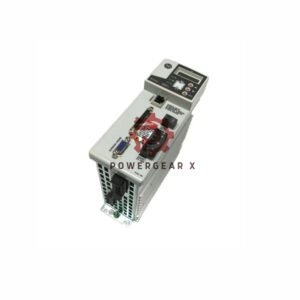
FC-D981 AERA FC-D980 Series Digital Piezoelectric Metal-Sealed Mass Flow Controller
FC-D981 is a high-flow digital mass flow controller from the AERA FC-D980 Series. It combines a piezoelectric valve with all-metal sealing for fast, stable gas control. Therefore, the FC-D981 suits semiconductor processes that demand clean, leak-tight flow delivery. Moreover, multi-gas and multi-range flexibility cuts spare-part counts and setup time. In addition, the all-metal design removes elastomer risk from the gas path. Consequently, maintenance stays simple and predictable.
Why the FC-D981 Stands Out
- Fast response: Settles within 1 second to ±2% of set point.
- Multi-gas design: Stores up to eight gases with eleven calibration points each.
- All-metal seals: No elastomer contact with process gas.
- Ultra-clean wetted path: Double VAR 316L stainless steel, electropolished to 1 Ra.
- Tight leak integrity: 1 x 10^-10 atm-cc/sec (He) maximum.
- Stable zero: Drift stays below 0.5% of full scale per year.
Technical Data
- Brand: AERA
- Model: FC-D981
- Series: FC-D980 Series (digital, piezoelectric, metal-sealed)
- Flow range: 5 to 30 slm full scale. Model 7 covers 5 to 10 slm. Model 7.5 covers 10 to 20 slm. Model 8 single-gas covers 10 to 30 slm.
- Accuracy: ±1% of set point from 25 to 100% of full scale. ±0.25% of full scale from 2 to 25% of full scale.
- Repeatability: ±0.2% of full scale.
- Response time: Under 1 second to ±2% of set point. This defines the frequency response for closed-loop control.
- Control range: 2 to 100% of full scale. Turndown ratio reaches 50:1.
- Resolution: Fine control down to 2% of full scale supports low-flow set points.
- Linearity: Holds within ±1% of set point across the calibrated span.
- Gas types: Multi-gas, field programmable. Up to eight gases and eleven calibration points per gas.
- Operating pressure: Differential 14 to 40 psiD (97 to 275 kPaD). Maximum operating pressure 70 psig (490 kPaG). Proof pressure 140 psig (981 kPaG).
- Wetted materials: Double VAR type 316L stainless steel. All gas-wetted surfaces electropolished and ultra-cleaned to 1 Ra (0.025 um).
- Seals: All-metal, metal seal design.
- Valve type: Piezoelectric, normally-open or normally-closed.
- Electrical interface: Analog 0 to 5 VDC input and output plus RS-485. 20-pin Honda connector.
- Heated option: No. Standard unit is unheated.
- Temperature range: 5 to 45 degrees C (41 to 113 degrees F).
- Environmental tolerance: Stable operation across the full 5 to 45 degrees C band.
- Zero stability: Under 0.5% of full-scale flow over one year.
- Power supply: +15 VDC ±2% at 120 mA min. -15 VDC ±2% at 50 mA min. 1.3 W max.
- Leak integrity: 1 x 10^-10 atm-cc/sec (He) max.
- Dimensions: 140.5 x 38 x 151 mm (H x W x D). Port-to-port length is 151 mm.
- Weight: 1.3 kg (2.9 lb).
- EMI immunity: Metal housing and RS-485 signaling resist electrical noise in dense tool racks.
Installation Guide
- Mount the unit in any orientation per the outline drawing.
- Keep port-to-port length at 151 mm for drop-in replacement.
- Supply clean, dry gas within the 14 to 40 psiD differential range.
- Stay below 70 psig operating pressure and 140 psig proof pressure.
- Wire the 20-pin Honda connector for 0 to 5 VDC and RS-485.
- Provide both +15 VDC and -15 VDC rails at the stated currents.
- Flush and purge lines before first gas exposure.
Setup and Maintenance Ease
- Field-programmable gas tables remove the need for factory recalibration on gas changes.
- Eight stored gases and eleven calibration points each simplify recipe switching.
- Piezoelectric valve has few moving parts, so wear stays low.
- All-metal seals tolerate aggressive gases and reduce seal replacement work.
- Stable zero cuts routine re-zeroing to a yearly check.
- Analog and RS-485 outputs give simple diagnostics during tuning.
Compatibility Notes
- Fits tools built around the FC-D980 Series footprint.
- RS-485 links to standard digital control networks.
- 0 to 5 VDC analog suits legacy controllers.
- Works with CVD, PVD, etch, diffusion, ion implantation, and sputtering tools.
- Normally-open or normally-closed valve choices match different fail-safe plans.
Certification and Compliance
- RoHS compliant.
- Referenced to SEMI E17-91.
- Lifecycle status: current. Official product pages active as of 2026-11.
Packing List
- One FC-D981 mass flow controller.
- One 20-pin Honda connector kit.
- One outline drawing sheet.
- One calibration and compliance document set.
FAQ
Q: Can I switch gases in the field?
A: Yes. The unit stores eight gases and eleven calibration points per gas. Therefore, you reprogram it on site without sending it back. Furthermore, no factory visit is needed.
Q: How fast does it reach the set point?
A: It settles within 1 second to ±2% of set point. In addition, that speed helps fast-step recipes. Besides, short settling protects throughput.
Q: What differential pressure does it need?
A: Keep 14 to 40 psiD across the unit. However, higher differentials may hurt accuracy. Therefore, regulate the supply carefully.
Q: Does it work with corrosive gases?
A: The all-metal seal and electropolished 316L path handle many corrosive gases. Still, check gas compatibility first. Likewise, confirm wetted-part ratings with your gas supplier.
Q: Is a heated version available?
A: This model is unheated. Meanwhile, it runs at 5 to 45 degrees C ambient. Thus, keep ambient conditions in that window.
Q: How often should I re-zero it?
A: Zero drift stays under 0.5% of full scale per year. Thus, an annual check is usually enough. Consequently, routine downtime stays low.
Q: What should I check if flow reads unstable?
A: First confirm differential pressure sits in the 14 to 40 psiD window. Then check the 20-pin connector seating. As a result, most field issues trace to supply pressure or wiring, not the valve.
Q: Can I replace an older FC-D980 unit directly?
A: Yes. The 151 mm port-to-port length and shared connector make it a drop-in swap. Also, the shared 20-pin pinout keeps rewiring simple. Therefore, upgrade time stays short.
Q: Why does the valve type matter for my tool?
A: Normally-open or normally-closed changes how the tool fails on power loss. Therefore, pick the one that matches your safety plan. Additionally, confirm the fail-safe choice with your process engineer.


There are no reviews yet.