


Product details
Product Overview
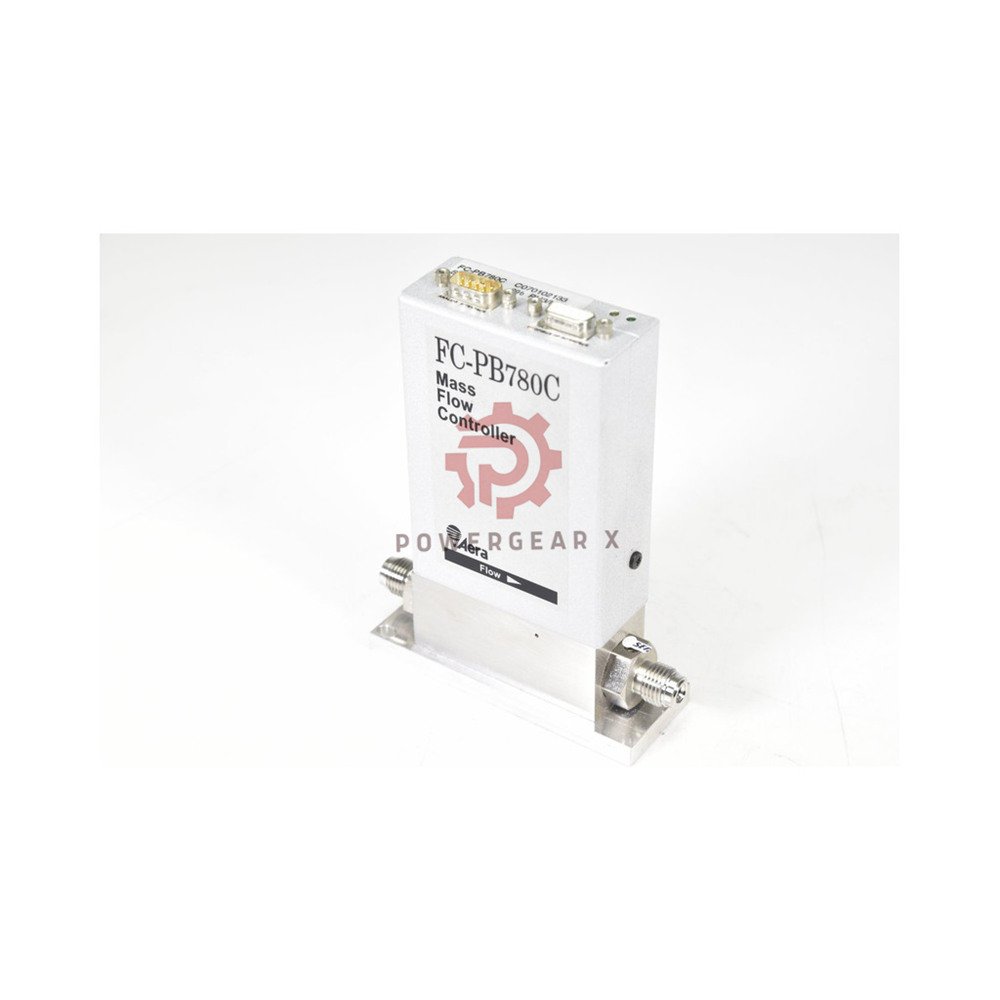
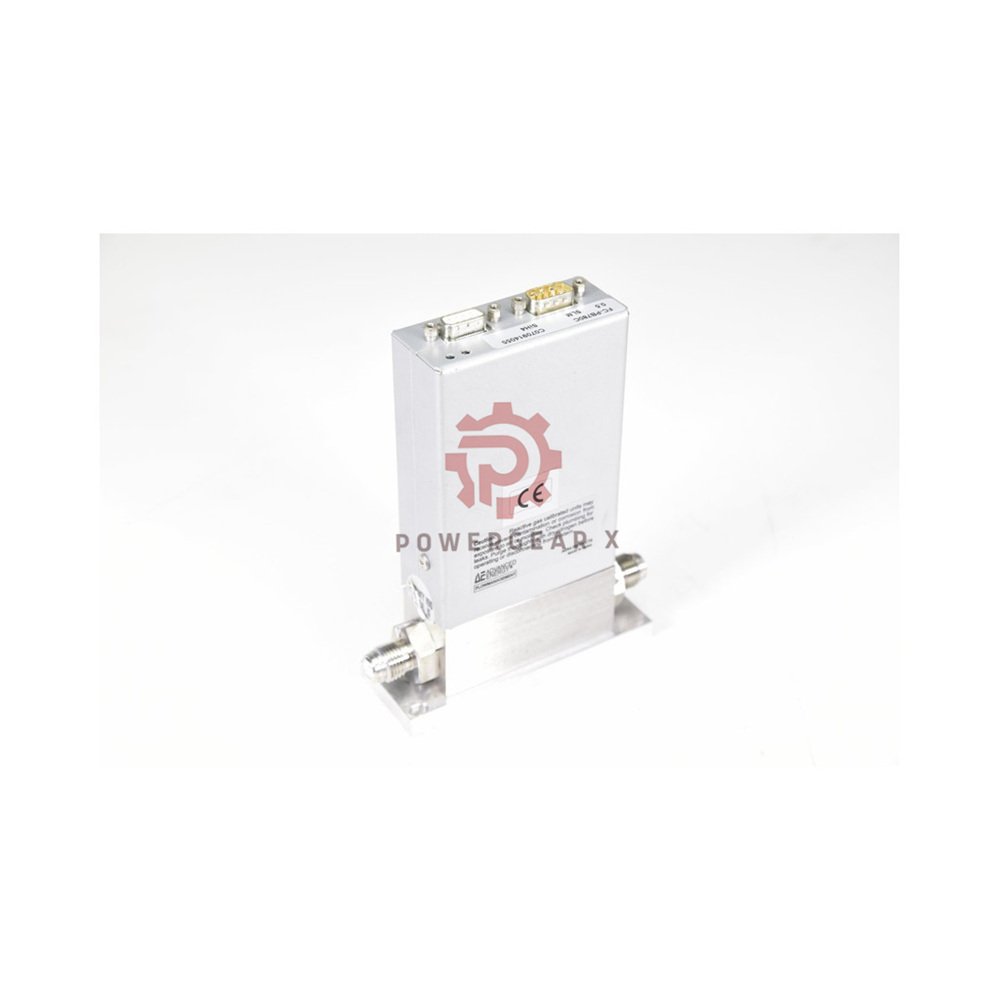
FC-771A is a mid-flow analog mass flow controller from the AERA FC-7700 Series. It uses a 3-digit elastomer-sealed design. The unit controls inert gases from 6 slm up to 30 or 50 slm. It suits semiconductor processes such as CVD, PVD, etch, diffusion, ion implantation and sputtering. The valve comes in normally-open or normally-closed form. The analog 0 to 5 VDC interface keeps system integration simple.
Technical Data
- Brand: AERA
- Model: FC-771A
- Series: FC-7700 Series (3-digit analog, elastomer-sealed)
- Full-scale flow range: 6 slm to 30/50 slm
- Accuracy: within +/-2% of full scale
- Repeatability: within +/-0.2% of full scale
- Linearity: within +/-0.5% of full scale
- Response time: under 3 sec to within +/-2% of full scale between set points
- Control range / turndown: 2 to 100% of full scale
- Zero stability: under 0.5% of full-scale flow over one year
- Gas type: all inert gases (for example N2, O2, Ar, He)
- Operating pressure: differential 10 to 40 psiD
- Normal operating pressure: 70 psig
- Maximum inlet pressure: 140 psig
- Wetted materials: stainless steel type 316(L), PTFE, magnetic stainless
- Seals: elastomer (fluoroelastomer or chloroprene rubber)
- Electrical interface: analog 0 to 5 VDC command and output; Aera 20-pin card-edge connector
- Heated option: no (standard unheated version)
- Operating temperature: 5 to 45 degrees C (41 to 113 degrees F)
- Valve type: solenoid (normally-open or normally-closed)
- Leak integrity: 1 x 10^-6 atm-cc/sec (He) max
- Power supply: +15 VDC +/-2% at 25 mA; -15 VDC +/-2% at 180 mA; 3.1 W max
- Dimensions (H x W x D): 128 x 38 x 151 mm
- Weight: 1.5 kg (3.3 lb)
- Compliance: RoHS
- Lifecycle status: current, official product pages active as of 2026-11 (last verified 2026-11)
Key Benefits
- Mid-flow coverage. One model covers 6 to 50 slm.
- Stable control. Tight linearity and repeatability support repeatable processes.
- Fast response. The unit settles within 3 sec between set points.
- Simple interface. Analog 0 to 5 VDC works with most legacy tools.
- Serviceable design. The elastomer seal and 20-pin connector ease field work.
Installation Guide
- Mount the body on a flat, clean surface. Keep the 128 x 38 x 151 mm footprint in mind.
- Flush the line before you connect the FC-771A. Keep particles out of the flow path.
- Set differential pressure between 10 and 40 psiD. Do not exceed 140 psig inlet pressure.
- Use the Aera 20-pin card-edge connector for command and output signals.
- Feed +15 VDC and -15 VDC within +/-2%. Respect the 3.1 W max draw.
- Keep ambient temperature between 5 and 45 degrees C.
- Use only inert gases. Avoid corrosive media in this standard version.
Setup and Maintenance
- Zero the unit after warm-up. Check zero drift once a year.
- Verify 0 to 5 VDC output against a known flow reference at two points.
- Replace elastomer seals when leak integrity drops below 1 x 10^-6 atm-cc/sec (He).
- Log pressure and temperature. This helps spot drift early.
- The card-edge connector allows quick swap without re-piping.
Compatibility Notes
- Works with inert gases such as N2, O2, Ar and He.
- Fits tools that accept analog 0 to 5 VDC setpoints.
- The 20-pin card-edge connector matches Aera FC-7700 Series cabling.
- Not for corrosive gases or heated applications.
Certification and Compliance
- RoHS: compliant.
- Leak integrity: 1 x 10^-6 atm-cc/sec (He) max.
Packing List
- 1 x FC-771A mass flow controller
- 1 x Quick start guide
- 1 x Calibration certificate
- 1 x Protective cap set
FAQ
- Q: Which gases can I use?
Use inert gases only. Common choices are N2, O2, Ar and He. - Q: What flow range does this model cover?
It covers 6 slm up to 30 or 50 slm, depending on the configured full scale. - Q: How do I connect it to my tool?
Use the Aera 20-pin card-edge connector. Signals are analog 0 to 5 VDC. - Q: Does it need a heated jacket?
No. This is the standard unheated version. Keep ambient temperature between 5 and 45 degrees C. - Q: How often should I check zero?
Check zero after warm-up. Then verify it once a year. Zero drift stays under 0.5% of full scale per year. - Q: From experience, what causes flow drift on these units?
Dirty gas lines and seal wear are common causes. Flush lines before install. Replace seals when leak rate rises. - Q: My output reads low at high setpoints. What should I check?
Check differential pressure first. Low pressure starves the valve. Then confirm the 0 to 5 VDC command source. - Q: Can I swap the valve without draining the line?
Plan the layout so you can isolate the unit. Use shutoff valves on both sides. This makes seal service faster.



There are no reviews yet.