
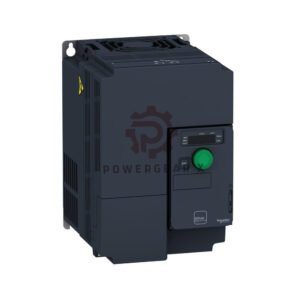
Product details
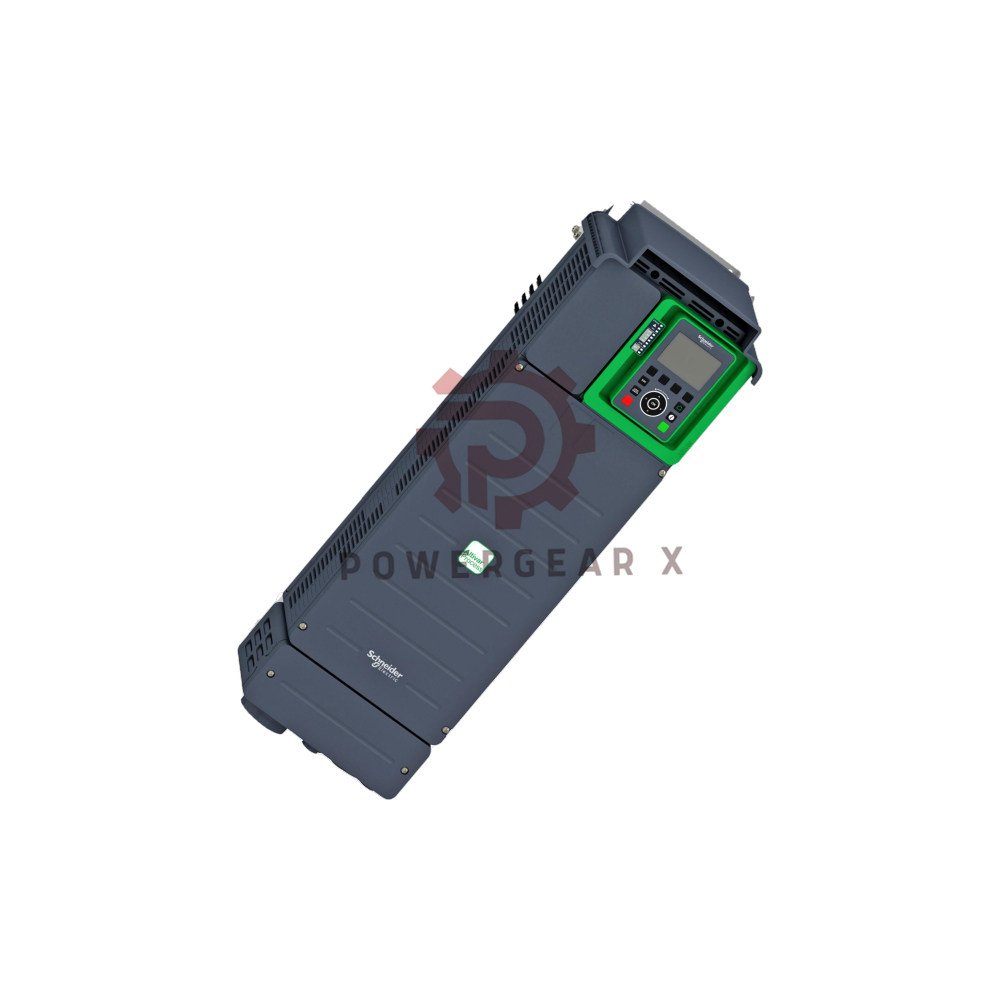
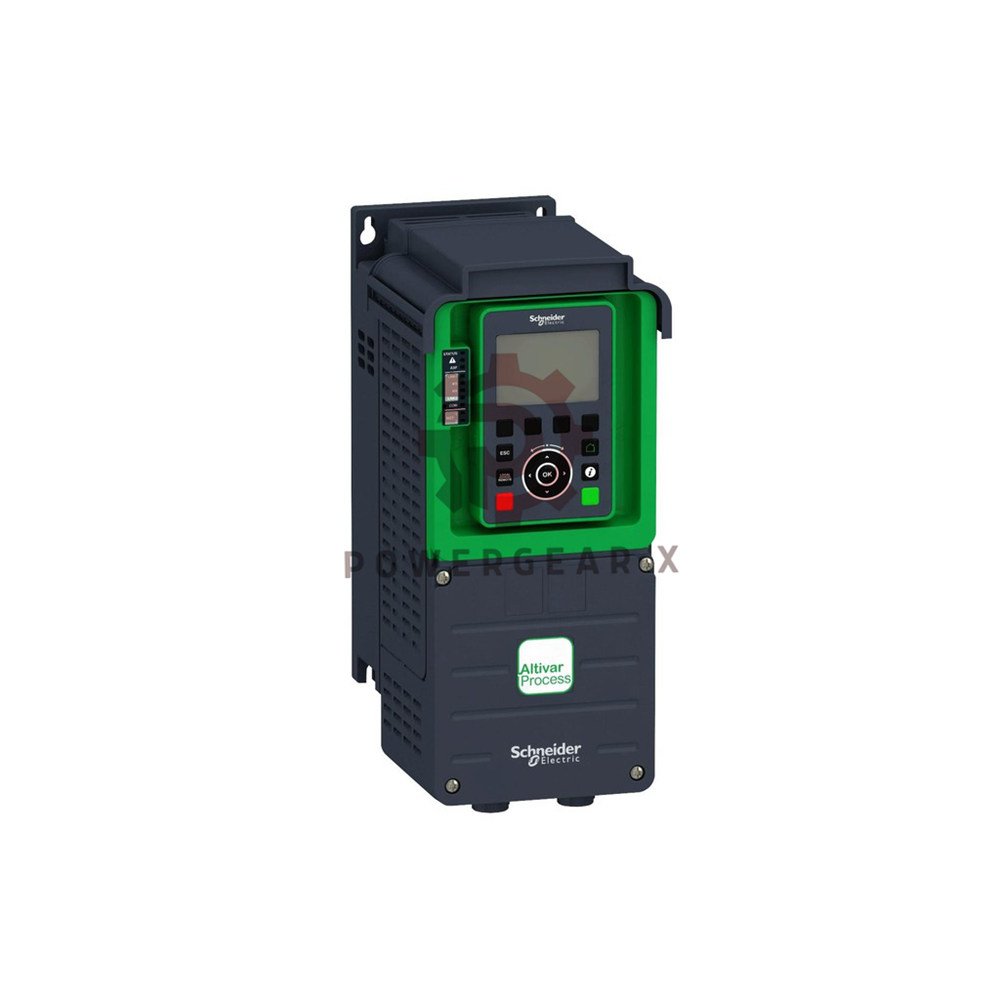
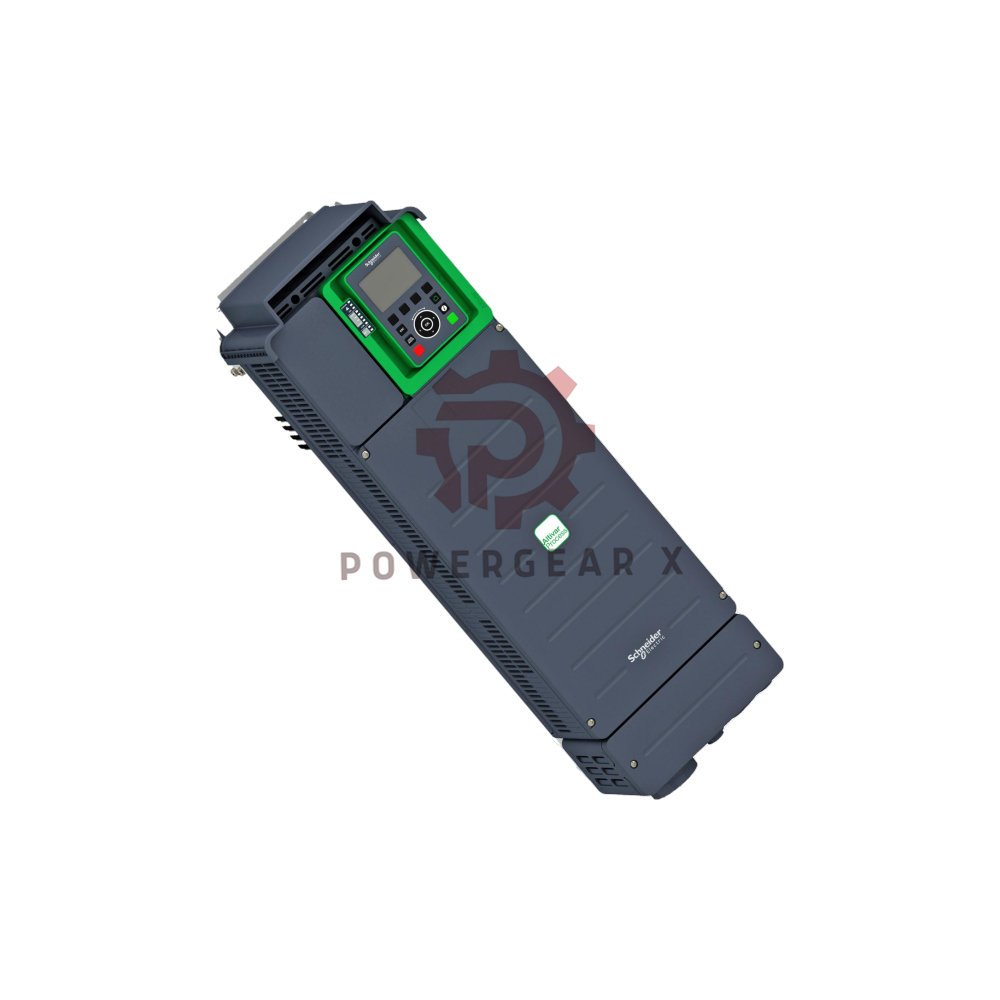
ATV930U30N4Z in Brief
- ATV930U30N4Z is a compact three-phase drive from Schneider Electric.
- It comes from the Altivar Process ATV930 series.
- Moreover, it is a cabinet integration version in IP20.
- So you can mount it inside a panel with ease.
- It runs on 380 to 480 V three-phase power.
- Also, it offers dual ND and HD ratings in one unit.
- In addition, a dynamic brake transistor is built in.
- As a result, wiring stays short and clean.
- One small detail: bottom power terminals are IP00.
Power and Overload
- Normal Duty
- Motor power: 3 kW
- The maker does not publish an HP value here.
- Overload: up to 120% for 60 s
- Heavy Duty
- Motor power: 2.2 kW (3 HP)
- Overload: up to 150% for 60 s
- Switching frequency
- 4 kHz for U07N4 to D45N4
- 2.5 kHz for D55N4 to C22N4
- Auto derating above nominal frequency
- Output frequency: 0.1 to 599 Hz
Motor Control
- Asynchronous motor
- Standard constant torque
- Variable standard torque
- Optimized torque mode
- Open-loop sensorless flux vector
- Closed-loop with encoder
- Synchronous PM motor
- Open-loop vector control
- Closed-loop vector control
- Synchronous reluctance motor
- Open-loop vector control
- Closed-loop vector control
Safety and Braking
- Safety
- 1 STO function
- SIL3 per IEC 61508
- Cat. PL e per ISO 13849-1
- Braking
- Built-in dynamic brake transistor
- External resistor required
- Minimum value: 34 Ω
Inputs and Outputs
- Analog inputs
- 3 total
- 2 can be 0–10 V or 0/4–20 mA
- Those 2 also take PTC, PT100, PT1000 or KTY84 probes
- 1 can be 0 to ±10 V
- Digital inputs
- 8 inputs
- 24 V DC
- Positive or negative logic
- Digital output
- 1 assignable
- Works as Pulse Train Output
- Analog outputs
- 2 outputs
- 0–10 V or 0/4–20 mA
- Relay outputs
- 3 total
- 1 NO/NC plus 2 NO
- Safety inputs
- 2 inputs for STO
- Expansion
- Up to 3 extra I/O modules
Communication
- Built-in ports
- 1 Ethernet dual-port switch (RJ45)
- 1 Modbus serial port (RJ45)
- Built-in protocols
- EtherNet/IP
- Modbus TCP
- Modbus RTU
- Option slot
- PROFINET
- PROFIBUS DP V1
- CANopen
- DeviceNet
- EtherCAT
- POWERLINK
- Cybersecurity
- Achilles Level 2
Electrical Data
- Normal Duty
- Input current: 5.8 A at 380 V; 5.1 A at 480 V
- Apparent power: 4.2 kVA at 380 V
- Continuous output: 7.2 A
- Transient output: 8.6 A for 60 s
- Heavy Duty
- Input current: 4.5 A at 380 V; 4.0 A at 480 V
- Apparent power: 3.3 kVA at 380 V
- Continuous output: 5.6 A
- Transient output: 8.4 A for 60 s
- SCCR: 50 kA maximum
- EMC filter: C2 integrated
Environment and Protection
- Operating temperature: 0 to +40 °C standard
- Derating: 40 to 50 °C
- Storage temperature: -40 to +70 °C
- Humidity: 5 to 95%, non-condensing
- Altitude: no derating to 1000 m
- Above 1000 m: derate 1% per 100 m, up to 3000 m
- Protection: IP20; bottom power terminals IP00
- Environmental class: 3C3 / 3S3 / 3M3
Physical Data
- Dimensions (H×W×D): 285 x 130 x 196 mm
- Weight: the maker does not publish this value
- Power loss: 119 W ND; 87 W HD
- Minimum air flow: 38 m³/h
- Terminal torque: 2.5 N·m
- Clearance: 100 mm top and bottom; 10 mm front
Approvals
- UL 508C
- UL 61800-5-1
- EN/IEC 61800-3 (C2/C3)
- EN/IEC 61800-5-1
- IEC 61508
- IEC 13849-1
- Achilles Level 2
- REACH
- SEMI F47-0706
Best-Fit Equipment and Applications
- Small pumps
- Booster sets in buildings
- Cooling water loops
- Compact fans
- Panel cooling and air ducts
- Quiet speed control at night
- Small conveyors
- Packaging and sorting lines
- Smooth starts protect goods
- Mixers
- Small tanks in food plants
- Steady torque under thick fluids
- Machine tools
- Spindle and feed drives
- Panel mount saves floor space
FAQ
- Q: Where does this cabinet version fit best?
- A: Inside a control panel or machine enclosure. It has no heavy wall bracket, so it suits OEM builds. In short, think panel first, wall second.
- Q: What size resistor should I add for braking?
- A: Start at 34 Ω or higher. Too low a value stresses the chopper. Also keep the resistor cable short to cut noise.
- Q: Can this unit run a 3 kW motor in heavy duty?
- A: No. Heavy duty tops out at 2.2 kW. Use normal duty for the 3 kW motor. That keeps the 120% overload margin.
- Q: From field experience, why does a small panel drive overheat?
- A: Poor air flow is the usual cause. The unit needs 38 m³/h and clean filters. Check the 100 mm top and bottom gap too.
- Q: How can I shorten setup time for many identical machines?
- A: Configure one drive, then copy its file over Ethernet. Load the same file into each panel unit. This step cuts errors and saves hours.

There are no reviews yet.